


x

 Acrylic On CanvasWallArtBaroque Classicism
 1623
1623 72.0 x 56.0 cm
 Gemäldegalerie Alte Meister
Giclée- of canvasafdruk van museumkwaliteit met een snelle productie en flexibele afwerkingsmogelijkheden. ( Bestel handgeschilderde reproductie Koop afbeelding)





























Kies uit onze vooraf ingestelde maten die overeenkomen met de originele verhoudingen van het kunstwerk.

U kunt uw eigen afmetingen opgeven om in een specifieke lijst of ruimte te passen. Als de door u gekozen maat niet overeenkomt met de proporties van het originele kunstwerk, zullen wij de afbeelding bijsnijden of uitbreiden met een gespiegelde of effen rand. Een digitaal mockup wordt ter goedkeuring naar u verzonden voordat de productie begint.
Houd er rekening mee dat de preview op het scherm de werkelijke bijsneding of uitbreiding niet weergeeft. Alleen de mockup toont de uiteindelijke compositie nauwkeurig.
Hoewel aangepaste maten beschikbaar zijn, raden wij aan een afmeting uit de vooraf bepaalde lijst te kiezen om de originele proporties te behouden.
Wereldwijde levering () binnen 2 weken in plaats van de standaard 4/5 weken. (22 augustus)


Drinking Bacchus
Afmetingen reproductie
Guido Reni's "Drinking Bacchus," painted in 1623, is not merely a depiction of a youthful reveler; it’s a carefully constructed tableau brimming with symbolic weight and the sensual allure characteristic of the High Baroque. The painting immediately draws the eye to a young boy, seemingly lost in a moment of intense contemplation as he holds a wine glass overflowing with crimson liquid. This isn't a joyous celebration, however, but rather a scene steeped in ambiguity, inviting viewers to ponder the nature of indulgence and perhaps even hinting at darker undertones. The composition is dominated by a richly draped tree – a vine laden with grapes – that serves as both backdrop and subtle participant in the drama. Its tendrils reach out towards the boy, suggesting an almost predatory embrace, while the scattered grapes themselves become symbols of fleeting pleasure and potential excess.
Reni’s style is a testament to his training within the esteemed Bolognese School. He inherited and refined the principles championed by the Carracci brothers – anatomical precision, dramatic lighting, and a deep reverence for classical forms. Yet, Reni transcends mere imitation; he imbues these foundations with an intensely personal expression. Notice the meticulous rendering of the boy’s features: the delicate curve of his lips, the subtle furrow in his brow, all executed with a remarkable sensitivity to texture and light. The drapery is equally impressive – voluminous yet controlled, conveying both luxury and a sense of languid movement. Reni's mastery lies not just in replicating beauty but in capturing an emotional state, a quiet intensity that elevates the scene beyond simple representation.
The central figure, drinking from the wine glass, is undeniably linked to Bacchus, the Roman god of wine, revelry, and fertility. However, Reni deliberately obscures the overt celebration often associated with this deity. The boy’s expression isn't one of boisterous joy but rather a pensive stillness, suggesting a more introspective engagement with the intoxicating substance. The bowl in the lower left corner adds another layer of complexity – it could represent moderation, a warning against excess, or perhaps even a reflection of the potential consequences of unchecked desire. The vine itself is a potent symbol, representing both abundance and temptation, mirroring the duality inherent in Bacchus’s character.
Reni's skillful manipulation of light and shadow is crucial to the painting’s impact. The scene is bathed in a warm, diffused glow that highlights the boy’s face and hands while simultaneously obscuring details within the background. This creates a sense of intimacy and draws the viewer into the moment, fostering a feeling of quiet contemplation. The deep shadows cast by the tree and drapery contribute to an atmosphere of mystery and intrigue, hinting at hidden depths beneath the surface. The color palette – dominated by rich reds, browns, and golds – further enhances this effect, evoking both luxury and a subtle sense of foreboding. “Drinking Bacchus” is not simply a beautiful painting; it’s a carefully orchestrated exploration of human emotion, inviting us to confront our own desires and vulnerabilities.
This reproduction offers an exceptional opportunity to bring Reni's masterful work into your home or office, capturing the same evocative atmosphere and profound symbolism that captivated viewers centuries ago.

Guido Reni, ook bekend als Le Guide, werd in 1575 geboren in Bologna, Italië. Hij was het enige kind van Daniele Reni, een muzikant, en Ginevra Pozzi, eveneens uit een muzikale familie. Deze achtergrond wekte zijn waardering voor harmonie en vorm, die later zijn artistieke stijl zouden beïnvloeden. Al op negenjarige leeftijd begon Guido zijn leerperiode onder Denis Calvaert, een Vlaamse schilder die in Bologna werkte. Hij studeerde samen met andere ambitieuze kunstenaars Albani en Domenichino, waardoor hij een sterke basis legde in klassieke principes.
Reni’s artistieke carrière strekte zich uit over verschillende Italiaanse steden, waaronder Rome, Napels en zijn geboortestad Bologna. Zijn vroeë werk toonde de invloed van Calvaert en de Carracci-broers, met nadruk op anatomische nauwkeurigheid en dramatische compositie. Reni ontwikkelde echter al snel een eigen stijl die gekenmerkt werd door elegant classicisme, verfijnde techniek en emotionele intensiteit. Hij werd een dominante figuur in de Bolognese School, bekend om haar nadruk op academische training en geïdealiseerde vormen. Zijn werk kenmerkte zich door een voortdurende zoektocht naar perfectie, waarbij hij vaak schetsen herwerkte en details verfijnde tot in het kleinste detail.
Reni's oeuvre omvat een breed scala aan onderwerpen, waaronder religieuze scènes, mythologische verhalen en allegorische voorstellingen. Enkele van zijn meest gevierde werken zijn:
Reni’s stijl wordt vaak omschreven als eclectisch classicisme. Hij combineerde de precisie van klassieke kunst met de dynamiek en emotie van de Barokperiode. Zijn figuren zijn doorgaans geïdealiseerd, bezitten een serene schoonheid en gracieuze beweging. Hij was meester in het gebruik van clair-obscur, waarbij hij licht en schaduw gebruikte om dramatische effecten te creëren en de aandacht van de kijker te vestigen op belangrijke details.
Guido Reni speelde een cruciale rol in het vormgeven van de ontwikkeling van de Hoge Barokstijl in Italië. Hij beïnvloedde generaties kunstenaars met zijn verfijnde techniek, elegante composities en emotionele diepte. Zijn werk is te vinden in prominente musea over de hele wereld, waaronder het Paleis van Capodimonte in Napels. Reni’s nalatenschap strekt zich verder uit dan schilderkunst; hij was ook een dichter en een gerespecteerde intellectuele figuur in zijn tijd.
Zijn kunst blijft kunstenaars en kunstliefhebbers inspireren, waardoor zijn plaats als een van de belangrijkste schilders van de 17e eeuw wordt verstevigd. Zijn invloed is te zien in latere Barokkunstenaars die streefden naar het nabootsen van zijn gratie en emotionele kracht.
Guido Reni overleed in Bologna in 1642, en liet een rijke artistieke erfenis achter die tot op de dag van vandaag publiek blijft boeien. Zijn werken getuigen van zijn meesterschap, zijn passie voor klassieke schoonheid en zijn vermogen om menselijke emoties vast te leggen.

1575 - 1642 , Italië

Explore the life & work of Guido Reni, a master of Baroque classicism. Discover his iconic religious & mythological paintings, and understand his enduring influence on art history. Expert analysis for collectors.

Explore the life & art of Simon Vouet, a pivotal French Baroque painter who introduced Italian styles to France. Discover his masterpieces and lasting influence on 17th-century art.

Explore the captivating world of Baroque Classicism! Discover its history, key artists like Caravaggio & Rubens, and defining characteristics. Expert insights & high-quality reproductions at Most-Famous-Paintings.

Ontdek de barokke pracht! Leer over de geschiedenis, kenmerken en toepassingen van deze weelderige kunststijl in uw interieur. Laat u inspireren door meesters en breng grootsheid in huis.
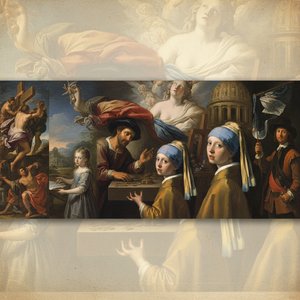
Ontdek de 10 meest iconische Barok meesterwerken van Caravaggio, Rembrandt & Rubens! Duik in de geschiedenis en passie achter deze klassieke schilderijen. Vind museumkwaliteit reproducties voor uw interieur op Most-Famous-Paintings.com.


Blijf op de hoogte van het laatste kunstnieuws, exclusieve aanbiedingen en decoratie-ideeën.
Vertel ons over uw project en onze kunstexperts geven u 3 gepersonaliseerde kunstsuggesties.
Wij stellen drie opties speciaal voor u samen – gratis!


 Voorvertoning
 Verstuur
 Delen
Delen
 Details bekijken

 Download
 Vergelijkbare items
 Röntgenonderzoek
 Diavoorstelling
 Lees meer







 De optie voor glas is alleen beschikbaar bij een formaat kleiner dan 110 cm.


