


x

Met de hand geschilderd in olieverf op canvas in uw gewenste maat en lijst, op bestelling gemaakt door onze kunstenaars. ( Bestel print Koop afbeelding)





























Kies uit onze vooraf ingestelde maten die overeenkomen met de originele verhoudingen van het kunstwerk.

U kunt uw eigen afmetingen invoeren om in een specifieke lijst of ruimte te passen. Als de door u gekozen maat niet overeenkomt met de verhoudingen van het originele beeld, zullen we het kunstwerk bijsnijden of het schilderij uitbreiden met extra handgeschilderde elementen. Een digitale mockup wordt ter goedkeuring naar u verzonden voordat de productie begint.
Houd er rekening mee dat de preview op het scherm niet de werkelijke uitsnede of uitbreiding weergeeft. Alleen de mockup toont de uiteindelijke compositie nauwkeurig.
Hoewel aangepaste afmetingen mogelijk zijn, raden we aan een maat uit de vooraf gedefinieerde lijst te selecteren om de originele verhoudingen te behouden.
Wereldwijde levering () binnen 3 tot 4 weken in plaats van de standaard 5 weken. (22 augustus). Zonder concessies aan de kwaliteit.


Pierre Bladelin Triptych
Afmetingen reproductie
The *Pierre Bladelin Triptych*, created around 1450 by Rogier van der Weyden, stands as a testament to the profound artistic achievements of the Early Netherlandish Renaissance. More than just a depiction of biblical scenes—the Annunciation, Nativity and Visitation—it’s an immersive experience crafted with meticulous detail and imbued with an emotional resonance that continues to captivate viewers centuries later.
Artist & Context: Rogier van der Weyden (c. 1400-1464), a sculptor initially trained in Tournai, Belgium, ascended to prominence as one of the foremost painters of his era. His workshop flourished during a period marked by burgeoning humanist thought and artistic innovation—a time when artists sought to capture not merely appearances but also inner psychological states.
The triptych’s tripartite structure is deliberately designed to guide the viewer's gaze through a narrative progression. Each panel presents distinct scenes—the Annunciation, depicting Mary receiving the divine messenger Gabriel; the Nativity, portraying Jesus’ birth in Bethlehem; and the Visitation, illustrating Mary and Elizabeth meeting. These figures are rendered with astonishing accuracy, capturing their expressions of awe, compassion, and humility.
Symbolism: The inclusion of a dog beneath Mary and Joseph symbolizes fidelity and loyalty—a cornerstone of Christian virtue. The illuminated building in the second panel represents Jerusalem, symbolizing divine grace and spiritual aspiration. Light plays a crucial role throughout the triptych, emanating from Christ’s radiant halo and illuminating the faces of the figures, signifying God's presence and enlightenment.
What distinguishes this artwork is its ability to evoke profound emotion—a hallmark of van der Weyden’s artistic vision. The artist skillfully captures the psychological complexity of his subjects, conveying their inner turmoil and spiritual devotion with breathtaking subtlety. This emotive realism anticipates developments in Renaissance art that would prioritize human experience.
The *Pierre Bladelin Triptych* remains an enduring masterpiece—a symbol of Flemish artistic excellence and a powerful reminder of the transformative power of faith and beauty. Its meticulous detail, luminous colors, and expressive figures continue to inspire artists and collectors alike, securing its place as one of the most celebrated works of the Early Netherlandish Renaissance.

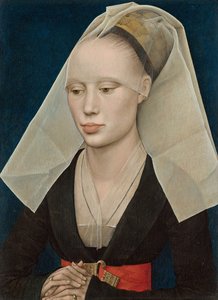
1400 - 1464 , België

Ontdek de 10 meesterwerken van de Vroege Nederlandse Renaissance! Van Jan van Eyck tot Rogier van der Weyden, leer over hun techniek & symboliek. Vind museumkwaliteit kunst reproducties en decoratie-inspiratie op Most-Famous-Paintings.com.

Explore the revolutionary art of Rogier van der Weyden, a pivotal figure of the Early Netherlandish Renaissance. Discover his emotional realism, innovative compositions, and lasting impact on painting history.

Ontdek de 10 meesterwerken van Jan van Eyck, Rogier van der Weyden & andere Vlaamse Primitieven. Duik in de rijke symboliek en olieverfschilderijen van de Vroege Nederlandse Schilderkunst. Vind museumkwaliteit reproducties op Most-Famous-Paintings.com!

Explore the revolutionary art of Hugo van der Goes – a master of Early Netherlandish painting renowned for his dramatic realism, psychological depth & profound influence on Renaissance artists. Discover his iconic works and lasting legacy.

Explore the Northern Renaissance! Discover Jan van Eyck's innovations, religious shifts, & key artists of this influential period. Expert analysis and insights into Early Netherlandish painting at Most-Famous-Paintings.


Blijf op de hoogte van het laatste kunstnieuws, exclusieve aanbiedingen en decoratie-ideeën.
Vertel ons over uw project en onze kunstexperts geven u 3 gepersonaliseerde kunstsuggesties.
Wij stellen drie opties speciaal voor u samen – gratis!


 Voorvertoning
 Verstuur
 Delen
Delen
 Details bekijken

 Download
 Vergelijkbare items
 Röntgenonderzoek
 Diavoorstelling

 Lees meer







 De optie voor glas is alleen beschikbaar bij een formaat kleiner dan 110 cm.


