x

 Acrylic On CanvasWallArtNorthern Renaissance
 1535
1535 9.0 x 7.0 cm
 Louvre
Koop een digitale afbeelding in hoge resolutie met verbeterde kwaliteit, die veel superieur is aan de online voorvertoning.
Elk bestand wordt met uiterste precisie voorbereid door onze interne specialisten, met behulp van geavanceerde tools en deskundige handmatige retouche. Wij garanderen dat elke afbeelding een uitzonderlijke helderheid, nauwkeurige kleurweergave en verfijnde details bezit.
Het uiteindelijke bestand wordt binnen 72 uur per e-mail geleverd, geoptimaliseerd voor direct gebruik in professionele, redactionele en printomgevingen. Dit is dezelfde kwaliteit waarop vooraanstaande designstudio's, uitgevers en galerieën vertrouwen.
Download een bestand met hoge resolutie voor persoonlijke weergave, afdrukken en creatieve projecten. ( Bestel print Bestel handgeschilderde reproductie)
Wanneer u kiest voor Most-Famous-Paintings.com, ontvangt u niet alleen een afbeelding – u krijgt een professioneel verbeterd digitaal kunstwerk, met precisie vervaardigd en voorzien van een tevredenheidsgarantie. Dit is alles wat automatisch bij uw bestelling is inbegrepen:

Uw hoogwaardige digitale afbeeldingsbestand wordt binnen 72 uur na bestelling naar u gemaild – klaar voor direct gebruik.

Uw kunstwerk wordt professioneel geoptimaliseerd met behulp van geavanceerde AI-tools en handmatige bewerkingen, waardoor maximale details, helderheid en kleurnauwkeurigheid worden gegarandeerd.

Je bestand per ongeluk verwijderd of kwijtgeraakt? Geen zorgen – we sturen het u op elk gewenst moment gratis opnieuw toe.

Geniet direct van uw kunstwerk zonder invoerrechten, belastingen of verzendkosten – digitale downloads zijn altijd belastingvrij.

Met behulp van professionele hulpmiddelen en kleurbeheer zorgen wij ervoor dat uw digitale afbeelding de originele kleuren zo nauwkeurig mogelijk weergeeft.

Als u niet tevreden bent met uw digitale afbeelding, passen wij deze aan of storten wij 100% terug binnen 60 dagen – zonder vragen gesteld.

Niet tevreden? Ontvang binnen 60 dagen na ontvangst van uw digitale bestand uw volledige aankoopbedrag terug – zonder vragen te stellen.

Koop 3 afbeeldingen, bespaar 10% - Koop 5, bespaar 15% - Koop 10+, bespaar 20%. Ideaal voor creatieve projecten, galerieën en bureaus.
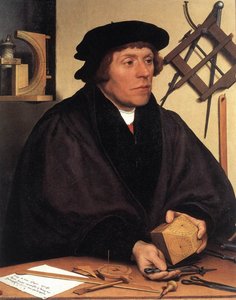
Within the hushed reverence of the Musée du Louvre in Paris resides a miniature painting that transcends its diminutive size, offering an intimate glimpse into the life and artistic vision of Simon Bening. His “Self-Portrait,” created in 1535, is not merely a likeness; it’s a carefully constructed statement about identity, skill, and the burgeoning humanist ideals of the Renaissance. Measuring just 9 x 7 centimeters on vellum, this work embodies the meticulous detail characteristic of Bening's illuminatory practice – a testament to his mastery of color, light, and texture. The painting immediately draws the eye with its stark contrast: the deep, somber tones of the artist’s clothing against the luminous white collar, a deliberate choice that elevates him as both subject and focal point.
Bening, born in Ghent around 1483, was deeply rooted in the artistic traditions of Flanders. His father, Alexander Bening, was himself an illuminator, and Simon inherited not only his technical skills but also a profound appreciation for the intricate beauty of manuscript decoration. This background profoundly shaped his style – a harmonious blend of Northern European realism with a subtle, almost ethereal quality. The painting’s composition is deceptively simple: Bening presents himself in profile, clad in a dark robe that suggests both status and introspection. The careful rendering of fabric folds, the delicate texture of his hair, and the precise detail of his hands all speak to Bening's dedication to capturing the essence of his subject with unparalleled accuracy.
To fully appreciate “Self-Portrait,” one must consider the materials and techniques employed by Bening. Vellum, a type of animal skin parchment, was prized for its smoothness and durability – ideal for the delicate work of miniature painting. The use of oil paints allowed Bening to achieve subtle gradations of color and create a remarkable sense of depth and volume within such a small space. Notably, he masterfully employed illumination techniques, evident in the careful blending of light and shadow that gives the portrait a three-dimensional quality. This wasn’t simply about replicating appearance; it was about capturing the *feeling* of presence – an achievement rarely seen in portraits of this period.
Furthermore, Bening's background as an illuminator profoundly influenced his approach to detail. He meticulously rendered every element, from the folds of his robe to the glint of light on his collar. This attention to detail wasn’t merely decorative; it reflected a deep understanding of perspective and spatial relationships – skills honed through years of working with complex illuminated manuscripts. The painting is a miniature masterpiece, showcasing not just artistic talent but also a profound technical mastery.
“Self-Portrait” offers a valuable window into the cultural and intellectual landscape of 16th-century Europe. The Renaissance witnessed a renewed interest in classical art, humanism, and individual achievement – themes that are subtly reflected in Bening’s work. The act of self-portraiture itself was becoming increasingly common during this period, as artists sought to assert their own identity and celebrate their creative abilities. This wasn't simply vanity; it was a deliberate assertion of artistic agency.
The painting’s provenance – its presence in the Louvre – further underscores its historical significance. The Musée du Louvre, one of the world’s largest and most prestigious art museums, has amassed an unparalleled collection of European masterpieces spanning centuries. “Self-Portrait” stands as a testament to Bening's enduring legacy and his place within this remarkable artistic canon. It is a tangible link to a pivotal moment in Western art history – a time of profound change, innovation, and the celebration of human potential.
While experiencing “Self-Portrait” firsthand at the Louvre remains the ideal, high-quality reproductions offer an accessible way to appreciate Bening’s artistry. Most-Famous-Paintings.com offers stunning prints that faithfully capture the painting's intricate details and luminous quality. Consider a custom reproduction in a size that complements your space – perhaps on canvas for a dramatic statement or on fine art paper for a more subtle elegance.
Beyond its aesthetic appeal, “Self-Portrait” is a powerful reminder of the enduring human desire to understand ourselves and our place in the world. It’s an invitation to contemplate the complexities of identity, the pursuit of artistic excellence, and the timeless beauty of a Renaissance masterpiece.


1483 - 1561 , België


Blijf op de hoogte van het laatste kunstnieuws, exclusieve aanbiedingen en decoratie-ideeën.
Vertel ons over uw project en onze kunstexperts geven u 3 gepersonaliseerde kunstsuggesties.
Wij stellen drie opties speciaal voor u samen – gratis!


 Voorvertoning
 Verstuur
 Delen
Delen
 Details bekijken

 Download
 Vergelijkbare items
 Röntgenonderzoek
 Diavoorstelling
 Lees meer