x

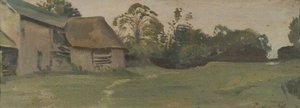
 Oil On PanelImpressionistic Landscape
 25.0 x 33.0 cm
 The Munnings Art Museum
Met de hand geschilderd in olieverf op canvas in uw gewenste maat en lijst, op bestelling gemaakt door onze kunstenaars. ( Bestel print Koop afbeelding)





























Kies uit onze vooraf ingestelde maten die overeenkomen met de originele verhoudingen van het kunstwerk.

U kunt uw eigen afmetingen invoeren om in een specifieke lijst of ruimte te passen. Als de door u gekozen maat niet overeenkomt met de verhoudingen van het originele beeld, zullen we het kunstwerk bijsnijden of het schilderij uitbreiden met extra handgeschilderde elementen. Een digitale mockup wordt ter goedkeuring naar u verzonden voordat de productie begint.
Houd er rekening mee dat de preview op het scherm niet de werkelijke uitsnede of uitbreiding weergeeft. Alleen de mockup toont de uiteindelijke compositie nauwkeurig.
Hoewel aangepaste afmetingen mogelijk zijn, raden we aan een maat uit de vooraf gedefinieerde lijst te selecteren om de originele verhoudingen te behouden.
Wereldwijde levering () binnen 3 tot 4 weken in plaats van de standaard 5 weken. (18 augustus). Zonder concessies aan de kwaliteit.


Tree Study (verso)
Afmetingen reproductie
Alfred James Munnings's "Tree Study (verso)" isn’t merely a depiction of a solitary tree; it’s a distillation of the English countryside, captured with an immediacy that speaks to both the artist’s profound connection to his native Suffolk and a deeply ingrained sense of nostalgia for a vanishing way of life. Painted in 1930, this oil on panel offers a glimpse into Munnings's meticulous process – a testament to his dedication to observing and translating the subtle nuances of light, texture, and atmosphere onto canvas. The piece, rendered in a predominantly Impressionistic style, eschews precise detail in favor of capturing the *feeling* of the scene: the dappled sunlight filtering through foliage, the rough bark of the tree, and the hazy distance that suggests an expansive horizon. It’s a study not for reproduction, but for understanding – a foundational sketch upon which Munnings would later build more elaborate landscapes.
Alfred James Munnings was inextricably linked to the heartland of England. Born in Mendham Township, Sussex, in 1878, his life revolved around the rolling fields and vibrant equestrian traditions of rural Suffolk. Unlike many artists who sought grand vistas or dramatic subjects, Munnings focused on the quiet beauty of everyday life – the working farms, the grazing horses, and the ever-changing light of the countryside. This intimate connection informed every brushstroke, imbuing his work with a palpable sense of authenticity and warmth. He wasn’t simply painting what he saw; he was conveying an emotional response to the land itself, a deep appreciation for its rhythms and its enduring spirit. Munnings's artistic journey began not within the formal confines of an academy, but in the practical world of a Norwich printing house. This apprenticeship honed his skills in design and observation while simultaneously allowing him to pursue studies at the Norwich School of Art.
Munnings’s technique is characterized by loose, expressive brushstrokes – a hallmark of Impressionism. He employed a broken color approach, layering thin washes of paint to build up the image gradually, allowing the colors to mingle and create subtle variations in tone. The palette is dominated by earthy greens, browns, and ochres, reflecting the natural hues of the Suffolk landscape. Notably, the painting avoids sharp outlines or overly defined forms, instead relying on atmospheric perspective to suggest depth and distance. The artist skillfully uses light and shadow to model the tree’s form, creating a sense of three-dimensionality that belies the relatively flat surface of the panel. The texture of the bark is hinted at through short, choppy brushstrokes, while the foliage appears as a shimmering mass of color. A subtle pinkish hue is present in some areas, possibly referencing May blossom.
"Tree Study (verso)" transcends a simple landscape depiction; it’s imbued with a quiet melancholy – a poignant reminder of the passage of time and the inevitable changes that sweep across the countryside. The “verso” aspect, often overlooked, adds to this sense of intimacy and immediacy. It suggests a preliminary study, a fleeting moment captured before being refined into a more finished work. The tree itself can be interpreted as a symbol of resilience – rooted firmly in the earth, weathering the storms of time. Munnings’s ability to capture such subtle emotional nuances speaks volumes about his artistic skill and his profound understanding of the human condition. The painting evokes a feeling of peaceful contemplation, inviting the viewer to lose themselves in the beauty of the natural world and reflect on its enduring significance.
Additional Research:

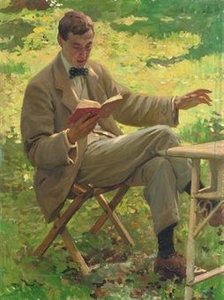
1878 - 1959 , Verenigd Koninkrijk

Explore the profound evolution of Post-Impressionist landscapes. From Van Gogh's emotional brushwork to Cézanne's structural mastery, discover how these visionaries redefined art history through color and form in this expert guide for fine art enthusiasts.


Blijf op de hoogte van het laatste kunstnieuws, exclusieve aanbiedingen en decoratie-ideeën.
Vertel ons over uw project en onze kunstexperts geven u 3 gepersonaliseerde kunstsuggesties.
Wij stellen drie opties speciaal voor u samen – gratis!


 Voorvertoning
 Verstuur
 Delen
Delen
 Details bekijken

 Download
 Vergelijkbare items
 Röntgenonderzoek
 Diavoorstelling
 Lees meer







 De optie voor glas is alleen beschikbaar bij een formaat kleiner dan 110 cm.