Verkoop uw kunst
Verlanglijstje Winkelwagen Cart
VoorvertoningVoorvertoning Bekijk in ARBekijk in AR Bestel print Bestel printBestel handgeschilderde reproductie Bestel handgeschilderde reproductie VerstuurVerstuur
Details bekijkenDetails bekijken Toevoegen aan favorieten Toevoegen aan favorieten DownloadDownload Vergelijkbare itemsVergelijkbare items RöntgenonderzoekRöntgenonderzoek DiavoorstellingDiavoorstelling

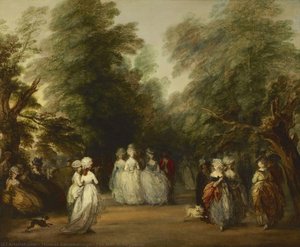
The Mall

Thomas Gainsborough’s serene ‘The Mall,’ painted in 1784, captures the elegance of London society with exquisitely rendered figures amidst a tranquil park landscape—a timeless masterpiece reflecting British Rococo artistry. Explore its beauty and bring history home.

Thomas Gainsborough (1727-1788): Een Britse meester van portretten & landschappen, bekend om zijn elegante stijl en liefde voor het Engelse platteland. Ontdek zijn kunst bij Most-Famous-Paintings!

Koop een digitale afbeelding in hoge resolutie met verbeterde kwaliteit, die veel superieur is aan de online voorvertoning.

Elk bestand wordt met uiterste precisie voorbereid door onze interne specialisten, met behulp van geavanceerde tools en deskundige handmatige retouche. Wij garanderen dat elke afbeelding een uitzonderlijke helderheid, nauwkeurige kleurweergave en verfijnde details bezit.

Het uiteindelijke bestand wordt binnen 72 uur per e-mail geleverd, geoptimaliseerd voor direct gebruik in professionele, redactionele en printomgevingen. Dit is dezelfde kwaliteit waarop vooraanstaande designstudio's, uitgevers en galerieën vertrouwen.

Digitale afbeeldingen

Download een bestand met hoge resolutie voor persoonlijke weergave, afdrukken en creatieve projecten. (Bestel print Bestel printBestel handgeschilderde reproductie Bestel handgeschilderde reproductie)

Totaalprijs

$ 24,90

Inbegrepen bij elke bestelling van een digitale afbeelding

Professionele digitale levering, gegarandeerd

Wanneer u kiest voor Most-Famous-Paintings.com, ontvangt u niet alleen een afbeelding – u krijgt een professioneel verbeterd digitaal kunstwerk, met precisie vervaardigd en voorzien van een tevredenheidsgarantie. Dit is alles wat automatisch bij uw bestelling is inbegrepen:

shipping_icon
Snelle levering per e-mail

Uw hoogwaardige digitale afbeeldingsbestand wordt binnen 72 uur na bestelling naar u gemaild – klaar voor direct gebruik.

canvas_icon
AI-verbeterd digitaal bestand

Uw kunstwerk wordt professioneel geoptimaliseerd met behulp van geavanceerde AI-tools en handmatige bewerkingen, waardoor maximale details, helderheid en kleurnauwkeurigheid worden gegarandeerd.

insurance_icon
Gratis levenslange herlevering van digitale afbeeldingen

Je bestand per ongeluk verwijderd of kwijtgeraakt? Geen zorgen – we sturen het u op elk gewenst moment gratis opnieuw toe.

tax_icon
Geen invoerkosten – nooit

Geniet direct van uw kunstwerk zonder invoerrechten, belastingen of verzendkosten – digitale downloads zijn altijd belastingvrij.

color_icon
Garantie op kleurgetrouwheid

Met behulp van professionele hulpmiddelen en kleurbeheer zorgen wij ervoor dat uw digitale afbeelding de originele kleuren zo nauwkeurig mogelijk weergeeft.

return_icon
60 dagen tevredenheidsgarantie

Als u niet tevreden bent met uw digitale afbeelding, passen wij deze aan of storten wij 100% terug binnen 60 dagen – zonder vragen gesteld.

guarantee_icon
100% Geld-terug-garantie

Niet tevreden? Ontvang binnen 60 dagen na ontvangst van uw digitale bestand uw volledige aankoopbedrag terug – zonder vragen te stellen.

discount_icon
Korting bij grote bestellingen

Koop 3 afbeeldingen, bespaar 10% - Koop 5, bespaar 15% - Koop 10+, bespaar 20%. Ideaal voor creatieve projecten, galerieën en bureaus.

Snelle feiten

  • Medium: Oil on canvas
  • Title: The Mall
  • Movement: Romanticism
  • Artistic style: Elegant realism
  • Artist: Thomas Gainsborough
  • Location: National Gallery, London
  • Notable elements or techniques: Landscape blending

Kunstquiz

Er is slechts één goed antwoord op elke vraag.

Vraag 1:
What is the primary subject matter of Thomas Gainsborough’s ‘The Mall’?
Vraag 2:
In what year was ‘The Mall’ painted?
Vraag 3:
What artistic technique is Gainsborough known for employing in ‘The Mall’?
Vraag 4:
Where was Thomas Gainsborough born?
Vraag 5:
What role did Gainsborough play in the establishment of the Royal Academy?

Beschrijving verzamelobject

A Window Into Georgian Elegance: Exploring Gainsborough’s “The Mall”

  • Subject Matter & Composition The painting captures a quintessential moment of Georgian society – a leisurely gathering in The Mall, London's prestigious promenade. Gainsborough skillfully portrays a group of figures strolling amidst lush greenery, creating an idyllic tableau that speaks to the era’s fascination with refined leisure and aristocratic gatherings.
  • Style & Technique Gainsborough’s style is characterized by its understated elegance and masterful realism. Employing oil paint on canvas, he achieved remarkable tonal subtlety and atmospheric depth through meticulous layering of glazes—a technique that lends the scene an ethereal quality. Notice how light dances across the faces of the subjects and illuminates the foliage, demonstrating Gainsborough's dedication to capturing naturalism with artistic precision.
  • Historical Context Created in 1784 during the reign of George III, “The Mall” reflects the burgeoning Enlightenment ideals prevalent at the time. The painting embodies the aristocratic taste for pastoral landscapes and idealized portraits—a genre favored by artists seeking to elevate their subjects and convey moral virtue. It’s a snapshot of London's social elite enjoying the beauty of springtime.
  • Symbolism & Narrative Beyond its visual splendor, “The Mall” carries symbolic weight. The figures represent not merely individuals but embodiments of social status and cultural sophistication. Their poses are deliberate—relaxed yet dignified—suggesting a harmonious blend of intellect and leisure. The inclusion of the dog symbolizes loyalty and companionship, while the horse represents power and nobility – elements carefully interwoven into the composition to reinforce its overarching message.
  • Emotional Impact Viewing “The Mall” evokes a sense of tranquility and beauty, transporting us back to a time of aristocratic grace and artistic innovation. Gainsborough’s ability to convey emotion through subtle facial expressions and nuanced gestures resonates powerfully with viewers today. It serves as an enduring reminder of the power of art to capture not just what is seen but also what is felt—a testament to Gainsborough's genius and his lasting contribution to British art history.

Kunstenaarsbiografie

A Suffolk Beginning: The Early Life and Artistic Awakening

The story of Thomas Gainsborough, one of Britain’s most celebrated artists, unfolds not within the confines of a grand academy or bustling metropolis, but in the tranquil market town of Sudbury, Suffolk. Born in 1727, the youngest son of John Gainsborough, a weaver and wool merchant, young Thomas displayed an innate artistic sensibility from a remarkably early age. While his siblings pursued more conventional paths, Thomas’s world rapidly became consumed by drawing and painting – miniature self-portraits and delicate landscapes blossoming from his hand even before he reached ten years old. This precocious talent wasn't merely a childhood pastime; it was the burgeoning of a vision that would reshape British art. His father, recognizing this unique gift, encouraged its development, setting young Thomas on a path diverging sharply from the family trade. The Suffolk countryside itself became his first studio, imbuing his later works with a deep and abiding love for the natural world – a characteristic that would distinguish him throughout his career. This early immersion in landscape wasn’t simply about replicating what he saw; it was about *feeling* the essence of the English countryside, an emotional resonance that would permeate his canvases for decades to come.

London and the Shaping of a Style: Influences and Early Commissions

In 1740, at the age of thirteen, Gainsborough journeyed to London, embarking on formal artistic training under Hubert Gravelot, a French engraver renowned for his elegant rococo style. This exposure proved pivotal, introducing him to refined techniques and fashionable aesthetics. However, it was his association with William Hogarth and the St Martin’s Lane Academy that truly began to mold his artistic identity. Initially influenced by Hogarth's narrative approach – his focus on social commentary and moral lessons through meticulously detailed scenes – Gainsborough soon charted his own course, developing a distinctive style characterized by its lightness of touch, fluid brushwork, and subtle color palettes. He absorbed lessons from various masters, yet resisted strict adherence to any single school, forging a path that blended observation with imagination. Gainsborough’s early works often featured scenes of rural life, reflecting the landscapes he knew so intimately. His style was influenced by Dutch Masters like Jacob van Ruisdael, whose atmospheric landscapes and use of light he deeply admired. Returning to Sudbury after marrying Margaret Burr in 1746, Gainsborough established himself as a portraitist for the local gentry. This period honed his skills in capturing likenesses and character, but it was during his subsequent move to Ipswich, and later Bath, that he began attracting a more sophisticated clientele – individuals who appreciated not just accurate representation, but also artistic flair and emotional depth.

Bath and Beyond: Portraiture, Landscape, and Royal Patronage

The years spent in Bath (1759-1774) marked a significant turning point in Gainsborough’s career. The city was a hub of fashionable society, providing him with ample opportunities to paint portraits of the wealthy and influential. He quickly gained renown for his ability to capture not only physical resemblance but also the personality and social standing of his sitters. His portraits weren't merely depictions; they were statements about identity and status. He developed a remarkable skill in capturing fleeting expressions and subtle nuances, imbuing his subjects with a sense of life and immediacy. Gainsborough’s style evolved during this period, becoming looser and more expressive, reflecting the changing artistic trends of the time. He also continued to paint landscapes, often incorporating them into his portraits – a technique that highlighted both the beauty of nature and the importance of human connection. The culmination of his success came with his move to London in 1774, where he established a studio on Pall Mall and became a founding member of the Royal Academy. He also secured royal patronage, becoming a favorite painter of King George III and Queen Charlotte, further solidifying his position as one of Britain’s leading artists. His portraits of the royal family are considered masterpieces of their time, showcasing his technical skill and artistic sensitivity.

A Legacy of Innovation: Enduring Appeal and Influence

Thomas Gainsborough died in 1788, leaving behind a body of work that continues to captivate audiences today. His influence on subsequent generations of British artists is undeniable. He liberated portraiture from rigid formality, infusing it with spontaneity and emotional resonance. His loose brushwork and atmospheric effects paved the way for the Impressionists, while his lyrical landscapes inspired artists like John Constable, who deeply admired Gainsborough’s ability to capture the spirit of the English countryside. Gainsborough's legacy extends beyond technique; it lies in his profound understanding of human character and his unwavering commitment to artistic expression. He wasn’t simply a painter of portraits or landscapes; he was a storyteller, a poet of light and color, and a visionary who transformed British art. Mrs. Thomas Gainsborough, painted in 1785, exemplifies this period – an elegant portrait showcasing rococo style and muted tones. His paintings are a testament to the power of observation, imagination, and the enduring allure of the English landscape.

Exploring Gainsborough's World Today

Fortunately, the opportunity to experience Gainsborough’s genius firsthand remains readily available. Gainsborough’s House, in his birthplace of Sudbury, stands as a testament to his life and work, offering visitors an intimate glimpse into his early influences and artistic development. Christchurch Mansion in Ipswich houses a significant collection of Gainsborough paintings alongside works by Constable and other masters. Numerous museums across the United Kingdom and internationally display his masterpieces, including the National Gallery in London and the Metropolitan Museum of Art in New York. His work continues to be studied, analyzed, and celebrated, ensuring that his artistic vision will endure for generations to come.

Thomas Gainsborough

Thomas Gainsborough

1727 - 1788 , Verenigd Koninkrijk

Belangrijkste feiten

  • Artistic Movement Or Style: Rocococo, portretten
  • Artists Or Movements Influenced By This Artist:
    • Constable
    • Impressionisten
  • Artists Who Influenced This Artist:
    • Gravelot
    • Hogarth
  • Date Of Birth: 1727
  • Date Of Death: 1788
  • Full Name: Thomas Gainsborough
  • Nationality: Britse kunstenaar
  • Notable Artworks:
    • Mrs. Gainsborough
    • Mr & Mrs Andrews
  • Place Of Birth (City And Country): Sudbury, VK