x

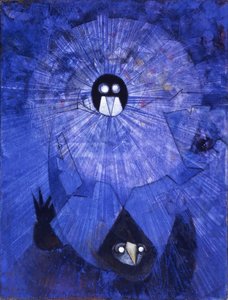
 39.0 x 55.0 cm
 Northumbria University Gallery
Koop een digitale afbeelding in hoge resolutie met verbeterde kwaliteit, die veel superieur is aan de online voorvertoning.
Elk bestand wordt met uiterste precisie voorbereid door onze interne specialisten, met behulp van geavanceerde tools en deskundige handmatige retouche. Wij garanderen dat elke afbeelding een uitzonderlijke helderheid, nauwkeurige kleurweergave en verfijnde details bezit.
Het uiteindelijke bestand wordt binnen 72 uur per e-mail geleverd, geoptimaliseerd voor direct gebruik in professionele, redactionele en printomgevingen. Dit is dezelfde kwaliteit waarop vooraanstaande designstudio's, uitgevers en galerieën vertrouwen.
Download een bestand met hoge resolutie voor persoonlijke weergave, afdrukken en creatieve projecten. ( Bestel print Bestel handgeschilderde reproductie)
Wanneer u kiest voor Most-Famous-Paintings.com, ontvangt u niet alleen een afbeelding – u krijgt een professioneel verbeterd digitaal kunstwerk, met precisie vervaardigd en voorzien van een tevredenheidsgarantie. Dit is alles wat automatisch bij uw bestelling is inbegrepen:

Uw hoogwaardige digitale afbeeldingsbestand wordt binnen 72 uur na bestelling naar u gemaild – klaar voor direct gebruik.

Uw kunstwerk wordt professioneel geoptimaliseerd met behulp van geavanceerde AI-tools en handmatige bewerkingen, waardoor maximale details, helderheid en kleurnauwkeurigheid worden gegarandeerd.

Je bestand per ongeluk verwijderd of kwijtgeraakt? Geen zorgen – we sturen het u op elk gewenst moment gratis opnieuw toe.

Geniet direct van uw kunstwerk zonder invoerrechten, belastingen of verzendkosten – digitale downloads zijn altijd belastingvrij.

Met behulp van professionele hulpmiddelen en kleurbeheer zorgen wij ervoor dat uw digitale afbeelding de originele kleuren zo nauwkeurig mogelijk weergeeft.

Als u niet tevreden bent met uw digitale afbeelding, passen wij deze aan of storten wij 100% terug binnen 60 dagen – zonder vragen gesteld.

Niet tevreden? Ontvang binnen 60 dagen na ontvangst van uw digitale bestand uw volledige aankoopbedrag terug – zonder vragen te stellen.

Koop 3 afbeeldingen, bespaar 10% - Koop 5, bespaar 15% - Koop 10+, bespaar 20%. Ideaal voor creatieve projecten, galerieën en bureaus.

In the vast, often turbulent landscape of postwar American art, few figures cast a shadow as profound or as geometrically precise as Tony Smith. Born in South Orange, New Jersey, in 1912, Smith’s journey toward becoming a cornerstone of Minimalist sculpture was not a linear ascent through academic halls, but rather a complex weaving of architectural discipline, industrial fascination, and an intuitive connection to the unconscious. His early life was shaped by a profound encounter with physical fragility; a bout of tuberculosis in his youth instilled in him a deep reverence for the transformative power of structure and the way built environments can respond to human limitations. This early exposure to innovative building techniques—witnessed through his family’s use of prefabricated housing—planted the seeds for an artistic language that would eventually bridge the gap between the organic spirit and the industrial machine.
Smith’s path to creative mastery was marked by a restless, experiential intellect. Eschewing the rigid confines of traditional academia, he sought knowledge through direct engagement with the masters of his era. At the Art Students League of New York, he immersed himself in the meticulous disciplines of anatomy and drawing under figures such as George Bridgman and George Groszek. His pursuit of architectural truth led him to the New Bauhaus in Chicago and, most pivotally, to an apprenticeship with the legendary Frank Lloyd Wright. Working on the Ardmore Project and spending time at Taliesin, Smith absorbed a philosophy where form and function were inseparable. Yet, as he matured, a certain disillusionment began to take root. The domestic restrictions of client-driven architecture—the demand for comfort over pure form—began to feel like a cage, prompting him to seek a medium that offered the permanence and monumental presence he craved.
The transition from architect to sculptor in the early 1960s represented one of the most radical shifts in modern art history. Smith did not merely abandon architecture; he translated its principles into a new, sculptural vocabulary. He began to view his works not as mere objects, but as presences—entities that occupied space with a spiritual and physical weight. This period saw the birth of his iconic large-scale, modular works, characterized by their geometric abstraction and industrial rigor. One of his most revolutionary innovations was the decision to have his sculptures industrially fabricated. By utilizing steel and other industrial materials, Smith stripped away the "hand of the artist" in the traditional sense, allowing the raw, unyielding power of the material to speak for itself.
His work during this era was a masterful synthesis of seemingly contradictory forces:
The legacy of Tony Smith extends far beyond the steel monoliths that bear his name. He was a bridge-builder between generations, a teacher at institutions like NYU and Cooper Union who mentored future icons of the New York School. His influence can be traced through the lineage of contemporary art, even reaching into the work of his daughter, the renowned artist Kiki Smith, whose sensitivity to the human form carries a different, yet equally profound, resonance. Smith’s ability to infuse industrial geometry with an almost primordial sense of mystery ensured that his work would never be dismissed as mere mathematical exercise.
Today, the significance of Smith’s oeuvre is recognized through major retrospectives at The Museum of Modern Art, the Menil Collection, and the Los Angeles County Museum of Art. He remains a vital figure for anyone studying the intersection of art and architecture, reminding us that even within the most rigid structures, there exists a profound capacity for human expression and spiritual depth. His sculptures remain as they were intended: powerful, silent presences that continue to challenge our perception of space, weight, and the very essence of existence.

1912 - 1980 , United States of America


Blijf op de hoogte van het laatste kunstnieuws, exclusieve aanbiedingen en decoratie-ideeën.
Vertel ons over uw project en onze kunstexperts geven u 3 gepersonaliseerde kunstsuggesties.
Wij stellen drie opties speciaal voor u samen – gratis!


 Voorvertoning
 Verstuur
 Delen
Delen
 Details bekijken

 Download
 Vergelijkbare items
 Röntgenonderzoek
 Diavoorstelling
 Lees meer