


x

Met de hand geschilderd in olieverf op canvas in uw gewenste maat en lijst, op bestelling gemaakt door onze kunstenaars. ( Bestel print Koop afbeelding)
Kies uit onze vooraf ingestelde maten die overeenkomen met de originele verhoudingen van het kunstwerk.

U kunt uw eigen afmetingen invoeren om in een specifieke lijst of ruimte te passen. Als de door u gekozen maat niet overeenkomt met de verhoudingen van het originele beeld, zullen we het kunstwerk bijsnijden of het schilderij uitbreiden met extra handgeschilderde elementen. Een digitale mockup wordt ter goedkeuring naar u verzonden voordat de productie begint.
Houd er rekening mee dat de preview op het scherm niet de werkelijke uitsnede of uitbreiding weergeeft. Alleen de mockup toont de uiteindelijke compositie nauwkeurig.
Hoewel aangepaste afmetingen mogelijk zijn, raden we aan een maat uit de vooraf gedefinieerde lijst te selecteren om de originele verhoudingen te behouden.
Wereldwijde levering () binnen 3 tot 4 weken in plaats van de standaard 5 weken. (18 augustus). Zonder concessies aan de kwaliteit.


Vorosh
Afmetingen reproductie
Victor Vasarely's "Vorosh" is more than just an image; it’s an invitation to question the very nature of reality. Created in 1967, this seminal work exemplifies the groundbreaking aesthetic movement known as Op Art – Optical Art – and stands as a testament to Vasarely’s pioneering exploration of visual perception. The artwork immediately captivates with its deceptively simple composition: a meticulously constructed grid of squares, each subtly varying in size and density, generating an undulating wave effect that seems to ripple across the surface. This isn't merely decoration; it’s a carefully orchestrated illusion, demanding active engagement from the viewer.
Born Károly Vaszary in 1906 in Pécs, Croatia – then part of Austria-Hungary – Vasarely’s artistic trajectory began unexpectedly. Initially pursuing medical studies, he abandoned this path in 1927 to embrace painting, a decision profoundly shaped by his time at the Podolini-Volkmann Academy and, crucially, Sándor Bortnyik's “Műhely” workshop. This environment, steeped in the principles of Bauhaus functional design and geometric abstraction, provided the foundation for his revolutionary approach. "Vorosh" embodies this legacy perfectly. The artwork’s rigid grid structure, achieved through precise repetition, speaks to a deliberate control over visual elements – a calculated attempt to manipulate perception itself. The stark black and white palette further amplifies this effect, stripping away extraneous detail to focus solely on the dynamic interplay of shapes.
The creation of "Vorosh" likely involved a sophisticated screen-printing technique, allowing for an unparalleled level of precision in replicating the intricate geometric patterns. This method ensured consistent color application and maximized the optical illusion at the heart of the piece. Vasarely’s mastery lies not just in his artistic vision but also in his technical execution – he understood that the beauty of Op Art resided in its ability to create a convincing, almost unsettling, sense of movement and depth. The artwork's seemingly flat surface belies a complex manipulation of perspective; the varying sizes and densities of squares generate a receding or bulging effect, playing with the viewer’s natural assumptions about space.
"Vorosh" transcends mere visual trickery, inviting contemplation on fundamental questions surrounding perception, order, and chaos. The artwork's abstract nature allows for multiple interpretations – perhaps a representation of the inherent instability within seemingly ordered systems, or an exploration of the subjective experience of reality. Vasarely’s work wasn’t simply about creating beautiful patterns; it was about challenging our understanding of how we see the world. The powerful visual impact of "Vorosh" evokes a sense of both fascination and unease, prompting viewers to consider the limitations of their own perceptual abilities. It remains a compelling example of Op Art's enduring legacy – a testament to the power of geometry to transform the ordinary into the extraordinary.


1906 - 1997 , Kroatië
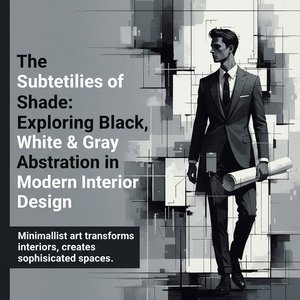
Ontdek de subtiele kracht van zwart, wit en grijs in hoteldesign. Expert tips voor licht, textuur & moderne architectuur. Creëer rustgevende, luxe ruimtes met Most-Famous-Paintings.

Explore the revolutionary world of Victor Vasarely, father of Op Art. Discover his geometric masterpieces, artistic system, & lasting impact on modern design. A guide for discerning art collectors.
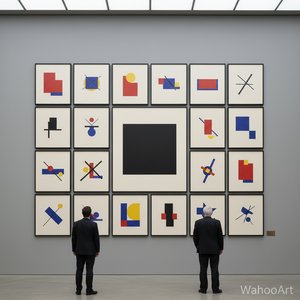
Ontdek de 25 meest iconische werken van Kazimir Malevich, pionier van het suprematisme en abstracte kunst. Van 'Zwarte Vierkant' tot 'Witte op Wit', leer over zijn invloedrijke stijl & koop museumkwaliteit reproducties voor uw interieur. Explore the full collection online!

Explore the evolution of geometric abstraction from Cubism to contemporary art. Discover key artists like Malevich & Mondrian, investment insights, and expert collecting advice at Most-Famous-Paintings.
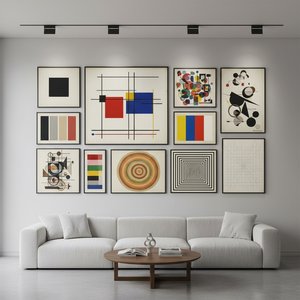
Ontdek de 10 meest invloedrijke meesterwerken van de geometrische abstractie! Van Mondriaan tot Malevich, leer over kunstenaars, technieken & kleuren. Museumkwaliteit reproducties op Most-Famous-Paintings.com – voor een unieke interieurstijl.


Blijf op de hoogte van het laatste kunstnieuws, exclusieve aanbiedingen en decoratie-ideeën.
Vertel ons over uw project en onze kunstexperts geven u 3 gepersonaliseerde kunstsuggesties.
Wij stellen drie opties speciaal voor u samen – gratis!


 Verstuur
 Delen
Delen
 Details bekijken

 Download
 Vergelijkbare items
 Diavoorstelling

 Lees meer




































 De optie voor glas is alleen beschikbaar bij een formaat kleiner dan 110 cm.


