


x

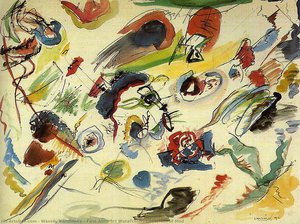
 Abstract Expressionism
 1958
1958 38.0 x 50.0 cm
Koop een digitale afbeelding in hoge resolutie met verbeterde kwaliteit, die veel superieur is aan de online voorvertoning.
Elk bestand wordt met uiterste precisie voorbereid door onze interne specialisten, met behulp van geavanceerde tools en deskundige handmatige retouche. Wij garanderen dat elke afbeelding een uitzonderlijke helderheid, nauwkeurige kleurweergave en verfijnde details bezit.
Het uiteindelijke bestand wordt binnen 72 uur per e-mail geleverd, geoptimaliseerd voor direct gebruik in professionele, redactionele en printomgevingen. Dit is dezelfde kwaliteit waarop topontwerpstudio's, uitgevers en galerieën vertrouwen.
Download een bestand met hoge resolutie voor persoonlijke weergave, afdrukken en creatieve projecten. ( Print kopen Handgemaakt schilderij kopen)
Wanneer u kiest voor Most-Famous-Paintings.com, ontvangt u niet alleen een afbeelding – u krijgt een professioneel verbeterd digitaal kunstwerk, met precisie vervaardigd en voorzien van een tevredenheidsgarantie. Dit is alles wat automatisch bij uw bestelling is inbegrepen:

Uw hoogwaardige digitale afbeeldingsbestand wordt binnen 72 uur na bestelling naar u gemaild – klaar voor direct gebruik.

Uw kunstwerk wordt professioneel geoptimaliseerd met behulp van geavanceerde AI-tools en handmatige bewerkingen, waardoor maximale details, helderheid en kleurnauwkeurigheid worden gegarandeerd.

Je bestand per ongeluk verwijderd of kwijtgeraakt? Geen zorgen – we sturen het u op elk gewenst moment gratis opnieuw toe.

Geniet direct van uw kunstwerk zonder invoerrechten, belastingen of verzendkosten – digitale downloads zijn altijd belastingvrij.

Met behulp van professionele hulpmiddelen en kleurbeheer zorgen wij ervoor dat uw digitale afbeelding de originele kleuren zo nauwkeurig mogelijk weergeeft.

Als u niet tevreden bent met uw digitale afbeelding, passen wij deze aan of storten wij 100% terug binnen 60 dagen – zonder vragen gesteld.

Niet tevreden? Ontvang binnen 60 dagen na ontvangst van uw digitale bestand uw volledige aankoopbedrag terug – zonder vragen te stellen.

Koop 3 afbeeldingen, bespaar 10% - Koop 5, bespaar 15% - Koop 10+, bespaar 20%. Ideaal voor creatieve projecten, galerieën en bureaus.

Within the vibrant, often turbulent constellation of the New York School, few artists captured the ethereal boundary between the conscious mind and the primordial subconscious as poignantly as William Baziotes. Born in 1912 to Greek immigrants in Pittsburgh, Pennsylvania, Baziotes carried within him a profound connection to ancient heritage—a fascination with classical sculpture and mythic resonance that would later breathe life into his abstract forms. His formal journey began at the National Academy of Design, where he emerged in 1936 as a painter deeply attuned to the technical rigors of his craft, yet possessed by an irrepressible urge to explore the unseen realms of the psyche.
The trajectory of Baziotes’ career was irrevocably shaped by the socio-economic landscape of the Great Depression. Through his involvement with the Works Progress Administration (WPA), particularly the easel project between 1938 and 1940, he found the freedom to experiment with large-scale canvases that demanded a more visceral, gestural approach. It was during this era that he began to weave together the disparate threads of European Surrealism and the burgeoning American Abstract Expressionism. While his contemporaries often leaned toward pure abstraction or intellectualized concepts, Baziotes remained a poet of the image, utilizing automatism not merely as a technique, but as a gateway to a more evocative, biomorphic language.
Baziotes’ visual vocabulary is perhaps most famously defined by its use of biomorphic forms—organic, rounded shapes that suggest biological life, cellular structures, or the fluid movement of deep-sea organisms. His work often feels like a window into a prehistoric or extraterrestrial landscape, where the distinction between flesh and flora becomes beautifully blurred. In masterpieces such as Jungle Form (1952), one encounters a mesmerizing metamorphosis; a verdant figure emerges from a tangled thicket, her very essence seemingly woven from emerald and mossy textures. This ability to marry the psychological intensity of Surrealism with the raw, energetic brushwork of Abstract Expressionism allowed him to create works that are simultaneously haunting and deeply rhythmic.
His inspirations were as diverse as they were profound. Beyond the visual influence of primitive art, Baziotes drew immense spiritual and linguistic nourishment from the poetry of Charles Baudelaire and the timeless elegance of ancient Greek art. This literary and historical depth infused his paintings with a sense of tragic beauty and ritualistic movement. Whether through the melancholic color palettes found in works like The Falcon or the stark, haunting compositions of The Flesh Eaters, Baziotes sought to capture a moment of transcendence—a reaching toward the heavens or an exploration of the shadows lurking within the human spirit.
The mid-1940s marked the zenith of Baziotes’ professional recognition. His 1944 debut solo exhibition at Peggy Guggenheim’s legendary Art of This Century gallery served as a definitive arrival, placing him at the epicenter of the modern art world. He was not merely a participant in this movement but a foundational architect of its community. Alongside luminaries such as Mark Rothko, Robert Motherwell, and David Hare, Baziotes co-founded the Subjects of the Artist School in 1948. This institution became a vital crucible for artistic dialogue, hosting lectures by icons like John Cage and Jean Arp, and fostering a collaborative environment that would define the postwar American aesthetic.
In his later years, Baziotes transitioned into a period of significant pedagogical influence, teaching at prestigious institutions including the Museum of Modern Art and New York University. Though his life was tragically cut short by lung cancer in 1963, just days before his fifty-first birthday, his contribution to the evolution of modern art remains indelible. He leaves behind a legacy characterized by:
Today, the works of William Baziotes continue to captivate collectors and historians alike, offering a profound meditation on the interconnectedness of the human soul and the untamed natural world.

1912 - 1963 , United States of America


Blijf op de hoogte van het laatste kunstnieuws, exclusieve aanbiedingen en inspirerende interieurideeën.
Vertel ons over uw project en onze kunstexperts geven u 3 gepersonaliseerde kunstsuggesties.
Wij stellen 3 opties speciaal voor u samen – Gratis!


 Bekijk op ware grootte
 Verstuur
 Delen
Delen
 Details bekijken

 Download
 Vergelijkbare werken
 Röntgenonderzoek
 Diavoorstelling
 Lees meer


![Abstract Composition [triptych] — Vaclav Vytlacil, Abstract Expressionism](/media/artworks/images/thumbnails/e5/3d/e53db42ea02644b9a8e722f9d4dd3742.jpg)


