


x

Koop een digitale afbeelding in hoge resolutie met verbeterde kwaliteit, die veel superieur is aan de online voorvertoning.
Elk bestand wordt met uiterste precisie voorbereid door onze interne specialisten, met behulp van geavanceerde tools en deskundige handmatige retouche. Wij garanderen dat elke afbeelding een uitzonderlijke helderheid, nauwkeurige kleurweergave en verfijnde details bezit.
Het uiteindelijke bestand wordt binnen 72 uur per e-mail geleverd, geoptimaliseerd voor direct gebruik in professionele, redactionele en printomgevingen. Dit is dezelfde kwaliteit waarop vooraanstaande designstudio's, uitgevers en galerieën vertrouwen.
Download een bestand met hoge resolutie voor persoonlijke weergave, afdrukken en creatieve projecten. ( Bestel print Bestel handgeschilderde reproductie)
Wanneer u kiest voor Most-Famous-Paintings.com, ontvangt u niet alleen een afbeelding – u krijgt een professioneel verbeterd digitaal kunstwerk, met precisie vervaardigd en voorzien van een tevredenheidsgarantie. Dit is alles wat automatisch bij uw bestelling is inbegrepen:

Uw hoogwaardige digitale afbeeldingsbestand wordt binnen 72 uur na bestelling naar u gemaild – klaar voor direct gebruik.

Uw kunstwerk wordt professioneel geoptimaliseerd met behulp van geavanceerde AI-tools en handmatige bewerkingen, waardoor maximale details, helderheid en kleurnauwkeurigheid worden gegarandeerd.

Je bestand per ongeluk verwijderd of kwijtgeraakt? Geen zorgen – we sturen het u op elk gewenst moment gratis opnieuw toe.

Geniet direct van uw kunstwerk zonder invoerrechten, belastingen of verzendkosten – digitale downloads zijn altijd belastingvrij.

Met behulp van professionele hulpmiddelen en kleurbeheer zorgen wij ervoor dat uw digitale afbeelding de originele kleuren zo nauwkeurig mogelijk weergeeft.

Als u niet tevreden bent met uw digitale afbeelding, passen wij deze aan of storten wij 100% terug binnen 60 dagen – zonder vragen gesteld.

Niet tevreden? Ontvang binnen 60 dagen na ontvangst van uw digitale bestand uw volledige aankoopbedrag terug – zonder vragen te stellen.

Koop 3 afbeeldingen, bespaar 10% - Koop 5, bespaar 15% - Koop 10+, bespaar 20%. Ideaal voor creatieve projecten, galerieën en bureaus.
William Hogarth's *The Bathos*, a powerfully unsettling engraving created towards the end of his life, is not merely an artwork; it’s a visual lament—a darkly satirical reckoning with the decline of knowledge, artistic standards, and perhaps even civilization itself. Completed in 1764, just months before his death, this densely packed composition feels less like a carefully constructed image and more like a fever dream rendered in meticulous lines. It's an apocalyptic vision born from a mind acutely aware of its own mortality and deeply critical of the world around him. The very title, “Bathos,” derived from a rhetorical term signifying a deliberate descent from the sublime to the ridiculous, signals Hogarth’s intention: to expose the absurdity lurking beneath pretensions of grandeur.
To gaze upon *The Bathos* is to be overwhelmed. The scene unfolds with chaotic energy, a swirling vortex of fragmented objects—books scattered like fallen ideals, musical instruments silenced, tools rendered useless. Dominating this wreckage lies the skeletal figure of Death, not as an active agent of destruction but as a weary observer, slumped amidst the debris. This isn’t a triumphant depiction of the end times; it's one of exhaustion and disillusionment. Above him, an angel ascends towards a sign proclaiming “The World’s End,” yet even this celestial messenger appears burdened, almost defeated. Hogarth masterfully employs the engraving technique—the precise interplay of light and shadow created through intricate hatching and cross-hatching—to amplify the sense of claustrophobia and impending doom. The turbulent sea forming the backdrop isn't merely a setting; it’s a metaphor for the instability threatening to engulf everything. The artist doesn’t shy away from detail, each object meticulously rendered, contributing to the overall feeling of oppressive disorder.
Understanding *The Bathos* requires acknowledging Hogarth's broader artistic project. He was a pioneer in British art, forging a path independent of traditional patronage by appealing directly to the public through his narrative series—works like *A Harlot’s Progress* and *A Rake’s Progress*. These earlier works were moralizing tales told through vivid imagery, but *The Bathos* feels different. It's less about specific vices and more about a systemic failure of values. Hogarth wasn’t simply lamenting the decline of artistic taste—he was critiquing what he saw as a broader intellectual and spiritual decay. The inclusion of references to classical art, like allusions to Dürer and Poussin, suggests a disillusionment with even the most revered traditions. He seems to be arguing that even the great masters were not immune to superficiality and artistic pretense. The print’s complex symbolism—the broken instruments, the crumbling architecture, the exhausted angel—all contribute to this overarching theme of collapse.
Though created in the 18th century, *The Bathos* resonates with a timeless relevance. Its depiction of societal breakdown and intellectual exhaustion feels eerily prescient, speaking to anxieties that continue to plague us today. Hogarth’s genius lies not only in his technical skill but also in his ability to tap into universal human fears—the fear of loss, the fear of meaninglessness, the fear of oblivion. A reproduction of *The Bathos* is more than just a decorative piece; it's a conversation starter, a visual embodiment of critical thought, and a powerful reminder of the fragility of civilization. For collectors seeking works with intellectual depth, or for interior designers aiming to create spaces that provoke contemplation, Hogarth’s final masterpiece offers a compelling and enduring statement.
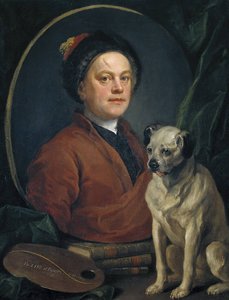
1697 - 1764 , Verenigd Koninkrijk


Blijf op de hoogte van het laatste kunstnieuws, exclusieve aanbiedingen en decoratie-ideeën.
Vertel ons over uw project en onze kunstexperts geven u 3 gepersonaliseerde kunstsuggesties.
Wij stellen drie opties speciaal voor u samen – gratis!


 Voorvertoning
 Verstuur
 Delen
Delen
 Details bekijken

 Download
 Vergelijkbare items
 Röntgenonderzoek
 Diavoorstelling

 Lees meer


