x

Håndmalt olje på lerret i din valgte størrelse og ramme, laget på bestilling av våre kunstnere. ( Kjøp trykk Kjøp bilde)
Velg mellom våre forhåndsdefinerte størrelser som bevarer kunstverkets opprinnelige proporsjoner.

Du kan angi egne mål for å tilpasse en spesifikk ramme eller plass. Dersom den valgte størrelsen ikke samsvarer med originalbildets proporsjoner, vil vi enten beskjære kunstverket eller utvide maleriet med ytterligere håndmalte elementer. En digital mockup vil bli sendt til din godkjenning før produksjonen starter.
Vennligst merk at forhåndsvisningen på skjermen ikke gjenspeiler den faktiske beskjæringen eller utvidelsen. Kun mockuppen vil vise den endelige komposisjonen nøyaktig.
Selv om tilpassede størrelser er tilgjengelige, anbefaler vi å velge et mål fra den forhåndsdefinerte listen for å bevare de originale proporsjonene.
Verdensomspennende levering () på 3–4 uker i stedet for standard 5 uker. (17 August). Ingen kompromisser med kvaliteten.


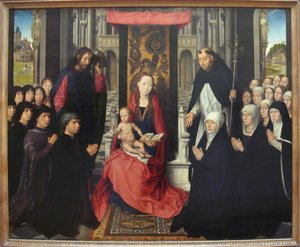
Saint Jerome
Størrelse på reproduksjon

Antonio de Puga (1602 – 1648) stands as a singular figure in Spanish Baroque art, largely obscured by the shadow of his contemporaries yet possessing a distinctive artistic voice that resonates with remarkable detail and psychological insight. Born in Orense, Galicia, he emerged from a region historically underserved by artistic patronage, marking him as an exceptional talent whose career defied conventional expectations. While many artists of his era sought fame through established academies, Puga’s journey was one of grit and profound intellectual curiosity, carving out a space for himself within the most prestigious circles of the Spanish Court.
The early years of Puga's life remain shrouded in much of the mystery that often surrounds masters of the seventeenth century. However, through the meticulous scholarship of Maria Luisa Caturla, we have begun to piece together a clearer portrait of his formative period. His lineage was humble—the son of a local tailor—yet his ambitions were nothing short of royal. Documents from 1635 reveal that he worked under the direction of the esteemed Eugenio Caxés, contributing to the grand decoration of the Hall of Realms in the Buen Retiro Palace. This early engagement with such monumental projects suggests that Puga was not merely a provincial painter but a vital participant in the most significant artistic endeavors of the Spanish Golden Age.
Puga’s artistic output is characterized by a profound ability to blend dramatic historical narrative with the dignified stillness of portraiture. His oeuvre frequently focused on the powerful figures of his time, including the Counts of Lemos and the Duke of Aricoste, for whom he executed numerous commissions that captured both their social stature and their individual humanity. There is a palpable tension in his work, a hallmark of the Baroque style, where light and shadow dance across the canvas to evoke a sense of movement and psychological depth.
Beyond the faces of the nobility, Puga demonstrated a remarkable command over landscape and complex historical compositions. His involvement in the decoration of the Buen Retiro Palace allowed him to experiment with large-scale storytelling. Some historians even attribute the landscape elements within significant works, such as the Recovery of Puerto Rico by D. Juan de Haro currently held in the Museo del Prado, to his skilled hand. This ability to integrate human drama with sweeping, atmospheric environments showcases a versatility that few of his peers could replicate.
His technical repertoire was further enriched by an immense personal collection of art and knowledge:
Despite his undeniable talent, Puga’s life was marked by the financial vulnerabilities common to many artists of the period. A 1643 document revealing a debt owed to the Marquis of Viana serves as a poignant reminder of the precarious nature of artistic patronage. Yet, even in moments of hardship, his dedication to the craft remained unyielding. His death in 1648 marked the end of a brilliant, if somewhat turbulent, career that bridged the gap between the provincial traditions of Galicia and the sophisticated splendor of Madrid.
Today, Antonio de Puga is remembered not just as an assistant to greater masters, but as a foundational figure for Galician art. He proved that brilliance could emerge from the periphery, bringing a unique perspective to the Spanish Baroque. His works continue to captivate modern audiences, offering a window into a world of courtly elegance, historical triumph, and the enduring power of the painted image.

1602 - 1648 , Spain


Hold deg oppdatert med de siste kunstnyhetene, eksklusive tilbud og dekorasjonsideer.
Fortell oss om prosjektet ditt, så vil våre kunsteksperter gi deg 3 personlige kunstforslag.
Vi velger ut 3 alternativer kun for deg – helt gratis!


 Forhåndsvisning
 Send
Send Del med andre
 Vis detaljer

 Last ned bildet
 Liknende objekter
 Røntgenundersøkelse
 Lysbildefremvisning
 Vis hele teksten




































 Glassalternativet er kun tilgjengelig i størrelser under 110 cm