Ønskeliste Handlekurv Cart
ForhåndsvisningForhåndsvisning Se i ARSe i AR Kjøp trykk Kjøp trykkKjøp bilde Kjøp bilde SendSend
Vis detaljerVis detaljer Legg til i favoritter Legg til i favoritter Last ned bildetLast ned bildet Liknende objekterLiknende objekter RøntgenundersøkelseRøntgenundersøkelse LysbildefremvisningLysbildefremvisning

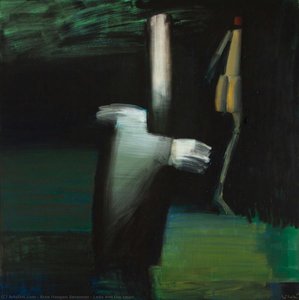
The Painter Francis Bacon

Discover Chronis Botsoglou's evocative Greek paintings & sculptures! Blending tradition & modernism, explore his bold colors & emotional depth. See works at Most-Famous-Paintings & Prado Museum.

Håndlaget oljereproduksjon

Håndmalt olje på lerret i din valgte størrelse og ramme, laget på bestilling av våre kunstnere. (Kjøp trykk Kjøp trykkKjøp bilde Kjøp bilde)

Standard
custom
CM
INCH

Velg mellom våre forhåndsdefinerte størrelser som bevarer kunstverkets opprinnelige proporsjoner.

bredde
høyde

Du kan angi egne mål for å tilpasse en spesifikk ramme eller plass. Dersom den valgte størrelsen ikke samsvarer med originalbildets proporsjoner, vil vi enten beskjære kunstverket eller utvide maleriet med ytterligere håndmalte elementer. En digital mockup vil bli sendt til din godkjenning før produksjonen starter.
Vennligst merk at forhåndsvisningen på skjermen ikke gjenspeiler den faktiske beskjæringen eller utvidelsen. Kun mockuppen vil vise den endelige komposisjonen nøyaktig.
Selv om tilpassede størrelser er tilgjengelige, anbefaler vi å velge et mål fra den forhåndsdefinerte listen for å bevare de originale proporsjonene.

Eksempler på hva som kan endres: Erstatt ansikt med bilde av kunden; Legg til kjæledyr (f.eks. bytt ut katt med hund); Inkluder en skjult melding i bakgrunnen; Endre bakgrunnslandskap eller elementer.
Etter bestilling vil Most-Famous-Paintings.com-teamet sende e-post til kunden for instruksjoner og sende et utkast (mockup) som forhåndsvisning.

Verdensomspennende levering () på 3–4 uker i stedet for standard 5 uker. (23 August). Ingen kompromisser med kvaliteten.

why_choose_icon
Gratis ekspressfrakt over hele verden
why_choose_icon
Lerretsduk av høykvalitets lin
why_choose_icon
Full forsikring under transport
why_choose_icon
Garanti for refusjon av toll og importavgifter
why_choose_icon
Garantert korrekt fargegjengivelse
why_choose_icon
60 dagers returrett (kun ved feil)
why_choose_icon
100% pengene tilbake-garanti
why_choose_icon
Rabatt ved flere kjøp

Totalpris for bestilling

$ 272

reproduction

The Painter Francis Bacon

Teknikk for reproduksjon

Størrelse på reproduksjon

-

Endelig pris

$ 272


Om kunstneren

Robert Delaunay: A Pioneer of Color and Rhythm

Robert Delaunay, born Robert-Victor-Felix Delaunay in Paris on April 12th, 1885, was a pivotal figure in the early development of modern art. His life, marked by both artistic innovation and personal transformation alongside his wife Sonia Delaunay, ultimately shaped the trajectory of Orphism and significantly influenced movements like Cubism and Abstract Art. From humble beginnings as an apprentice to a theatrical designer, Delaunay’s journey was one of relentless experimentation with color, light, and form—a pursuit that redefined the possibilities of painting itself. His career spanned several decades, culminating in a legacy of vibrant abstraction and a profound impact on generations of artists.

Early Influences and the Rise of Neo-Impressionism

Delaunay’s early artistic development was deeply rooted in the principles of Neo-Impressionism. Following his apprenticeship, he began to paint, initially exploring decorative arts before gravitating towards a more expressive style. Inspired by figures like Paul Signac and Georges Seurat, Delaunay embraced the Neo-Impressionist technique of dividing colors into small strokes of pure hues, believing that this method would create a shimmering effect when viewed from a distance. This approach, however, proved only a stepping stone for his later explorations. He moved beyond mere replication of natural appearances, seeking to capture the essence of light and color itself—a core tenet of his evolving artistic philosophy. His early works, such as “Saint-Séverin” (1906-7), demonstrate this shift, showcasing an increasing interest in capturing atmospheric effects through carefully orchestrated color combinations.

The Birth of Orphism: Color and Rhythm

A turning point arrived in 1912 when Delaunay, along with Sonia and other artists including František Kupka and Chaïm Soutine, began to develop what would become known as Orphism. This movement, named after the Greek word for “rainbow,” was characterized by an intense focus on color—not as a representation of reality, but as an independent entity capable of evoking emotion and creating visual rhythms. Delaunay’s paintings from this period, such as "Disc" (1912) and "Circular Forms" (1912), exemplify this radical departure. He abandoned traditional perspective and form, instead employing geometric shapes—circles, squares, and lines—arranged in dynamic compositions that pulsed with color and energy. Influenced by theories of light and color developed by scientists like Michel Eugène Chevreul, Delaunay believed that colors could be combined to create a sense of movement and vibration. This exploration was further fueled by his interest in the work of Paul Klee and other artists experimenting with abstraction.

Collaboration with Sonia Delaunay and the Expansion of Artistic Practice

The partnership with Sonia Delaunay proved crucial to Robert’s artistic development, and their collaboration extended beyond painting. Sonia, a talented textile designer, began creating vibrant fabrics incorporating geometric patterns inspired by her husband's paintings. This led to a fascinating exchange—Robert translating his visual rhythms onto fabric, while Sonia applied them to textiles, effectively expanding the reach of Orphism into new mediums. Furthermore, they established the “Atelier du Rectangle,” a collaborative studio where they produced furniture, wallpaper, and other decorative objects, solidifying their commitment to exploring the expressive potential of geometric abstraction. This period also saw Robert Delaunay experimenting with relief painting, culminating in his monumental panels for the Aeronautics pavilion at the 1937 Paris International Exhibition—large-scale works that showcased his mastery of color and composition.

Later Years and Abstract Legacy

Following World War I, Delaunay’s style evolved further, moving towards a more purely abstract approach. He continued to work with vibrant colors and geometric forms, but increasingly focused on creating dynamic compositions that emphasized rhythm and movement. Despite facing challenges during the Nazi occupation of France, he persevered in his artistic practice, producing significant works until his death in Montpellier on October 25th, 1941. Robert Delaunay’s legacy extends far beyond his own paintings. His pioneering work with color, his exploration of abstraction, and his influence on subsequent generations of artists—including Stanton Macdonald-Wright, Morgan Russell, and Paul Klee—cemented his place as a foundational figure in the development of modern art. His emphasis on color as an independent expressive force continues to resonate within abstract painting today, reminding us of the transformative power of visual experimentation.
chronis botsoglou

chronis botsoglou

1941 - 2022 , Greece

Kort om kunstneren

  • Artistic Movement Or Style:
    • Divisionism
    • Cubism
    • Orphism
    • Abstract art
  • Artists Or Movements Influenced By This Artist:
    • Stanton-Wright
    • Morgan Russell
    • Klee
    • Marc
    • Apollinaire
  • Artists Who Influenced This Artist:
    • Neoimpressionism
    • Cézanne
  • Date Of Birth: April 12, 1885
  • Date Of Death: October 25, 1941
  • Full Name: Robert Delaunay
  • Nationality: French
  • Notable Artworks:
    • Endless Rhythm
    • Cubism
    • Orphic Cubism
    • Simultanism
  • Place Of Birth: Paris, France