


x


 Oil On CanvasWallArtVorticism
 Modern
 152.0 x 224.0 cm
 Tate Britain
Håndmalt olje på lerret i din valgte størrelse og ramme, laget på bestilling av våre kunstnere. ( Bytt til trykk Bytt til bilde)





























Velg mellom våre forhåndsdefinerte størrelser som bevarer kunstverkets opprinnelige proporsjoner.

Du kan angi egne mål for å tilpasse en spesifikk ramme eller plass. Dersom den valgte størrelsen ikke samsvarer med originalbildets proporsjoner, vil vi enten beskjære kunstverket eller utvide maleriet med ytterligere håndmalte elementer. En digital mockup vil bli sendt til din godkjenning før produksjonen starter.
Vennligst merk at forhåndsvisningen på skjermen ikke gjenspeiler den faktiske beskjæringen eller utvidelsen. Kun mockuppen vil vise den endelige komposisjonen nøyaktig.
Selv om tilpassede størrelser er tilgjengelige, anbefaler vi å velge et mål fra den forhåndsdefinerte listen for å bevare de originale proporsjonene.
Verdensomspennende levering () på 3–4 uker i stedet for standard 5 uker. (31 July). Ingen kompromisser med kvaliteten.


The Mud Bath
Størrelse på reproduksjon
In the realm of early twentieth-century modernism, few works capture the raw, pulsating energy of the machine age quite like David Bomberg’s The Mud Bath. This Vorticist masterpiece serves as a breathtaking exploration of movement, where the boundaries between form and void dissolve into a rhythmic dance of geometry. At first glance, the viewer is met with a controlled chaos—a complex web of interlocking triangles, rectangles, and irregular polygons that seem to vibrate against a muted, earthy backdrop. The composition is anchored by a central vertical axis, reminiscent of a structural pillar or a primordial tree, which acts as a stabilizer for the swirling, angular fragments that orbit it. It is a painting that does not merely sit upon the canvas but seems to actively construct itself before the eyes of the observer.
The color palette of this work is both disciplined and profoundly impactful, utilizing a limited spectrum to achieve maximum visual tension. A dominant, fiery red provides an intense warmth that surges through the composition, while sharp strikes of cobalt blue offer a cooling contrast, adding much-needed depth to the flattened pictorial plane. These primary tones are punctuated by brilliant whites that highlight the edges of the geometric shards, creating a crisp, staccato rhythm. The background, a soft and understated beige, provides a grounding element that prevents the vibrant shapes from feeling untethered, allowing the structural complexity of the work to remain the focal point.
To understand The Mud Bath, one must look toward the radical artistic movements of the post-war era. Bomberg, a prominent figure among the 'Whitechapel Boys,' was deeply immersed in the avant-garde currents of Cubism and Futurism. This specific piece exemplifies the essence of Vorticism—a movement that sought to find the "vortex" at the heart of modern life, capturing the dynamism and mechanical precision of an industrializing world. Unlike the more fluid abstractions found in other movements, Bomberg’s approach here is architectural and structural; he strips away the superficiality of nature to reveal the underlying skeletal energy of the subject matter.
While the title might suggest a literal depiction of a landscape or a natural process, the painting functions primarily as an exploration of pure form. Any connection to the organic—the suggestion of foliage, water, or earth—is purely symbolic, serving as a ghostly echo of reality beneath the heavy layers of abstraction. For the discerning collector or interior designer, this artwork offers more than just visual interest; it provides a sophisticated focal point that commands attention through its historical weight and structural integrity. A high-quality reproduction of this piece brings with it an aura of intellectual depth and a bold, modern aesthetic that can transform a contemporary space into a gallery of profound artistic significance.

Som sønn av de polsk-jødiske immigrantforeldrene Abraham og Rebecca Bomberg, begynte han sin kunstneriske reise ved City and Guilds Technical Art School, før han videreutdannet seg som litograf i Birmingham.
Han studerte under Walter Sickert ved Westminster School of Art (1908–1910), hvor han ble preget av Sickers fokus på form og det urbane livet. Gjennom Roger Fry sin utstilling "Manet and the Post-Impressionists" i 1910, fikk han en betydelig eksponering for Paul Cézanne. Han begynte ved Slade School of Art i 1911, hvor han vant Tonks-prisen for sin tegning av medstudenten Isaac Rosenberg.
Erfaringene som menig soldat under første verdenskrig satte dype spor i hans kunstneriske visjon, noe som førte til en bevegelse bort fra det abstrakte.
I løpet av 1920-tallet adopterte Bomberg en mer figurativ stil, med fokus på portretter og landskap hentet direkte fra naturen. Han utviklet en stadig mer ekspresjonistisk teknikk, preget av teksturert impasto og emosjonell intensitet.
Omfattende reiser gjennom Midtøsten (særlig Palestina) og Europa hadde stor innflytelse på hans senere verk. Hans skildringer av Jerusalem er spesielt bemerkelsesverdige.

1890 - 1957 , Storbritannia
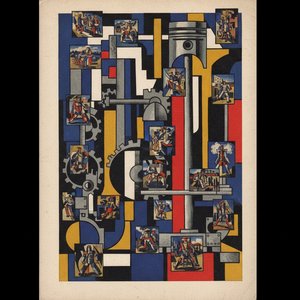
Utforsk Fernand Légers 25 mest ikoniske kunstverk! Oppdag kubismens mester, hans revolusjonerende stil og fargerike hyllest til maskinalderen. Finn inspirasjon til interiørdesign og kjøp eksklusive reproduksjoner på Most-Famous-Paintings.com.
Utforsk Wassily Kandinskys 25 mest ikoniske malerier! Oppdag historien bak abstrakt kunst, ekspresjonisme og fargeharmoni. Finn inspirasjon til interiøret – museumskvalitet reproduksjoner på Most-Famous-Paintings.com.

Oppdag de 25 mest ikoniske kunstverkene fra Metropolitan Museum of Art i New York! Lær historien bak Rembrandt, Van Gogh, Monet og mer. Finn inspirasjon til interiøret ditt med museumskvalitets reproduksjoner på Most-Famous-Paintings.com.

Opplev MOMA's 25 mest ikoniske kunstverk! Fra Van Goghs Starry Night til Warhols Campbell Soup Cans – lær historien bak mesterklassikerne. Finn inspirasjon og museumskvalitets reproduksjoner på Most-Famous-Paintings.no. Utforsk samlingen online!

Explore the groundbreaking work of David Bomberg, a pivotal figure in British abstraction. Discover his artistic evolution, influences, and lasting legacy through insightful analysis & expert commentary.


Hold deg oppdatert med de siste kunstnyhetene, eksklusive tilbud og dekorasjonsideer.
Fortell oss om prosjektet ditt, så vil våre kunsteksperter gi deg 3 personlige kunstforslag.
Vi velger ut 3 alternativer kun for deg – helt gratis!


 Forhåndsvisning
 Send
Send Del med andre
 Vis detaljer

 Last ned bildet
 Liknende objekter
 Røntgenundersøkelse
 Lysbildefremvisning
 Vis hele teksten







 Glassalternativet er kun tilgjengelig i størrelser under 110 cm


