


x

Giclée- eller lerretsprint av museumskvalitet med rask produksjon og fleksible valgmuligheter for etterbehandling. ( Kjøp håndlaget maleri Kjøp bilde)





























Velg mellom våre forhåndsdefinerte størrelser som bevarer kunstverkets opprinnelige proporsjoner.

Du kan oppgi egne mål for å tilpasse en spesifikk ramme eller et bestemt område. Dersom den valgte størrelsen ikke samsvarer med det originale bildets proporsjoner, vil vi enten beskjære kunstverket eller utvide bildet med en speilet eller ensfarget kant. En digital mockup vil bli sendt til din godkjenning før produksjonen starter.
Vennligst merk at forhåndsvisningen på skjermen ikke gjenspeiler den faktiske beskjæringen eller utvidelsen. Kun mockuppen vil vise den endelige komposisjonen nøyaktig.
Selv om tilpassede størrelser er tilgjengelige, anbefaler vi å velge et mål fra den forhåndsdefinerte listen for å bevare de originale proporsjonene.
Verdensomspennende levering () på 2 uker i stedet for standard 4/5 uker. (21 August)


Proun 19D
Størrelse på reproduksjon
El Lissitzky's *Proun 19D*, created in 1922, is not merely a painting; it’s a fragment of a revolutionary vision. Emerging from the fervor of post-revolutionary Russia, this work embodies the spirit of Constructivism and Suprematism, yet transcends easy categorization. It presents itself as a dynamic interplay of geometric forms—planes, angles, and circles—suspended within a field of ochre yellow. The composition isn’t representational in the traditional sense; rather, it feels like an exploded architectural drawing, a blueprint for a new world order rendered in paint, metal foil, and even sandpaper. Lissitzky deliberately eschewed conventional artistic materials, incorporating textures that disrupt the flatness of the canvas and invite tactile exploration. This deliberate materiality underscores the Constructivist ideal: art should not simply depict reality but actively *construct* it.
To understand *Proun 19D*, one must delve into the context of its creation. Lissitzky, initially trained as an architect and engineer, found himself drawn to the radical artistic experiments unfolding in Russia after the 1917 revolution. He became deeply influenced by Kazimir Malevich’s Suprematism—an art focused on pure geometric forms and spiritual resonance—and joined his circle in Vitebsk. However, Lissitzky wasn't content with simply replicating Malevich’s style. He sought to bridge the gap between painting and architecture, believing that art could play a vital role in building a new socialist society. This led to the development of ‘Proun,’ an acronym for “Project for the Affirmation of the New.” These weren’t paintings *of* space but investigations *into* space—attempts to create a dynamic, non-objective language capable of expressing the energy and optimism of the revolutionary era. *Proun 19D* is a prime example; it feels less like an image and more like a spatial construction captured in two dimensions.
“Proun” was conceived as a response to Malevich’s Suprematism, Lissitzky's aim being to synthesize architectural principles with artistic expression. He envisioned Prouns as “spatial constructions,” rejecting illusionistic representation for an exploration of space itself—a bold departure from traditional painting and a cornerstone of Constructivist thought.The seemingly abstract forms within *Proun 19D* are far from arbitrary. The intersecting planes can be interpreted as representing different perspectives, suggesting a multiplicity of viewpoints—a radical concept for its time. Circles, recurring motifs in Lissitzky’s work, often symbolize the cosmos or spiritual wholeness, hinting at the utopian aspirations underlying the Constructivist project. The use of contrasting textures and materials – the smooth painted surfaces against the rough sandpaper – creates a visual tension that mirrors the societal upheavals of the period. While devoid of figurative elements, *Proun 19D* evokes a powerful emotional response. The dynamic composition conveys a sense of movement, energy, and possibility. It’s an artwork that doesn’t tell you what to feel but invites you to participate in its creation of meaning.
A Reflection of Societal Transformation: Lissitzky’s meticulous attention to materiality—particularly the incorporation of sandpaper—served as a deliberate provocation, mirroring the urgency for social reform that characterized the Constructivist movement. The artwork's visual dynamism embodies the optimism and ambition of this era.El Lissitzky's *Proun 19D* stands as a pivotal work in the history of abstract art. Its influence extends far beyond the confines of painting, impacting fields such as graphic design, typography, and architecture. The principles of geometric abstraction and dynamic composition that Lissitzky pioneered continue to resonate with artists and designers today. A reproduction of *Proun 19D* isn’t simply a decorative element; it’s an investment in a legacy of innovation—a statement piece that embodies the spirit of artistic experimentation and utopian ideals. Its bold forms and striking color palette can invigorate any interior, adding a touch of intellectual sophistication and historical significance to your space.
“Proun”’s impact on design is undeniable—its spatial language has inspired architects and designers alike, demonstrating the enduring power of Lissitzky's vision for reshaping visual culture. A Proun reproduction serves as a reminder of the transformative potential inherent in abstract art,”
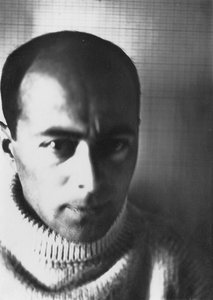
1890 - 1941 , Russland

Explore the radical world of Constructivism. Discover how pioneers like Tatlin and Rodchenko used geometric abstraction to redefine modern art through industrial form and social purpose. A deep dive into the Russian avant-garde for students and collectors alike.

Explore the profound impact of Minimalism and Geometric Abstraction. From Mondrian to Malevich, discover how stripping art to its essential forms revolutionized modern aesthetics through our expert-led historical guide.


Hold deg oppdatert med de siste kunstnyhetene, eksklusive tilbud og dekorasjonsideer.
Fortell oss om prosjektet ditt, så vil våre kunsteksperter gi deg 3 personlige kunstforslag.
Vi velger ut 3 alternativer kun for deg – helt gratis!


 Forhåndsvisning
 Send
Send Del med andre
 Vis detaljer

 Last ned bildet
 Liknende objekter
 Røntgenundersøkelse
 Lysbildefremvisning

 Vis hele teksten







 Glassalternativet er kun tilgjengelig i størrelser under 110 cm


