


x


Giclée- eller lerretsprint av museumskvalitet med rask produksjon og fleksible valgmuligheter for etterbehandling. ( Bytt til håndmalt maleri Bytt til bilde)





























Velg mellom våre forhåndsdefinerte størrelser som bevarer kunstverkets opprinnelige proporsjoner.

Du kan oppgi egne mål for å tilpasse en spesifikk ramme eller et bestemt område. Dersom den valgte størrelsen ikke samsvarer med det originale bildets proporsjoner, vil vi enten beskjære kunstverket eller utvide bildet med en speilet eller ensfarget kant. En digital mockup vil bli sendt til din godkjenning før produksjonen starter.
Vennligst merk at forhåndsvisningen på skjermen ikke gjenspeiler den faktiske beskjæringen eller utvidelsen. Kun mockuppen vil vise den endelige komposisjonen nøyaktig.
Selv om tilpassede størrelser er tilgjengelige, anbefaler vi å velge et mål fra den forhåndsdefinerte listen for å bevare de originale proporsjonene.
Verdensomspennende levering () på 2 uker i stedet for standard 4/5 uker. (30 July)


July 20th
Størrelse på reproduksjon
Fernando Botero’s “July 20th,” painted in 1984, isn't merely a depiction of two figures on a street; it’s a carefully constructed tableau brimming with quiet drama and subtle social commentary. The painting immediately arrests the eye with its monumental scale – a characteristic hallmark of Botero’s signature style, often referred to as “Boterismo.” Here, however, the exaggeration isn't purely for spectacle. Instead, it serves to amplify the emotional weight of the scene, drawing us into an intimate moment of interaction amidst the bustling backdrop of Medellín.
The composition is deceptively simple: a man in a fedora and sporting a baseball bat stands alongside a woman whose hand instinctively rises to her face. Their positioning – close but not touching – suggests a conversation held just short of revelation, a shared experience suspended in time. A few secondary figures populate the periphery, hinting at a larger urban life unfolding beyond this immediate exchange. The inclusion of a handbag and a small child adds layers of domesticity, grounding the scene within the everyday realities of Colombian society.
Botero's genius lies in his masterful manipulation of volume – a technique he honed during his early years observing the Baroque churches and vibrant street life of Medellín. “July 20th” exemplifies this perfectly. The figures are rendered with thick, almost sculptural brushstrokes, their forms ballooning outwards, creating an illusion of immense size and solidity. This deliberate distortion isn’t about literal representation; it's a conscious choice to emphasize the subjects’ presence and imbue them with a sense of weight and importance. Notice how the man’s bat seems to expand into a formidable weapon, while the woman’s gesture – a subtle shield against an unseen force – adds another layer of complexity.
Painted in 1984, “July 20th” reflects the social and political climate of Colombia at the time. The country was grappling with internal conflict and economic instability, and Botero’s work often engaged with themes of violence, inequality, and the complexities of Colombian identity. The painting can be interpreted as a meditation on human connection amidst societal pressures – a quiet moment of intimacy within a world marked by uncertainty. It's also worth noting that July 20th is Colombia's Independence Day, adding another layer of cultural significance to the scene.
The choice of Medellín as the setting is crucial. The city’s rich artistic heritage and its distinctive architectural style – characterized by ornate facades and a sense of grandeur – undoubtedly influenced Botero’s aesthetic sensibilities. “July 20th” captures this spirit, transporting us to a vibrant urban landscape where everyday life unfolds against a backdrop of historical and cultural richness.
Despite its seemingly simple composition, “July 20th” possesses a remarkable emotional depth. The ambiguity of the interaction between the two figures invites speculation – are they lovers? Friends? Strangers caught in a fleeting moment of connection? The painting’s power lies in its ability to evoke a sense of nostalgia and quiet contemplation. It's a reminder that even within the most chaotic of environments, moments of genuine human connection can emerge, offering a glimpse into the complexities of the human experience. The painting’s enduring appeal stems from its ability to resonate with viewers on a deeply personal level, prompting them to reflect on their own relationships and experiences.

1932 - 1959 , Colombia

Utforsk de 10 mest legendariske akrylmaleriene som revolusjonerte kunsten! Oppdag historiene bak Jackson Pollock, Mark Rothko og Andy Warhol. Finn inspirasjon til interiøret – kjøp museumskvalitets reproduksjoner på Most-Famous-Paintings.com.
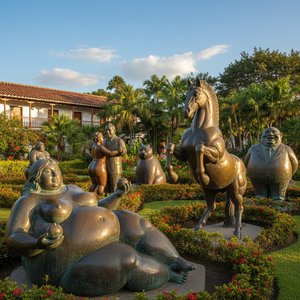
Explore the captivating world of Fernando Botero! Discover his iconic 'Boterismo' style, Colombian influences, investment potential & lasting legacy. Expert insights for art collectors.

Explore the vibrant world of Gene Davis and the Washington Color School. Discover his iconic stripe paintings, innovative techniques, and lasting impact on American abstract art. A deep dive for collectors & enthusiasts.

Løft kommersielle rom med skreddersydd kunst av høyeste kvalitet! Ekspertveiledning, sømløs produksjon og garantert verdiøkning. Finn den perfekte kunsten for ditt prosjekt – fra konsept til installasjon.

Utforsk 10 legendariske akrylmalerier som revolusjonerte kunsten! Fra Jackson Pollock til Mark Rothko – oppdag historiene, teknikkene og fargepalettene bak ikoniske verk. Finn museumskvalitets kunsttrykk på Most-Famous-Paintings.com.


Hold deg oppdatert med de siste kunstnyhetene, eksklusive tilbud og dekorasjonsideer.
Fortell oss om prosjektet ditt, så vil våre kunsteksperter gi deg 3 personlige kunstforslag.
Vi velger ut 3 alternativer kun for deg – helt gratis!


 Forhåndsvisning
 Send
Send Del med andre
 Vis detaljer

 Last ned bildet
 Liknende objekter
 Røntgenundersøkelse
 Lysbildefremvisning


 Vis hele teksten







 Glassalternativet er kun tilgjengelig i størrelser under 110 cm


