x

Håndmalt olje på lerret i din valgte størrelse og ramme, laget på bestilling av våre kunstnere. ( Kjøp trykk Kjøp bilde)





























Velg mellom våre forhåndsdefinerte størrelser som bevarer kunstverkets opprinnelige proporsjoner.

Du kan angi egne mål for å tilpasse en spesifikk ramme eller plass. Dersom den valgte størrelsen ikke samsvarer med originalbildets proporsjoner, vil vi enten beskjære kunstverket eller utvide maleriet med ytterligere håndmalte elementer. En digital mockup vil bli sendt til din godkjenning før produksjonen starter.
Vennligst merk at forhåndsvisningen på skjermen ikke gjenspeiler den faktiske beskjæringen eller utvidelsen. Kun mockuppen vil vise den endelige komposisjonen nøyaktig.
Selv om tilpassede størrelser er tilgjengelige, anbefaler vi å velge et mål fra den forhåndsdefinerte listen for å bevare de originale proporsjonene.
Verdensomspennende levering () på 3–4 uker i stedet for standard 5 uker. (17 August). Ingen kompromisser med kvaliteten.


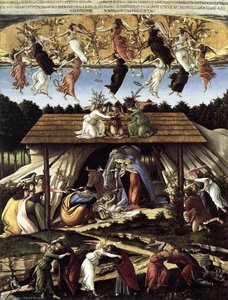
The Nativity
Størrelse på reproduksjon
Fra Bartolomeo’s “The Nativity,” painted around 1507, is more than simply a depiction of the biblical birth of Christ; it's a profound meditation on faith, humility, and the divine grace that permeates human experience. Created during a pivotal period in Florentine art – bridging the late Gothic and burgeoning Renaissance – this masterpiece embodies the artist’s unique synthesis of spiritual contemplation and masterful technique. The painting immediately draws the viewer into a scene brimming with serene beauty and quiet reverence, inviting reflection on the profound event at its heart.
The composition is carefully orchestrated to emphasize Mary's central role as the embodiment of maternal love and devotion. Kneeling before her, Joseph stands as a steadfast protector, while the infant Jesus, swaddled in white, occupies the immediate center – a beacon of hope and divine promise. Angels, rendered with an ethereal quality, surround the family, their gestures conveying both adoration and guardianship. Notice how Bartolomeo subtly integrates them into the architectural setting, creating a sense of layered depth and spiritual elevation. The use of perspective, though not entirely formalized as in later Renaissance works, establishes a clear spatial hierarchy, guiding the eye towards the focal point: Mary and the Christ Child.
Bartolomeo's style is immediately recognizable for its rich color palette and meticulous attention to detail. He employed tempera on panel, a technique favored by Florentine artists of his time, which allowed for luminous colors and subtle gradations of tone. The use of gold leaf – particularly in the halos surrounding the figures – adds an element of sacred splendor, elevating the scene beyond the earthly realm. The artist’s brushwork is remarkably smooth and controlled, creating a sense of tranquility and harmony. Observe how he masterfully renders the textures of fabric, wood, and skin, imbuing each element with a tangible quality.
Bartolomeo's training under Cosimo Rosselli profoundly influenced his approach to color and composition. Rosselli’s emphasis on atmospheric perspective – creating depth through subtle shifts in hue and value – is evident here, though Bartolomeo refines this technique with a more delicate touch. The background landscape, rendered in muted earth tones, provides a grounding element, anchoring the scene within a believable earthly setting while simultaneously suggesting an eternal backdrop.
“The Nativity” is replete with symbolic meaning. The donkey’s presence, often overlooked, represents humility and service – qualities essential to the narrative of Christ's birth. Mary’s posture, kneeling in prayer, symbolizes her submission to God’s will and her role as the Mother of God. The angels, traditionally associated with divine messengers, represent the intervention of grace into human affairs. Even the arrangement of the figures—the carefully considered placement of each hand, each gaze—contributes to the overall sense of spiritual significance.
Furthermore, Bartolomeo’s decision to depict the scene within a simple, almost austere setting underscores the painting's focus on faith and devotion rather than elaborate ornamentation. The lack of extraneous details directs the viewer’s attention solely to the central theme: the miraculous birth of Jesus Christ. The painting speaks not just of a historical event but of a timeless truth—the enduring power of love, humility, and divine grace.
“The Nativity” is considered one of Fra Bartolomeo’s most important works, exemplifying his unique artistic vision. It resides today in the collection of The Art Institute of Chicago, a testament to its enduring beauty and significance. Reproductions of this iconic painting continue to inspire awe and reverence, offering viewers a glimpse into the heart of Christian faith and the profound artistry of one of Renaissance Italy’s most gifted painters. Its quiet dignity and luminous colors make it an ideal choice for adorning homes and spaces dedicated to contemplation and spiritual reflection.


1472 - 1517 , Italia

Explore the profound history and symbolism of the world's greatest religious artworks. From Byzantine icons to Renaissance masters, journey through sacred iconography with our expert guide and discover museum-quality, hand-painted oil reproductions for your collection.

Explore the dramatic world of Italian Baroque art. Discover how masters like Caravaggio used chiaroscuro and tenebrism to revolutionize painting through light, shadow, and profound realism. A definitive guide for history lovers and art collectors.


Hold deg oppdatert med de siste kunstnyhetene, eksklusive tilbud og dekorasjonsideer.
Fortell oss om prosjektet ditt, så vil våre kunsteksperter gi deg 3 personlige kunstforslag.
Vi velger ut 3 alternativer kun for deg – helt gratis!


 Forhåndsvisning
 Send
Send Del med andre
 Vis detaljer

 Last ned bildet
 Liknende objekter
 Røntgenundersøkelse
 Lysbildefremvisning


 Vis hele teksten







 Glassalternativet er kun tilgjengelig i størrelser under 110 cm