


x

 Acrylic On CanvasWallArtExpressionist Abstraction
 1952
1952 66.0 x 56.0 cm
 Tate Britain
Kjøp et høyoppløselig, forbedret digitalt bilde som er langt bedre enn forhåndsvisningen på nettet.
Hver fil er omhyggelig klargjort av våre egne spesialister ved hjelp av avanserte verktøy og profesjonell manuell retusjering. Vi sørger for at hvert bilde har eksepsjonell klarhet, presis fargegjengivelse og fine detaljer.
Den endelige filen leveres via e-post innen 72 timer, optimalisert for umiddelbar bruk i profesjonelle, redaksjonelle og trykte miljøer. Dette er den samme kvaliteten som benyttes av ledende designstudioer, utgivere og gallerier.
Last ned en høyoppløselig fil for personlig bruk, utskrift og kreative prosjekter. ( Kjøp trykk Kjøp håndlaget maleri)
Når du velger Most-Famous-Paintings.com, får du ikke bare et bilde – du mottar et profesjonelt forbedret digitalt kunstverk, skapt med presisjon og med en garantert tilfredshetsgaranti. Her er alt som automatisk følger med din bestilling:

Din høyoppløselige digitale bildefil sendes til din e-post innen 72 timer etter bestilling – klar til umiddelbar bruk.

Ditt kunstverk blir profesjonelt optimalisert ved hjelp av avanserte AI-verktøy og manuell redigering, noe som sikrer maksimal detaljrikdom, klarhet og fargegjengivelse.

Har du ved et uhell slettet eller mistet filen din? Ingen bekymring – vi sender den på nytt når som helst, helt gratis.

Nyt ditt kunstverk umiddelbart uten toll, avgifter eller leveringskostnader – digitale nedlastinger er alltid avgiftsfrie.

Vi sikrer at ditt digitale bilde gjenspeiler de originale fargene så nøyaktig som mulig ved hjelp av profesjonelle verktøy og fargehåndtering.

Hvis du ikke er fornøyd med ditt digitale bilde, vil vi revidere det eller refundere 100% innen 60 dager – uten spørsmål.

Ikke fornøyd? Få full refusjon innen 60 dager etter at du har mottatt din digitale fil – uten spørsmål.

Kjøp 3 bilder, spar 10% - Kjøp 5, spar 15% - Kjøp 10+, spar 20%. Ideelt for kreative prosjekter, gallerier og byråer.
Francis Bacon's "Study for a Portrait," painted in 1952, isn’t merely a depiction of a man; it’s an excavation of the human psyche grappling with trauma and isolation. This intimate yet unsettling work, measuring just 66 x 56 cm, immediately draws the viewer into a space thick with unspoken anxieties – a testament to Bacon's profound ability to translate inner turmoil onto canvas. The painting captures a figure caught in a moment of intense, perhaps agonized, expression; his mouth agape, suggesting a scream trapped within, or a desperate plea lost in the void. The glasses and tie, seemingly mundane details, become symbols of an attempt at composure, a fragile facade struggling against the overwhelming force of emotion.
Understanding “Study for a Portrait” requires acknowledging the formative experiences that shaped Francis Bacon’s artistic vision. Born in Dublin in 1909, his childhood was marked by instability and emotional distance. Frequent moves due to his mother’s illness instilled a deep-seated sense of displacement – a feeling he would repeatedly explore throughout his career. His complex relationship with his father, coupled with the nurturing presence of his nanny, Jessie Lightfoot, further contributed to a landscape of unresolved emotions. It's crucial to note that Bacon didn’t begin painting until his late twenties, a delay that arguably intensified the urgency and raw power of his later works. This unconventional start fueled a relentless pursuit of expressing the unspoken anxieties simmering beneath the surface of human experience.
Bacon's technique is instantly recognizable – a deliberate distortion of form, a fragmentation of the figure that reflects its psychological state. He achieved this through layers of thin paint applied with rapid brushstrokes, creating a sense of movement and instability. The figures aren’t rendered realistically; instead, they are fractured, elongated, and often contorted into grotesque shapes. This stylistic choice isn't about ugliness, but rather about conveying the subjective experience of trauma – the feeling of being broken, fragmented, and utterly overwhelmed. The use of a palette knife adds to this textural intensity, creating a surface that feels both vulnerable and powerfully charged.
“Study for a Portrait” is laden with symbolic weight. The open mouth isn’t simply an expression of shouting; it represents a desperate attempt to release pent-up emotions, a futile cry for help. The glasses could symbolize a desire to see clearly through the fog of pain and confusion, while the tie suggests an adherence to societal expectations – a performance of normalcy that masks profound inner turmoil. Ultimately, the painting speaks to the universal experience of isolation, anxiety, and the struggle to maintain composure in the face of overwhelming adversity. It’s a hauntingly beautiful depiction of vulnerability, inviting viewers to confront their own anxieties and contemplate the hidden depths of the human condition.

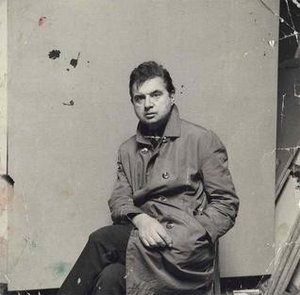
1909 - 1992 , Irland


Hold deg oppdatert med de siste kunstnyhetene, eksklusive tilbud og dekorasjonsideer.
Fortell oss om prosjektet ditt, så vil våre kunsteksperter gi deg 3 personlige kunstforslag.
Vi velger ut 3 alternativer kun for deg – helt gratis!


 Forhåndsvisning
 Send
Send Del med andre
 Vis detaljer

 Last ned bildet
 Liknende objekter
 Røntgenundersøkelse
 Lysbildefremvisning
 Vis hele teksten


