


x

Håndmalt olje på lerret i din valgte størrelse og ramme, laget på bestilling av våre kunstnere. ( Kjøp trykk Kjøp bilde)





























Velg mellom våre forhåndsdefinerte størrelser som bevarer kunstverkets opprinnelige proporsjoner.

Du kan angi egne mål for å tilpasse en spesifikk ramme eller plass. Dersom den valgte størrelsen ikke samsvarer med originalbildets proporsjoner, vil vi enten beskjære kunstverket eller utvide maleriet med ytterligere håndmalte elementer. En digital mockup vil bli sendt til din godkjenning før produksjonen starter.
Vennligst merk at forhåndsvisningen på skjermen ikke gjenspeiler den faktiske beskjæringen eller utvidelsen. Kun mockuppen vil vise den endelige komposisjonen nøyaktig.
Selv om tilpassede størrelser er tilgjengelige, anbefaler vi å velge et mål fra den forhåndsdefinerte listen for å bevare de originale proporsjonene.
Verdensomspennende levering () på 3–4 uker i stedet for standard 5 uker. (21 August). Ingen kompromisser med kvaliteten.


The colored
Størrelse på reproduksjon
František Kupka's "The Colored," painted in 1920, isn’t merely a depiction of a nude figure; it’s an invitation into the nascent world of abstract expressionism. Born in Opočno, Bohemia, in 1871, Kupka embarked on a remarkable artistic journey, initially trained in traditional academic styles before deliberately dismantling them to forge his own unique path. This painting represents a pivotal moment in that evolution – a bold departure from the representational work of his earlier “Planes by Colors, Large Nude,” signaling a deliberate embrace of pure form and color as vehicles for conveying emotion and spiritual experience. “The Colored” is more than just an image; it’s a distillation of Kupka's lifelong fascination with the interconnectedness of humanity, nature, and the cosmos – a theme that would permeate much of his subsequent work.
The central subject of “The Colored” is undeniably female, yet her form is deliberately ambiguous. She lies supine on her back, her limbs extended upwards, creating a sense of both vulnerability and poised strength. Her head is bowed, suggesting introspection or perhaps even a gentle fall – an image that invites the viewer to project their own emotions and interpretations onto the scene. However, Kupka resists literal representation; the figure isn’t fully defined, existing instead as a collection of flowing lines and subtly shifting planes. This deliberate ambiguity allows for multiple readings, mirroring the complex interplay between the physical and spiritual realms that Kupka sought to explore. The radiant yellow sun cradled within her embrace is not simply a source of light but a potent symbol – representing enlightenment, divinity, or perhaps even the very essence of life itself.
Kupka’s masterful use of color elevates “The Colored” beyond mere figuration. The palette is dominated by vibrant hues—a luminous yellow that pulsates with energy, contrasted against deep blues and rich reds. These aren't colors used to mimic reality; they are employed as pure expressive elements, each hue carrying its own emotional weight. The interplay between these colors creates a dynamic visual experience, suggesting movement, rhythm, and an underlying sense of harmony. Kupka’s approach aligns with the principles of Orphism, a movement he significantly influenced, where color was considered a primary language, capable of conveying emotions and spiritual truths independent of representational content. The careful balance and juxtaposition of these colors are key to understanding the painting's overall mood – a blend of serenity and dynamism.
“The Colored” stands as a crucial bridge between traditional art and the burgeoning abstract movements of the early 20th century. While predating the fully realized abstractions of artists like Mondrian, it demonstrates Kupka's pioneering spirit in exploring non-objective forms. His work anticipated key developments in both Orphism and Abstract Expressionism, demonstrating an intuitive understanding of how color and form could be used to evoke profound emotional responses. Kupka’s influence extends beyond purely visual aesthetics; his exploration of the relationship between music and painting – a concept he articulated in his 1913 book “Creation in the Plastic Arts” – foreshadowed later developments in synesthesia and interdisciplinary art practices. Reproductions of this piece offer a unique opportunity to appreciate Kupka’s visionary approach and its enduring relevance within the history of modern art.
Size: 65 x 54 cm
Date: 1920


1871 - 1957 , Tsjekkia
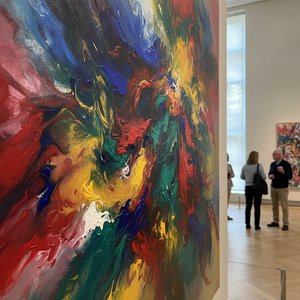
Explore the profound emotional depth of Lyrical Abstraction. Discover how masters like Raymond Parker used color and form to bridge Impressionism and Abstract Expressionism. Learn about this pivotal movement through our expert-led art history guide.

Explore the revolutionary world of Cubism. Discover how masters Pablo Picasso and Georges Braque dismantled reality through geometric abstraction to redefine modern art history.

Explore the profound emotional depth of Color Field painting. Discover the history of mid-century abstraction, from Rothko to Newman, and learn how pure color transforms the viewer's experience through our expert art history guide.


Hold deg oppdatert med de siste kunstnyhetene, eksklusive tilbud og dekorasjonsideer.
Fortell oss om prosjektet ditt, så vil våre kunsteksperter gi deg 3 personlige kunstforslag.
Vi velger ut 3 alternativer kun for deg – helt gratis!


 Forhåndsvisning
 Send
Send Del med andre
 Vis detaljer

 Last ned bildet
 Liknende objekter
 Røntgenundersøkelse
 Lysbildefremvisning


 Vis hele teksten







 Glassalternativet er kun tilgjengelig i størrelser under 110 cm


