


x
 Oil On CanvasWallArtFuturism and Expression
 1917Modern
 47.0 x 68.0 cm
Kjøp et høyoppløselig, forbedret digitalt bilde som er langt bedre enn forhåndsvisningen på nettet.
Hver fil er omhyggelig klargjort av våre egne spesialister ved hjelp av avanserte verktøy og profesjonell manuell retusjering. Vi sørger for at hvert bilde har eksepsjonell klarhet, presis fargegjengivelse og fine detaljer.
Den endelige filen leveres via e-post innen 72 timer, optimalisert for umiddelbar bruk i profesjonelle, redaksjonelle og trykte miljøer. Dette er den samme kvaliteten som benyttes av ledende designstudioer, utgivere og gallerier.
Last ned en høyoppløselig fil for personlig bruk, utskrift og kreative prosjekter. ( Kjøp trykk Kjøp håndlaget maleri)
Når du velger Most-Famous-Paintings.com, får du ikke bare et bilde – du mottar et profesjonelt forbedret digitalt kunstverk, skapt med presisjon og med en garantert tilfredshetsgaranti. Her er alt som automatisk følger med din bestilling:

Din høyoppløselige digitale bildefil sendes til din e-post innen 72 timer etter bestilling – klar til umiddelbar bruk.

Ditt kunstverk blir profesjonelt optimalisert ved hjelp av avanserte AI-verktøy og manuell redigering, noe som sikrer maksimal detaljrikdom, klarhet og fargegjengivelse.

Har du ved et uhell slettet eller mistet filen din? Ingen bekymring – vi sender den på nytt når som helst, helt gratis.

Nyt ditt kunstverk umiddelbart uten toll, avgifter eller leveringskostnader – digitale nedlastinger er alltid avgiftsfrie.

Vi sikrer at ditt digitale bilde gjenspeiler de originale fargene så nøyaktig som mulig ved hjelp av profesjonelle verktøy og fargehåndtering.

Hvis du ikke er fornøyd med ditt digitale bilde, vil vi revidere det eller refundere 100% innen 60 dager – uten spørsmål.

Ikke fornøyd? Få full refusjon innen 60 dager etter at du har mottatt din digitale fil – uten spørsmål.

Kjøp 3 bilder, spar 10% - Kjøp 5, spar 15% - Kjøp 10+, spar 20%. Ideelt for kreative prosjekter, gallerier og byråer.
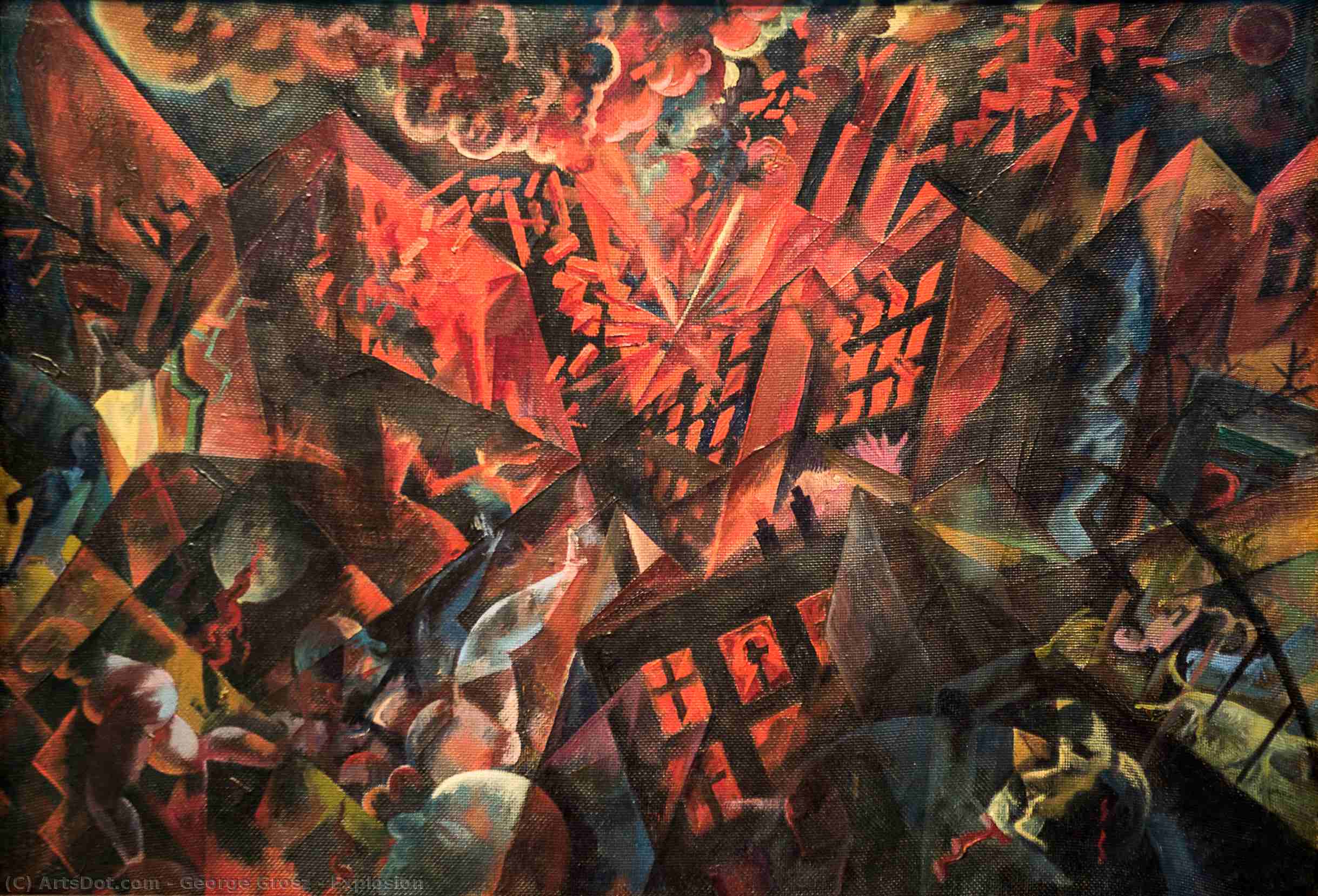
George Grosz’s “Explosion,” painted in 1917, isn’t merely a depiction of war; it’s a visceral scream against the very foundations of society. Born from the artist’s disillusionment following his discharge from the German army due to mental health struggles – a direct consequence of witnessing the horrors of World War I – this work embodies the chaotic disintegration of both physical landscapes and moral values. Grosz, a key figure in the Dada movement and a master of Expressionism, utilizes the burgeoning principles of Futurism to create an image that remains profoundly unsettling and remarkably relevant today. The painting’s immediate impact is one of overwhelming devastation: collapsing high-rise buildings, rendered in furious reds and oranges, seem to pinwheel around a central vortex of black, sucking in shattered windows and billowing smoke – a tangible representation of the war's indiscriminate destruction. It’s a scene that demands attention, forcing the viewer to confront the brutal reality of conflict.
To fully appreciate "Explosion," one must understand its historical context. Painted in 1917, a pivotal year marked by the height of World War I, the artwork reflects the widespread disillusionment and anti-war sentiment that fueled the rise of Dadaism. Grosz’s work aligns with this movement's rejection of traditional artistic values and embrace of irrationality and absurdity as responses to the perceived madness of the era. His earlier training in meticulous Dutch master copies – particularly those of Eduard von Grützner – provided him with a strong technical foundation, which he then deliberately subverted, using his skill to amplify the emotional impact of his subject matter. The painting’s genesis is inextricably linked to Grosz's personal trauma and his profound critique of the militaristic society that produced such devastation.
The fiery background, a dominant feature of “Explosion,” isn’t simply an aesthetic choice; it’s a deliberate symbol of intense heat and destruction. The swirling clouds and streaks of light suggest not just explosions but also the psychological turmoil experienced by those caught in the war's grip. The angular forms of the collapsing buildings – reminiscent of Cubist influences – further contribute to the painting’s sense of fragmentation and disorientation. Grosz masterfully employs contrast, juxtaposing the fiery foreground with cooler blues and greens in the background, intensifying the overall feeling of chaos and amplifying the emotional impact.
"Explosion" remains a powerful testament to George Grosz’s artistic vision and his unwavering commitment to social commentary. Its influence can be seen in contemporary artists who continue to grapple with themes of war, destruction, and societal decay. The Museum of Modern Art (MoMA) recognizes this significance, holding “Explosion” within its collection as a cornerstone of modern art history. This reproduction offers an exceptional opportunity to own a piece of this pivotal artwork, allowing you to experience the raw emotion and intellectual depth that define Grosz’s legacy.


1893 - 1959 , Tyskland


Hold deg oppdatert med de siste kunstnyhetene, eksklusive tilbud og dekorasjonsideer.
Fortell oss om prosjektet ditt, så vil våre kunsteksperter gi deg 3 personlige kunstforslag.
Vi velger ut 3 alternativer kun for deg – helt gratis!


 Forhåndsvisning
 Send
Send Del med andre
 Vis detaljer

 Last ned bildet
 Liknende objekter
 Røntgenundersøkelse
 Lysbildefremvisning
 Vis hele teksten


