x

 Acrylic On CanvasWallArtNeoclassical Portraiture
 1782
1782 75.0 x 62.0 cm
 The Frick Collection
Giclée- eller lerretsprint av museumskvalitet med rask produksjon og fleksible valgmuligheter for etterbehandling. ( Kjøp håndlaget maleri Kjøp bilde)





























Velg mellom våre forhåndsdefinerte størrelser som bevarer kunstverkets opprinnelige proporsjoner.

Du kan oppgi egne mål for å tilpasse en spesifikk ramme eller et bestemt område. Dersom den valgte størrelsen ikke samsvarer med det originale bildets proporsjoner, vil vi enten beskjære kunstverket eller utvide bildet med en speilet eller ensfarget kant. En digital mockup vil bli sendt til din godkjenning før produksjonen starter.
Vennligst merk at forhåndsvisningen på skjermen ikke gjenspeiler den faktiske beskjæringen eller utvidelsen. Kun mockuppen vil vise den endelige komposisjonen nøyaktig.
Selv om tilpassede størrelser er tilgjengelige, anbefaler vi å velge et mål fra den forhåndsdefinerte listen for å bevare de originale proporsjonene.
Verdensomspennende levering () på 2 uker i stedet for standard 4/5 uker. (16 August)


Lady Hamilton as
Størrelse på reproduksjon
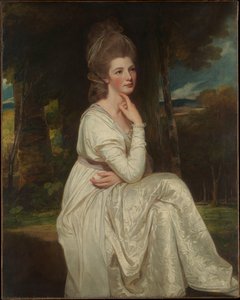
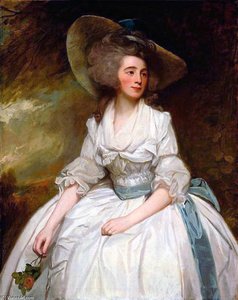
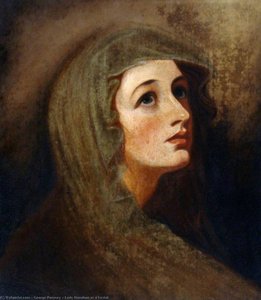
George Romney’s “Lady Hamilton as Circe,” painted in 1792, is more than just a portrait; it's an exquisitely crafted tableau vivant—a frozen moment brimming with narrative and psychological depth. This captivating work, now housed within the collections of the Frick Collection, offers a glimpse into the life of Emma Hart, later Lady Hamilton, a woman whose beauty, ambition, and scandalous affair with Lord Nelson captivated Regency England. Romney’s masterful handling of light, texture, and gesture transforms a simple sitting arrangement into a richly layered scene, inviting viewers to contemplate the complexities of her character.
The painting depicts Emma seated in an opulent chaise lounge, a small dog nestled at her feet—a deliberate reference to Homer's *Odyssey*, where Circe, the sorceress queen of the island of Aeaea, is often accompanied by her faithful hound. Romney’s choice of subject matter immediately establishes this allegorical framework, suggesting that Emma, like the mythical Circe, possesses a potent and alluring power. Her pose—relaxed yet alert, hand gently resting on the dog's head—conveys an air of quiet confidence and subtle command. The rich crimson velvet of her dress, contrasted against the muted tones of the background, draws immediate attention to her figure, emphasizing her beauty and drawing the eye into her gaze.
Romney’s technique is characterized by its remarkable realism and sensitivity. He eschewed the overly polished surfaces favored by some of his contemporaries, opting instead for a looser, more expressive brushstroke that captures the nuances of Emma's features—the delicate curve of her lips, the subtle play of light on her skin, the intelligent sparkle in her eyes. Note particularly how Romney renders the texture of the velvet fabric and the fur of the dog, demonstrating his meticulous attention to detail. The use of sfumato, a technique borrowed from Leonardo da Vinci, creates an atmospheric haze around Emma’s figure, softening the edges and lending the scene a dreamlike quality.
The background is deliberately ambiguous, suggesting a lavish interior—likely a room within Sir William Hamilton's residence in Naples. The presence of a partially visible clock and a glimpse of a tree hint at the passage of time and the exotic setting of Emma’s life. However, Romney skillfully avoids providing any specific details, allowing the viewer to project their own interpretations onto the scene. This deliberate vagueness contributes to the painting's enduring mystique, prompting us to consider not just what we see but also what lies beneath the surface.
Beyond its aesthetic qualities, “Lady Hamilton as Circe” is laden with symbolic meaning. The reference to Circe—a sorceress known for her ability to transform men into animals—underscores Emma’s own transformative power and her capacity to exert influence over those around her. Her affair with Lord Nelson was a closely guarded secret, fraught with social scandal and political intrigue. Romney's painting captures this duality—Emma as both a captivating beauty and a woman entangled in a dangerous game of desire and ambition.
The inclusion of the dog is particularly significant. In Greek mythology, dogs were often associated with loyalty, fidelity, and protection. Here, it serves as a visual reminder of Emma’s unwavering devotion to Sir William Hamilton, despite his infidelity. It also subtly hints at her own vulnerability—a loyal companion in a world of shifting alliances and treacherous relationships.
“Lady Hamilton as Circe” remains one of Romney's most celebrated works, admired for its exquisite beauty, psychological insight, and masterful technique. It offers a compelling portrait of a remarkable woman—a dancer, actress, mistress, and ultimately, a figure of enduring fascination. Reproductions of this painting continue to captivate art lovers and collectors alike, offering a window into the glamorous and scandalous world of Regency England. Its timeless appeal lies in its ability to evoke both admiration and intrigue, prompting us to contemplate the complexities of human desire, ambition, and the power of image.


1734 - 1802 , Storbritannia
Utforsk Georges Braques 25 mest ikoniske verk! Fordyp deg i kubismens verden, fargepaletter og kunstnerisk nyskapning. Finn inspirasjon til din bolig med museumskvalitets reproduksjoner på Most-Famous-Paintings.com.
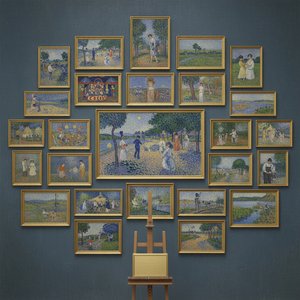
Utforsk Georges Seurats 25 mest ikoniske malerier! Oppdag historien bak punktillismen, impresjonismen og mesterverk som 'Et søndagsettermiddag på La Grande Jatte'. Finn kunsttrykk av høy kvalitet for ditt hjem på Most-Famous-Paintings.com.

Explore the life & art of George Romney, leading portraitist of Georgian England. Discover his style, famous patrons like Emma Hamilton, and legacy in British society. Expert insights for collectors.

Explore the refined world of Neoclassical portraiture. Discover the mastery of line, light, and order through an expert exploration of academic art history, from Jacques-Louis David to Jean-Antoine Houdon. Immerse yourself in the timeless elegance of classical realism.

Utforsk neoklassismens 10 mest ikoniske malerier! Oppdag historiene bak David, Ingres og Canova – mestere av klassisk kunst. Finn inspirasjon til interiørdesign & kjøp reproduksjoner på Most-Famous-Paintings.com.


Hold deg oppdatert med de siste kunstnyhetene, eksklusive tilbud og dekorasjonsideer.
Fortell oss om prosjektet ditt, så vil våre kunsteksperter gi deg 3 personlige kunstforslag.
Vi velger ut 3 alternativer kun for deg – helt gratis!


 Forhåndsvisning
 Send
Send Del med andre
 Vis detaljer

 Last ned bildet
 Liknende objekter
 Røntgenundersøkelse
 Lysbildefremvisning
 Vis hele teksten







 Glassalternativet er kun tilgjengelig i størrelser under 110 cm