x

 Olje på lerretVeggkunstRenaissance Mannerist
 1563Renessansen
 84.0 x 57.0 cm
 Kunsthistorisches Museum
Giclée- eller lerretsprint av museumskvalitet med rask produksjon og fleksible valgmuligheter for etterbehandling. ( Kjøp håndlaget maleri Kjøp bilde)





























Velg mellom våre forhåndsdefinerte størrelser som bevarer kunstverkets opprinnelige proporsjoner.

Du kan oppgi egne mål for å tilpasse en spesifikk ramme eller et bestemt område. Dersom den valgte størrelsen ikke samsvarer med det originale bildets proporsjoner, vil vi enten beskjære kunstverket eller utvide bildet med en speilet eller ensfarget kant. En digital mockup vil bli sendt til din godkjenning før produksjonen starter.
Vennligst merk at forhåndsvisningen på skjermen ikke gjenspeiler den faktiske beskjæringen eller utvidelsen. Kun mockuppen vil vise den endelige komposisjonen nøyaktig.
Selv om tilpassede størrelser er tilgjengelige, anbefaler vi å velge et mål fra den forhåndsdefinerte listen for å bevare de originale proporsjonene.
Verdensomspennende levering () på 2 uker i stedet for standard 4/5 uker. (15 August)


Sommer 1
Størrelse på reproduksjon
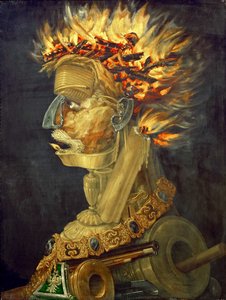
Giuseppe Arcimboldo's "Summer 1," painted in 1563, isn’t merely a portrait; it’s an immersive experience. This remarkable artwork, housed within the Most-Famous-Paintings collection, transcends traditional boundaries of representation, inviting us into a world where the familiar rules of painting dissolve and nature itself becomes the subject. Arcimboldo, a master of the Mannerist style, crafted this piece as part of his celebrated “The Four Seasons” series for the Habsburg court in Vienna and Prague – a testament to his innovative approach and keen understanding of allegorical symbolism. The image is not simply *seen*; it’s felt—a vibrant tapestry woven from the bounty of summer itself.
At first glance, "Summer 1" presents a human face and neck, meticulously constructed from an astonishing array of fruits, vegetables, flowers, and grains. The composition is strikingly dynamic; the head tilts slightly to one side, drawing our eye across the canvas in a continuous dance of discovery. But this isn’t a chaotic jumble. Arcimboldo's hand demonstrates incredible control, arranging each element with deliberate precision. The rough textures of the produce – the prickly skin of pears, the velvety petals of roses, the bristly stalks of wheat – are rendered with astonishing realism, contrasting beautifully against the smoother surfaces of the human form. The deep greens of leafy vines and herbs intertwine with the vibrant reds of cherries and plums, creating a rich, almost intoxicating color palette that immediately captures the eye.
Arcimboldo’s technique is a marvel of observation and manipulation. He wasn't simply gluing objects onto a surface; he was painstakingly building an entire figure from them. The meticulous detail, achieved through layers of oil paint, allows each element to retain its individual character while contributing to the overall composition. Notice how he captures the subtle variations in color and texture – the sheen on a ripe apple, the delicate veins in a leaf, the rough bark of a branch. This level of realism is what elevates "Summer 1" beyond mere decoration; it’s a profound meditation on the beauty and transience of nature.
The inclusion of both ripe and decaying produce carries significant symbolic weight. Arcimboldo, working within the Renaissance worldview, understood that life is cyclical – a constant interplay between growth and decay, abundance and scarcity. The presence of rotting fruit serves as a poignant reminder of mortality, while the vibrant, flourishing elements celebrate the vitality of summer. This duality reflects the broader themes explored in “The Four Seasons” series: the interconnectedness of all things and the fleeting nature of time.
"Summer 1" is deeply rooted in the intellectual currents of the Renaissance, particularly the influence of Neo-Platonism. This philosophical movement sought to reconcile classical thought with Christian theology, emphasizing the harmony between the material world and the divine. Arcimboldo's use of natural objects as representations of human form can be interpreted as a visual metaphor for this reconciliation – suggesting that humanity is, in essence, part of nature itself. His work was highly valued by Emperor Rudolf II, who recognized Arcimboldo’s genius and commissioned numerous portraits and decorative pieces.
Arcimboldo's legacy extends far beyond his time. His innovative approach to portraiture continues to inspire artists today, and his works are celebrated for their visual richness, symbolic depth, and emotional resonance. A reproduction of "Summer 1" from Most-Famous-Paintings offers a unique opportunity to bring this extraordinary artwork into your home or office – a captivating conversation piece that speaks volumes about the beauty, complexity, and enduring power of art.
To explore more about Giuseppe Arcimboldo’s life and work, visit this page. For further research, you can also consult Wikipedia's entry on Arcimboldo.


1527 - 1593 , Italia

Explore the rich history of still life painting & the symbolism of fruit across art movements. Discover masterpieces from Caravaggio to Cézanne with Most-Famous-Paintings – expert guidance & museum-quality reproductions.

Explore the rich history of still life painting with Most-Famous-Paintings. Discover Dutch Masters, decode vanitas symbolism & learn about collecting timeless art. Expert insights and museum-quality reproductions.

Explore the rich history & symbolism of still life painting with Most-Famous-Paintings. Discover masterpieces from the Dutch Golden Age, learn about vanitas art, and find expert guidance for collecting timeless artworks.
Oppdag René Magrittes 25 mest ikoniske surrealistiske malerier! Lær historien bak mesterverkene, fargepalettene og teknikken. Finn kunsttrykk av høy kvalitet for ditt hjem på Most-Famous-Paintings.com – museumskvalitet & inspirasjon.

Explore the profound beauty of fruit arrangement masterpieces. From Dutch Golden Age opulence to Baroque chiaroscuro, discover the art history, symbolism, and timeless elegance of classical still life paintings for the discerning collector.


Hold deg oppdatert med de siste kunstnyhetene, eksklusive tilbud og dekorasjonsideer.
Fortell oss om prosjektet ditt, så vil våre kunsteksperter gi deg 3 personlige kunstforslag.
Vi velger ut 3 alternativer kun for deg – helt gratis!


 Forhåndsvisning
 Send
Send Del med andre
 Vis detaljer

 Last ned bildet
 Liknende objekter
 Røntgenundersøkelse
 Lysbildefremvisning
 Vis hele teksten







 Glassalternativet er kun tilgjengelig i størrelser under 110 cm