


x

 Olje på lerretVeggkunstFauvist Color Theory
 Moderne
 72.0 x 60.0 cm
Giclée- eller lerretsprint av museumskvalitet med rask produksjon og fleksible valgmuligheter for etterbehandling. ( Kjøp håndlaget maleri Kjøp bilde)





























Velg mellom våre forhåndsdefinerte størrelser som bevarer kunstverkets opprinnelige proporsjoner.

Du kan oppgi egne mål for å tilpasse en spesifikk ramme eller et bestemt område. Dersom den valgte størrelsen ikke samsvarer med det originale bildets proporsjoner, vil vi enten beskjære kunstverket eller utvide bildet med en speilet eller ensfarget kant. En digital mockup vil bli sendt til din godkjenning før produksjonen starter.
Vennligst merk at forhåndsvisningen på skjermen ikke gjenspeiler den faktiske beskjæringen eller utvidelsen. Kun mockuppen vil vise den endelige komposisjonen nøyaktig.
Selv om tilpassede størrelser er tilgjengelige, anbefaler vi å velge et mål fra den forhåndsdefinerte listen for å bevare de originale proporsjonene.
Verdensomspennende levering () på 2 uker i stedet for standard 4/5 uker. (23 August)


Nu au coussin bleu
Størrelse på reproduksjon
Henri Matisse’s *Nu au coussin bleu* (1924) isn't merely a depiction of a reclining nude; it’s an invitation to step into a carefully constructed world—a sanctuary painted with the audacious palette and revolutionary spirit that defined Matisse’s later career. Part of the esteemed Brody collection, this oil on canvas transcends simple representation, becoming instead a profound exploration of color theory, tranquility, and subtle narrative depth. The painting immediately captivates with its vibrant yet harmonious blend of blues, pinks, ochres, and creams—a symphony designed to evoke feelings of calm, introspection, and a gentle yearning for escape. It’s a testament to Matisse's belief that color itself could be a powerful language, capable of conveying emotion and atmosphere far beyond the limitations of realistic depiction.
At the heart of the composition sits a woman seated comfortably on a chair, her posture relaxed yet imbued with an undeniable sense of dignity. Her hands gently cradle her head, suggesting a moment of quiet contemplation—a retreat from the external world into a private realm of thought and feeling. The blue cushion beneath her isn’t just a decorative element; it functions as a crucial anchor for the scene, grounding the composition and contributing significantly to the overall atmosphere of serenity. Beyond her, two figures – partially obscured in the background – add layers of intrigue, hinting at a subtle narrative unfolding within this intimate space. These secondary forms aren't rendered with meticulous detail, but rather suggested through delicate washes of color, drawing the viewer’s eye back to the central figure and fostering a sense of mystery—a deliberate choice that encourages us to focus on the emotional core of the painting.
Matisse's genius lies not just in his subject matter, but fundamentally in his revolutionary approach to color. He deliberately abandoned traditional rules of perspective and proportion, prioritizing instead the emotional impact of hue. *Nu au coussin bleu* exemplifies this brilliantly. The bold blues aren’t simply descriptive; they evoke feelings of calmness, introspection, and perhaps even a touch of melancholy. The pinks introduce warmth and softness, while the ochres ground the scene with an earthy resonance. This deliberate manipulation of color isn't arbitrary; it’s a carefully considered orchestration designed to elicit a specific emotional response from the viewer—a key characteristic of Fauvist painting. Matisse wasn’t interested in mimicking reality; he sought to express his inner world through the language of color, creating an experience for the eye that was both visually stunning and emotionally resonant.
Furthermore, Matisse's brushwork is remarkably fluid and energetic. Notice how the strokes aren’t precise or controlled but rather loose and expressive, mirroring the feeling of movement and life within the scene. This technique—the visible layering of colors and the dynamic application of paint—contributes significantly to the painting’s tactile quality, inviting us to almost *feel* the softness of the cushion and the warmth of the light. The interplay of these elements creates a sense of immediacy and vitality that contrasts sharply with the static quality often associated with traditional portraiture. It's as if Matisse is capturing not just an image, but a fleeting moment of feeling—a whisper of serenity in a world often filled with chaos.
While seemingly a simple depiction of a nude figure, *Nu au coussin bleu* is rich in symbolic potential. The pose itself – the woman’s hands gently covering her head – suggests a retreat from the outside world, a moment of quiet contemplation and self-reflection. The blue cushion, a recurring motif in Matisse's work, represents comfort, security, and perhaps even a yearning for escape—a visual shorthand for the artist’s own desire to create a sanctuary, both on canvas and in life. It speaks to a fundamental human need for solace and connection with something larger than oneself.
Henri Matisse was celebrated throughout his career for his innovative approach to color and form. His works often blend elements of modernism with a deep understanding of traditional techniques, making him one of the most influential artists of the 20th century. This painting showcases Matisse’s ability to capture the essence of his subjects through simple yet powerful compositions. The use of blue in the cushion and the subtle play of light on the figures' skin demonstrate his mastery over color and texture. The Baltimore Museum of Art, among other institutions, proudly displays this work as a testament to Matisse’s enduring legacy. For those seeking to bring the beauty and tranquility of *Nu au coussin bleu* into their homes, Most-Famous-Paintings offers meticulously crafted hand-painted reproductions that faithfully capture the original's vibrant colors and expressive energy—allowing you to experience the serenity of Matisse’s sanctuary in your own space.
To truly appreciate *Nu au coussin bleu*, it’s worthwhile to delve deeper into the artist’s broader body of work. Consider alongside this painting, his dynamic *Spanish Still Life (Seville II)*, which showcases his mastery of color and composition, or *Harmony in Red (La desserte)*, a vibrant exploration of form and pattern. And for a glimpse into Matisse's interior world, *Interior with Black Fern* offers a similarly intimate and evocative experience. These works, along with many others, reveal the breadth and depth of Matisse’s artistic vision—a vision that continues to inspire artists and art lovers alike.


1869 - 1954 , Frankrike
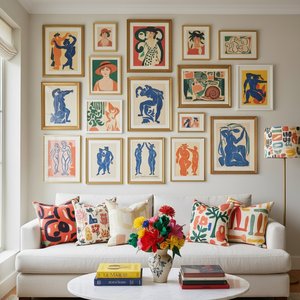
Utforsk 25 ikoniske malerier av Henri Matisse! Oppdag historien bak fauvismens fargerike mesterverk, fra 'The Dance' til 'Red Studio'. Finn kunsttrykk og reproduksjoner i museumskvalitet for din interiørdesign på Most-Famous-Paintings.com.

Oppdag fauvismens 10 mest ikoniske malerier! Lær historien bak Matisse, Derain og andre ekspresjonistiske mestere. Finn kunsttrykk av høy kvalitet & inspirasjon til ditt hjem på Most-Famous-Paintings.com.
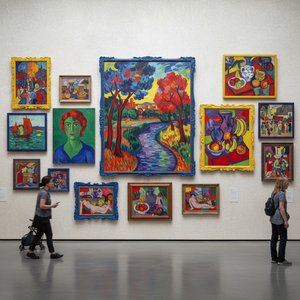
Opplev fauvismens revolusjonerende farger! Utforsk 10 mesterverk av Matisse, Derain og andre. Lær om historien bak disse ikoniske maleriene og finn din perfekte kunst til hjemmet på Most-Famous-Paintings.com – museumskvalitet reproduksjoner & inspirasjon.

Oppdag de 10 mest ikoniske malerier dominert av slåttegrå – fra Monet til Van Gogh. Lær om kunsthistorien, fargetoner og teknikker bak disse mesterverkene. Finn din perfekte veggkunst og interiørinspirasjon på Most-Famous-Paintings.com! Utforsk samlingen online.

Explore the rich history of blue in art! Discover its symbolism, from ancient pigments to modern masterpieces by Kandinsky & Seurat. Uncover the psychological impact and cultural meanings behind this captivating hue.


Hold deg oppdatert med de siste kunstnyhetene, eksklusive tilbud og dekorasjonsideer.
Fortell oss om prosjektet ditt, så vil våre kunsteksperter gi deg 3 personlige kunstforslag.
Vi velger ut 3 alternativer kun for deg – helt gratis!


 Forhåndsvisning
 Send
Send Del med andre
 Vis detaljer

 Last ned bildet
 Liknende objekter
 Røntgenundersøkelse
 Lysbildefremvisning
 Vis hele teksten







 Glassalternativet er kun tilgjengelig i størrelser under 110 cm


