x

Giclée- eller lerretsprint av museumskvalitet med rask produksjon og fleksible valgmuligheter for etterbehandling. ( Kjøp håndlaget maleri Kjøp bilde)





























Velg mellom våre forhåndsdefinerte størrelser som bevarer kunstverkets opprinnelige proporsjoner.

Du kan oppgi egne mål for å tilpasse en spesifikk ramme eller et bestemt område. Dersom den valgte størrelsen ikke samsvarer med det originale bildets proporsjoner, vil vi enten beskjære kunstverket eller utvide bildet med en speilet eller ensfarget kant. En digital mockup vil bli sendt til din godkjenning før produksjonen starter.
Vennligst merk at forhåndsvisningen på skjermen ikke gjenspeiler den faktiske beskjæringen eller utvidelsen. Kun mockuppen vil vise den endelige komposisjonen nøyaktig.
Selv om tilpassede størrelser er tilgjengelige, anbefaler vi å velge et mål fra den forhåndsdefinerte listen for å bevare de originale proporsjonene.
Verdensomspennende levering () på 2 uker i stedet for standard 4/5 uker. (20 August)


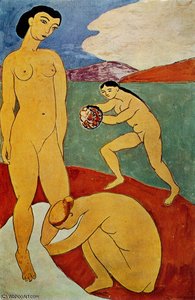
Three Sisters (Triptych - Right part)
Størrelse på reproduksjon
Henri Matisse’s “Three Sisters” stands as a testament to the artist's masterful command of color and his unwavering belief in its expressive power. Painted circa 1906-7, this vibrant triptych embodies the culmination of Matisse’s explorations into Fauvist principles—a movement that championed bold, non-naturalistic hues as a means of conveying emotion rather than representing reality.
The painting depicts three women seated together in what appears to be a dimly lit interior. The composition is strikingly simple yet profoundly impactful; Matisse eschews detailed rendering in favor of flattened planes of color—primarily shades of ochre, crimson, and lemon yellow—that dominate the canvas. These hues aren’t merely decorative; they pulsate with energy and imbue the scene with an atmosphere of warmth and intimacy.
Matisse's technique is characterized by loose brushstrokes and a deliberate disregard for traditional perspective. He applies paint thickly, creating textured surfaces that capture the interplay of light and shadow. The artist’s focus isn’t on capturing precise anatomical details but rather on conveying the essence of human presence—the subtle gestures and expressions of the women communicate a sense of quiet contemplation and connection.
Historically, “Three Sisters” reflects Matisse's engagement with Symbolism and Impressionism, movements that sought to capture subjective experience. However, it firmly establishes Matisse as a pioneer of Fauvism, marking a decisive break from academic conventions. The bold color palette aligns perfectly with the movement’s ethos—a rejection of mimetic representation in favor of artistic intuition.
Beyond its formal qualities, “Three Sisters” resonates emotionally with viewers. The luminous colors evoke feelings of serenity and comfort, while the stylized figures invite contemplation on themes of femininity, companionship, and domestic tranquility. It's a painting that speaks to the human desire for beauty and connection—a timeless masterpiece that continues to inspire admiration for its artistic innovation and expressive depth.


1869 - 1954 , Frankrike

Explore the vibrant revolution of Fauvism. Discover how masters like Henri Matisse liberated color from reality to express pure emotion. An expert guide into the 'Wild Beasts' of modern art history for collectors and enthusiasts.


Hold deg oppdatert med de siste kunstnyhetene, eksklusive tilbud og dekorasjonsideer.
Fortell oss om prosjektet ditt, så vil våre kunsteksperter gi deg 3 personlige kunstforslag.
Vi velger ut 3 alternativer kun for deg – helt gratis!


 Forhåndsvisning
 Send
Send Del med andre
 Vis detaljer

 Last ned bildet
 Liknende objekter
 Røntgenundersøkelse
 Lysbildefremvisning
 Vis hele teksten







 Glassalternativet er kun tilgjengelig i størrelser under 110 cm