x

Kjøp et høyoppløselig, forbedret digitalt bilde som er langt bedre enn forhåndsvisningen på nettet.
Hver fil er omhyggelig klargjort av våre egne spesialister ved hjelp av avanserte verktøy og profesjonell manuell retusjering. Vi sørger for at hvert bilde har eksepsjonell klarhet, presis fargegjengivelse og fine detaljer.
Den endelige filen leveres via e-post innen 72 timer, optimalisert for umiddelbar bruk i profesjonelle, redaksjonelle og trykte miljøer. Dette er den samme kvaliteten som benyttes av ledende designstudioer, utgivere og gallerier.
Last ned en høyoppløselig fil for personlig bruk, utskrift og kreative prosjekter. ( Kjøp trykk Kjøp håndlaget maleri)
Når du velger Most-Famous-Paintings.com, får du ikke bare et bilde – du mottar et profesjonelt forbedret digitalt kunstverk, skapt med presisjon og med en garantert tilfredshetsgaranti. Her er alt som automatisk følger med din bestilling:

Din høyoppløselige digitale bildefil sendes til din e-post innen 72 timer etter bestilling – klar til umiddelbar bruk.

Ditt kunstverk blir profesjonelt optimalisert ved hjelp av avanserte AI-verktøy og manuell redigering, noe som sikrer maksimal detaljrikdom, klarhet og fargegjengivelse.

Har du ved et uhell slettet eller mistet filen din? Ingen bekymring – vi sender den på nytt når som helst, helt gratis.

Nyt ditt kunstverk umiddelbart uten toll, avgifter eller leveringskostnader – digitale nedlastinger er alltid avgiftsfrie.

Vi sikrer at ditt digitale bilde gjenspeiler de originale fargene så nøyaktig som mulig ved hjelp av profesjonelle verktøy og fargehåndtering.

Hvis du ikke er fornøyd med ditt digitale bilde, vil vi revidere det eller refundere 100% innen 60 dager – uten spørsmål.

Ikke fornøyd? Få full refusjon innen 60 dager etter at du har mottatt din digitale fil – uten spørsmål.

Kjøp 3 bilder, spar 10% - Kjøp 5, spar 15% - Kjøp 10+, spar 20%. Ideelt for kreative prosjekter, gallerier og byråer.
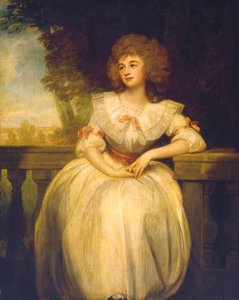
Henry Raeburn’s “Mrs. Charles Steuart,” painted in 1794, is more than just a portrait; it's a meticulously crafted window into the social and artistic sensibilities of late 18th-century Britain. This captivating oil on canvas, currently residing within the hallowed halls of the Tate Gallery in London, exemplifies Raeburn’s mastery of capturing not only likeness but also the very essence of his subject – her poise, grace, and subtle air of wealth. The painting immediately draws the eye to Mrs. Steuart herself, a woman radiating an understated elegance through her carefully chosen attire and direct gaze. Her white gown, adorned with delicate pearl accents, speaks volumes about her social standing, while her brown hair, styled in a fashionable manner of the period, adds to the overall impression of refined beauty.
Raeburn’s technique is characterized by an extraordinary sensitivity to light and shadow. He employs soft, diffused colors – creams, browns, and subtle blues – to create a sense of warmth and intimacy within the scene. The background, featuring a carefully rendered landscape with trees and a sky, serves not merely as a backdrop but as an integral element of the composition, subtly enhancing the feeling of depth and tranquility. Notably, Raeburn’s skill lies in his ability to imbue the portrait with a sense of immediacy; it feels less like a formal depiction and more like a captured moment, inviting the viewer into Mrs. Steuart's world.
To fully appreciate “Mrs. Charles Steuart,” one must understand Henry Raeburn’s place within the broader context of 18th-century British art. Born in Stockbridge, Scotland, in 1756, Raeburn initially pursued a career as a goldsmith before dedicating himself to painting. His early training under James Gilliland honed his precision and attention to detail – skills that would prove invaluable in his later portraiture work. Raeburn’s rise to prominence was remarkable; he became the first native Scottish painter to achieve widespread acclaim and royal patronage, a testament to his talent and ambition.
The painting reflects Raeburn's growing confidence as an artist, moving beyond the more rigid conventions of earlier portraiture styles. He embraced a looser, more naturalistic approach, capturing not just the outward appearance of his subjects but also their personalities and inner lives. This shift towards realism was partly influenced by his time in Italy, where he studied the works of Michelangelo and other masters, absorbing their techniques and philosophies.
Beyond its aesthetic qualities, “Mrs. Charles Steuart” offers a glimpse into the social dynamics of the era. Portraits like this were not merely decorative; they served as powerful symbols of status, wealth, and lineage. The elaborate gown, the pearl necklace – these details communicated Mrs. Steuart’s position within the social hierarchy. The direct gaze of the subject also suggests a degree of self-assurance and confidence, qualities highly valued in women of her station.
Furthermore, Raeburn's decision to portray Mrs. Steuart in such a dignified manner reflects the prevailing attitudes towards women during this period – they were often idealized as virtuous, gentle, and refined. However, beneath the surface of elegance lies a subtle complexity; the painting invites us to contemplate not just her outward appearance but also her inner world.
For those captivated by “Mrs. Charles Steuart,” a wealth of resources is available for further exploration. The Tate Gallery's website offers detailed information about the painting, including high-resolution images and scholarly essays. Additionally, the Kendal Museum in the United Kingdom houses an impressive collection of artworks by Elias V. Coe, providing a broader context for understanding Raeburn’s artistic influences. Reproductions of “Mrs. Charles Steuart” are available through various sources, offering collectors and interior designers alike the opportunity to bring this timeless masterpiece into their own spaces.
The enduring appeal of “Mrs. Charles Steuart” lies in its ability to transport us back to a bygone era – a time of elegance, refinement, and artistic innovation. It is a testament to Henry Raeburn’s genius as a portrait painter and a valuable window into the social and cultural landscape of 18th-century Britain.


1756 - 1823 , Storbritannia


Hold deg oppdatert med de siste kunstnyhetene, eksklusive tilbud og dekorasjonsideer.
Fortell oss om prosjektet ditt, så vil våre kunsteksperter gi deg 3 personlige kunstforslag.
Vi velger ut 3 alternativer kun for deg – helt gratis!


 Forhåndsvisning
 Send
Send Del med andre
 Vis detaljer

 Last ned bildet
 Liknende objekter
 Røntgenundersøkelse
 Lysbildefremvisning


 Vis hele teksten