Selg din kunst
Ønskeliste Handlekurv Cart
ForhåndsvisningForhåndsvisning Se i ARSe i AR Kjøp håndlaget maleri Kjøp håndlaget maleriKjøp bilde Kjøp bilde SendSend
Vis detaljerVis detaljer Legg til i favoritter Legg til i favoritter Last ned bildetLast ned bildet Liknende objekterLiknende objekter RøntgenundersøkelseRøntgenundersøkelse LysbildefremvisningLysbildefremvisning

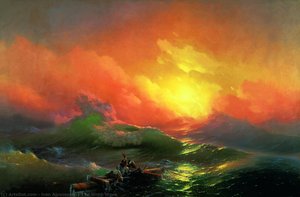
Seashore.

Experience the raw power of the sea! Ivan Aivazovsky’s "Seashore" (1840) – a breathtaking marine masterpiece, now available as a museum-quality giclée print or canvas.

Ivan Aivazovsky (1817-1900) var en russisk maler kjent for sine fantastiske haveskildringer og maritime kunstverk, preget av romantikk og et dypt forhold til havet. En pioner innen marin kunst!

Giclée / Kunsttrykk

Giclée- eller lerretsprint av museumskvalitet med rask produksjon og fleksible valgmuligheter for etterbehandling. (Kjøp håndlaget maleri Kjøp håndlaget maleriKjøp bilde Kjøp bilde)

P118B $10
P118H $10
P118W $10
P438Z $10
P508JH $12
P508YH $12
P805H $10
P805Z $10
P919BZ $10
P919G $10
P919XJ $10
P959ZH $10
P968JZ $12
W106C $8
W218G $10
W218JH $8
W218Y $10
W307PJ $10
W316G $10
W316PJ $8
W316Y $10
W398PJ $8
W4111J $10
W500HY $15
W500JH $15
W692G $12
W849H $8
W940BG $15
W953PJ $8

Standard
custom
CM
INCH

Velg mellom våre forhåndsdefinerte størrelser som bevarer kunstverkets opprinnelige proporsjoner.

bredde
høyde

Du kan oppgi egne mål for å tilpasse en spesifikk ramme eller et bestemt område. Dersom den valgte størrelsen ikke samsvarer med det originale bildets proporsjoner, vil vi enten beskjære kunstverket eller utvide bildet med en speilet eller ensfarget kant. En digital mockup vil bli sendt til din godkjenning før produksjonen starter.
Vennligst merk at forhåndsvisningen på skjermen ikke gjenspeiler den faktiske beskjæringen eller utvidelsen. Kun mockuppen vil vise den endelige komposisjonen nøyaktig.
Selv om tilpassede størrelser er tilgjengelige, anbefaler vi å velge et mål fra den forhåndsdefinerte listen for å bevare de originale proporsjonene.

Verdensomspennende levering () på 2 uker i stedet for standard 4/5 uker. (19 August)

why_choose_icon
Gratis ekspressfrakt over hele verden
why_choose_icon
Lerretsduk av høykvalitets lin
why_choose_icon
Full forsikring under transport
why_choose_icon
Garanti for refusjon av toll og importavgifter
why_choose_icon
Garantert korrekt fargegjengivelse
why_choose_icon
60 dagers returrett (kun ved feil)
why_choose_icon
100% pengene tilbake-garanti
why_choose_icon
Rabatt ved flere kjøp

Totalpris for bestilling

$ 68

reproduction

Seashore.

Giclée / Kunsttrykk

Størrelse på reproduksjon

-

Endelig pris

$ 68

Kort om verket

  • Artist: Ivan Aivazovsky
  • Title: Seashore
  • Location: Tretyakov Gallery, Moscow
  • Artistic style: Marine painting
  • Year: 1840
  • Medium: Oil on canvas
  • Influences:
    • Turner
    • Delacroix

Kunstighetsquiz

Det er kun ett riktig svar på hvert spørsmål.

Spørsmål 1:
What is the primary subject matter depicted in Ivan Aivazovsky’s ‘Seashore’?
Spørsmål 2:
In what year was Ivan Aivazovsky’s ‘Seashore’ painted?
Spørsmål 3:
Ivan Aivazovsky is most renowned for his work in which artistic genre?
Spørsmål 4:
The image description mentions a person standing on the beach. What is their likely activity?
Spørsmål 5:
What artistic technique did Aivazovsky likely employ to capture the dynamic movement of the sea in ‘Seashore’?

Beskrivelse av samleobjektet

A Storm Unleashed: Aivazovsky’s “Seashore” – A Window into the Soul of the Sea

Ivan Konstantinovich Aivazovsky's "Seashore," painted in 1840, isn’t merely a depiction of a seascape; it’s an immersive experience, a visceral journey into the heart of the Black Sea. More than just a landscape, this work represents a pivotal moment in Russian art – a shift towards Romanticism deeply influenced by Aivazovsky's profound connection to the ocean. Born in Feodosia, Crimea, a city intrinsically linked to the sea through its maritime history and turbulent geopolitical shifts, Aivazovsky’s entire life was shaped by its moods, its power, and its relentless beauty. He didn’t simply paint what he saw; he painted what he felt – the salty spray on his face, the rumble of distant storms, the ethereal glow of twilight reflecting off the waves.

The painting itself is a masterclass in atmospheric perspective and color theory. Aivazovsky expertly utilizes a muted palette dominated by deep blues, greens, and grays, punctuated by flashes of white foam and the warm ochre of distant cliffs. The sky isn’t a uniform expanse; it's layered with swirling clouds, rendered with delicate brushstrokes that capture the dynamic movement of the atmosphere. Notice how he employs a technique known as ‘sfumato,’ blurring the edges of objects to create an illusion of depth and distance – the boats become almost spectral, swallowed by the vastness of the sea. This masterful use of light and shadow isn’t just aesthetic; it serves to evoke a sense of drama and impending change.

The Romantic Spirit: Emotion and the Sublime

“Seashore” is a quintessential example of Russian Romanticism, a movement that prioritized emotion, individualism, and the power of nature. Unlike earlier Neoclassical depictions of the sea as a symbol of order and reason, Aivazovsky presents it as an untamed force – both beautiful and terrifying. The painting embodies the concept of the ‘sublime,’ a term coined by Edmund Burke to describe experiences that inspire awe and terror simultaneously. The sheer scale of the ocean, combined with the suggestion of an approaching storm, creates a feeling of vulnerability and insignificance in the face of nature’s grandeur.

The inclusion of several sailing vessels adds another layer of complexity. These aren't heroic explorers charting new territories; they are humble boats, dwarfed by the immensity of the sea. They represent humanity’s fleeting presence within this vast and ancient realm. The placement of these small figures on the horizon subtly underscores the insignificance of human endeavors against the backdrop of nature’s enduring power.

Aivazovsky's Technique: A Revolutionary Approach

Aivazovsky revolutionized marine painting through his innovative technique, largely developed in his studio in Feodosia. He meticulously prepared his canvases with a special mixture of oil and turpentine to create a smooth, absorbent surface – crucial for achieving the luminous effects he so expertly employed. He often worked *en plein air* (outdoors) for extended periods, directly observing the sea’s changing light and color. This direct engagement informed every brushstroke, resulting in an unparalleled sense of immediacy and authenticity.

Furthermore, Aivazovsky was a pioneer in using layering techniques to build up his paintings gradually, applying thin glazes of paint over previous layers to create depth and luminosity. This painstaking process, combined with his mastery of color mixing, allowed him to capture the subtle nuances of light reflecting off the water’s surface – a feat that had previously eluded most artists.

Beyond the Surface: Symbolism and Legacy

“Seashore” is more than just a beautiful painting; it's a meditation on humanity’s relationship with nature, a reflection on the power of memory, and an exploration of the human condition. The painting’s enduring appeal lies in its ability to evoke a profound emotional response – a sense of wonder, awe, and perhaps even a touch of melancholy. It speaks to our primal connection to the sea, a force that has shaped civilizations and inspired countless artists throughout history.

Aivazovsky's influence on subsequent generations of marine painters is undeniable. His work continues to captivate viewers today, reminding us of the beauty and power of the natural world and the enduring legacy of one of Russia’s greatest artistic masters. Reproductions like this offer a remarkable opportunity to bring this iconic image into your home, allowing you to experience the magic of Aivazovsky's vision firsthand.


Om kunstneren

A Life Embraced by the Waves

Ivan Konstantinovich Aivazovsky, born Hovhannes Aivazian in 1817, was more than a painter of seascapes; he was a conduit to the ocean’s soul. His very existence seemed inextricably linked to the Black Sea—a vast, unpredictable expanse that would forever dominate his artistic vision and fuel an extraordinary career spanning nearly six decades. Born in the Crimean port city of Feodosia, Aivazovsky didn't merely observe the sea; he felt it – its raw energy, sublime beauty, and inherent danger becoming the very essence of his art. From a young age, this connection was nurtured, initially by local architect Jacob Koch who recognized the boy’s talent, then blossoming within the rigorous academic environment of the Imperial Academy of Arts in Saint Petersburg. Yet, formal training alone couldn't account for the depth of Aivazovsky’s understanding; it was the constant presence of salt-laced air and the cries of gulls that truly shaped his artistic sensibility. His Armenian heritage also played a significant role, as he was baptized at the St. Sargis Armenian Church in Feodosia and maintained strong cultural ties throughout his life, occasionally incorporating Armenian themes into his expansive body of work.

The Early Years and Artistic Foundations

Aivazovsky’s early years were steeped in the maritime traditions of Feodosia, a bustling port city with deep roots in trade and seafaring. His family, originally from Western Armenia, had migrated to Crimea centuries earlier, establishing themselves as merchants and artisans. This exposure to the sea – its rhythms, its dangers, and its beauty – undoubtedly shaped his artistic sensibilities from an early age. Recognizing his exceptional talent, Jacob Koch, a local architect, encouraged Aivazovsky’s artistic pursuits, providing him with initial instruction. Later, he received formal training at the Imperial Academy of Arts in Saint Petersburg, where he honed his skills under the guidance of established masters. However, despite this rigorous academic education, Aivazovsky's true artistic voice emerged from his direct engagement with the natural world – specifically, the Black Sea. He spent countless hours observing ships, studying weather patterns, and capturing the ever-changing moods of the ocean on canvas. This intimate connection to the sea became the cornerstone of his unique style.

The Rise as a Naval Painter

A pivotal moment in Aivazovsky’s career arrived with his appointment as the main painter of the Russian Navy in 1843. This wasn't merely a prestigious title; it was an unparalleled opportunity—access to ships, sailors, naval battles, and firsthand observation that profoundly influenced his work. He became intimately acquainted with maritime life, documenting ship movements, capturing the drama of naval engagements, and portraying the lives of those who served on the Russian fleet. This role provided him with a constant stream of subject matter and allowed him to develop a highly realistic and technically proficient style. His paintings of naval battles – such as *The Battle of Navarino* (1846) – became iconic representations of these historical events, capturing both the chaos and the heroism of war at sea. The patronage of the Russian Imperial family further elevated his status and provided him with resources to continue his artistic endeavors.

A European Journey and Artistic Refinement

In the early 1840s, Aivazovsky embarked on a journey through Europe, seeking inspiration and broadening his artistic horizons. Italy proved particularly formative, immersing him in new landscapes and light, refining his skills, and developing a distinctive style characterized by dramatic compositions and masterful use of color. He spent time studying the works of masters like Turner and Friedrich, absorbing their techniques for capturing atmospheric effects and conveying emotion through landscape painting. His travels also exposed him to different artistic traditions, enriching his own creative vision. He returned to Russia with a renewed sense of purpose and a deeper understanding of the principles of art.

Style and Legacy: The Romantic Sea

Aivazovsky’s paintings are instantly recognizable for their romantic sensibility and technical brilliance. He wasn't simply recording what was seen, but rather conveying what was felt – the power, the mystery, and the sublime beauty of the sea. His use of color—particularly his mastery of light and shadow—created a sense of drama and movement that captivated viewers. Works like *The Ninth Wave* (1850) exemplify this ability to evoke both terror and awe, capturing the raw energy of a storm at sea. He often worked en plein air, directly from nature, capturing fleeting light effects. His prolific output – around 6,000 paintings—is remarkable and demonstrates his unwavering dedication to his craft. Aivazovsky’s legacy extends far beyond his artistic achievements; he is remembered as a symbol of Russian maritime pride and a pioneer in the development of marine art. His paintings continue to inspire awe and wonder, reminding us of the enduring power of nature and the human spirit.
  • Key Techniques: Aivazovsky’s distinctive style was characterized by his use of loose brushstrokes, layering of paint, and masterful manipulation of light and shadow.
  • Subject Matter: He primarily focused on seascapes, naval battles, and scenes of maritime life.
  • Influence: Aivazovsky profoundly influenced subsequent generations of Russian landscape painters.
Ivan Aivazovsky

Ivan Aivazovsky

1817 - 1900 , Russland

Kort om kunstneren

  • Artistic Movement Or Style: Romantikk, sjøkunst
  • Artists Or Movements Influenced By This Artist: Russisk landskapsmaleri
  • Artists Who Influenced This Artist: Ingen kjent
  • Date Of Birth: 1817
  • Date Of Death: 1900
  • Full Name: Ivan Konstantinovich Aivazovsky
  • Nationality: Russisk-armensk
  • Notable Artworks:
    • Niende bølge
    • Skip i stormfullt hav
  • Place Of Birth: Feodosia, Russland
Utforsk kunstverk organisert etter temaer, stiler og kjennetegn.