x


 Preview
 Bestill maleri Kjøp digitalt bilde
 Send
Send
 Vis detaljer
 Legg til i favoritter
 Last ned bildet
 Liknende objekter
 Røntgenundersøkelse
 Lysbildefremvisning
Giclée- eller lerretsprint av museumskvalitet med rask produksjon og fleksible valgmuligheter for etterbehandling.





























Velg mellom våre forhåndsdefinerte størrelser som bevarer kunstverkets opprinnelige proporsjoner.

Du kan oppgi egne mål for å tilpasse en spesifikk ramme eller et bestemt område. Dersom den valgte størrelsen ikke samsvarer med det originale bildets proporsjoner, vil vi enten beskjære kunstverket eller utvide bildet med en speilet eller ensfarget kant. En digital mockup vil bli sendt til din godkjenning før produksjonen starter.
Vennligst merk at forhåndsvisningen på skjermen ikke gjenspeiler den faktiske beskjæringen eller utvidelsen. Kun mockuppen vil vise den endelige komposisjonen nøyaktig.
Selv om tilpassede størrelser er tilgjengelige, anbefaler vi å velge et mål fra den forhåndsdefinerte listen for å bevare de originale proporsjonene.
Verdensomspennende levering () på 2 uker i stedet for standard 4/5 uker. (26 July)


La dame en bleu
Størrelse på reproduksjon
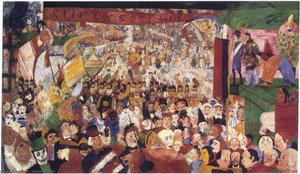
James Ensor’s “La Dame en Bleu,” or “The Blue Lady,” stands as a cornerstone of Expressionist art, capturing not merely an image but a profound psychological state. Painted around 1874 and currently housed in the National Museum Cardiff, this portrait transcends mere representation; it delves into themes of isolation, contemplation, and unsettling beauty—elements characteristic of Ensor’s distinctive artistic vision.
“La Dame en Bleu” firmly establishes Ensor within the burgeoning Expressionist movement, rejecting Impressionistic ideals of objective observation in favor of subjective emotional response. Unlike Renoir’s luminous depictions of Parisian life, Ensor eschews polished surfaces and vibrant colors for a darker palette—a deliberate choice designed to convey inner turmoil.
Ensor's technique is characterized by thick impasto brushstrokes that lend texture and physicality to the canvas. These bold strokes capture not only the visual appearance of the woman but also the artist’s palpable preoccupation with conveying psychological depth. The meticulous rendering of fabrics—particularly the dress—demonstrates Ensor’s dedication to capturing subtle nuances of form and color.
Painted in 1874, “La Dame en Bleu” emerged during a period of artistic ferment as Impressionism wrestled with its legacy. Artists like Renoir were pushing boundaries, experimenting with new approaches to capturing light and atmosphere—yet Ensor deliberately rejected these conventions, prioritizing emotional intensity over aesthetic beauty.
Ensor’s rejection of academic formalism resonated deeply with the avant-garde sensibilities of his time. He was a pioneer in exploring unsettling imagery and confronting uncomfortable truths about human psychology—a bold stance that cemented his position as one of the most influential figures in early 20th-century art.
"La Dame en Bleu" compels viewers to confront questions of identity, vulnerability, and the complexities of human experience. The woman’s gaze—direct yet distant—suggests a profound awareness of her surroundings while simultaneously maintaining an inner world untouched by external pressures. Ensor's masterful use of color and texture contributes to this unsettling effect, inviting contemplation on themes of isolation and psychological resilience.


1860 - 1949 , Belgia
Utforsk Egon Schieles 25 mest ikoniske malerier! Oppdag ekspresjonismens sjel gjennom portretter, selvportrett og kraftfulle farger. Finn museumskvalitets reproduksjoner og interiørinspirasjon på Most-Famous-Paintings.no – din kilde til tidløs kunst.

Explore the unsettling yet captivating world of James Ensor, a pioneer of Expressionism. Discover his satirical masterpieces, symbolic imagery & lasting influence on modern art. High-quality reproductions available at Most-Famous-Paintings.

Explore the captivating landscapes of James Stark (1794-1859), a leading Norwich School painter. Discover his Dutch Master influences, critical acclaim, and enduring legacy in contemporary realism. Art collecting insights & investment potential.

Utforsk psykologien bak lekent billedspråk! Oppdag hvordan humoristiske og fantasifulle malerier fremmer velvære og sosial tilknytning. Ekspertanalyse & kvalitetskunst.

Explore the rich history of portrait painting with expert insights into Renaissance masterpieces & modern innovations. Discover artists, movements & commission a custom oil painting at Most-Famous-Paintings.


Hold deg oppdatert med de siste kunstnyhetene, eksklusive tilbud og dekorasjonsideer.
Fortell oss om prosjektet ditt, så vil våre kunsteksperter gi deg 3 personlige kunstforslag.
Vi velger ut 3 alternativer kun for deg – helt gratis!


 Del med andre


 Vis hele teksten







 Glassalternativet er kun tilgjengelig i størrelser under 110 cm