


x
Kjøp et høyoppløselig, forbedret digitalt bilde som er langt bedre enn forhåndsvisningen på nettet.
Hver fil er omhyggelig klargjort av våre egne spesialister ved hjelp av avanserte verktøy og profesjonell manuell retusjering. Vi sørger for at hvert bilde har eksepsjonell klarhet, presis fargegjengivelse og fine detaljer.
Den endelige filen leveres via e-post innen 72 timer, optimalisert for umiddelbar bruk i profesjonelle, redaksjonelle og trykte miljøer. Dette er den samme kvaliteten som benyttes av ledende designstudioer, utgivere og gallerier.
Last ned en høyoppløselig fil for personlig bruk, utskrift og kreative prosjekter. ( Kjøp trykk Kjøp håndlaget maleri)
Når du velger Most-Famous-Paintings.com, får du ikke bare et bilde – du mottar et profesjonelt forbedret digitalt kunstverk, skapt med presisjon og med en garantert tilfredshetsgaranti. Her er alt som automatisk følger med din bestilling:

Din høyoppløselige digitale bildefil sendes til din e-post innen 72 timer etter bestilling – klar til umiddelbar bruk.

Ditt kunstverk blir profesjonelt optimalisert ved hjelp av avanserte AI-verktøy og manuell redigering, noe som sikrer maksimal detaljrikdom, klarhet og fargegjengivelse.

Har du ved et uhell slettet eller mistet filen din? Ingen bekymring – vi sender den på nytt når som helst, helt gratis.

Nyt ditt kunstverk umiddelbart uten toll, avgifter eller leveringskostnader – digitale nedlastinger er alltid avgiftsfrie.

Vi sikrer at ditt digitale bilde gjenspeiler de originale fargene så nøyaktig som mulig ved hjelp av profesjonelle verktøy og fargehåndtering.

Hvis du ikke er fornøyd med ditt digitale bilde, vil vi revidere det eller refundere 100% innen 60 dager – uten spørsmål.

Ikke fornøyd? Få full refusjon innen 60 dager etter at du har mottatt din digitale fil – uten spørsmål.

Kjøp 3 bilder, spar 10% - Kjøp 5, spar 15% - Kjøp 10+, spar 20%. Ideelt for kreative prosjekter, gallerier og byråer.
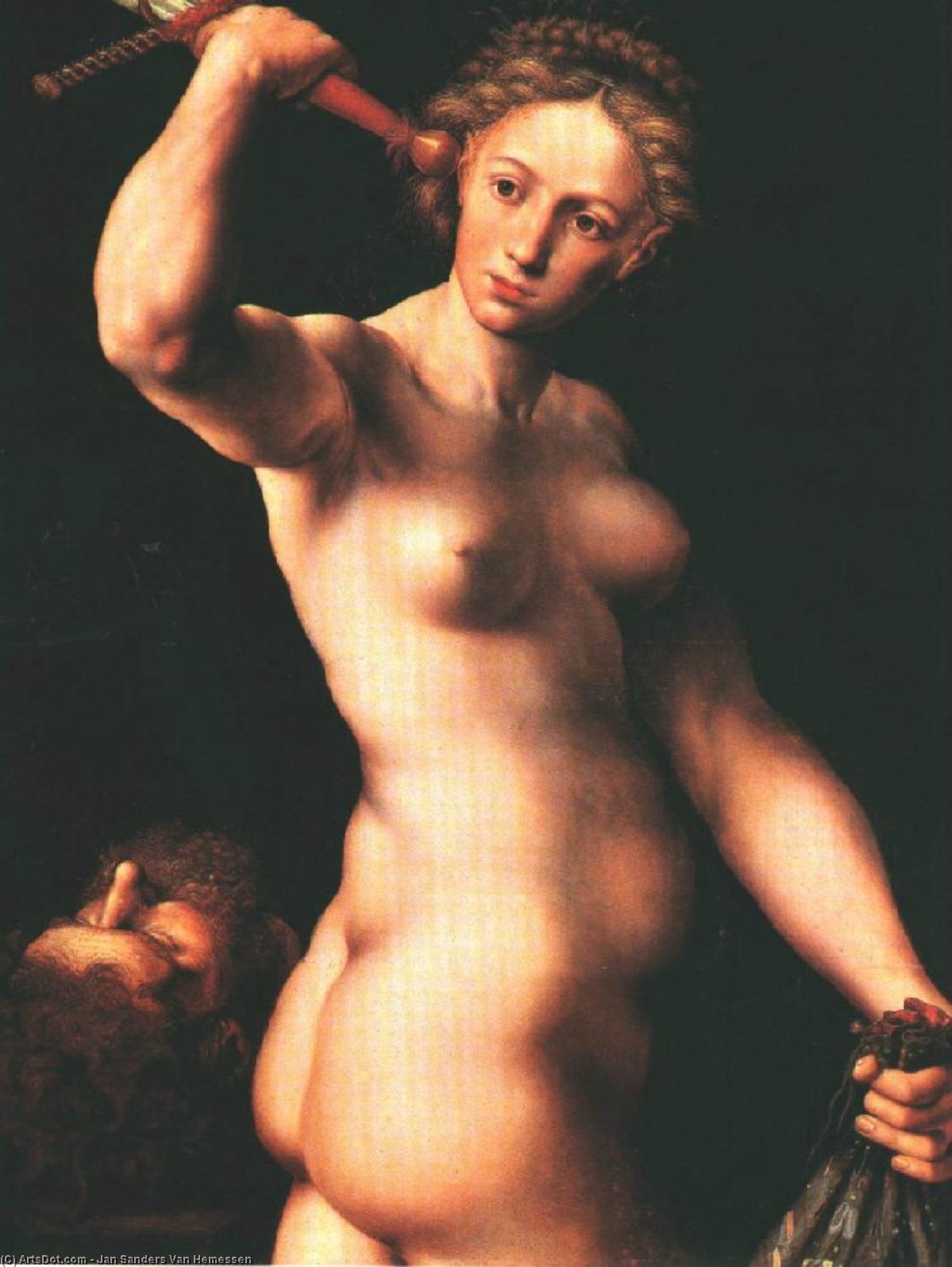
Jan Sanders van Hemessen's "Judith," painted around 1540, isn’t merely a depiction of a biblical tale; it’s a meticulously crafted moral drama rendered with the vibrant realism and psychological depth characteristic of the Northern Renaissance. This arresting image captures the pivotal moment when Judith, the courageous Jewish widow, delivers the fatal blow to Holofernes, the Assyrian general, thereby saving her besieged city. Van Hemessen, a key figure in the burgeoning Flemish genre painting movement, elevates this ancient story into a compelling meditation on female strength, strategic cunning, and divine justice – all presented with an astonishing level of detail and emotional resonance.
The composition immediately commands attention. Judith is not portrayed as a delicate heroine; instead, she’s depicted as a powerfully muscled figure, her body taut with effort and determination. Her profile, turned towards the viewer, conveys both resolve and a hint of grim satisfaction. The severed head of Holofernes, held aloft in her other hand, isn't presented in a gruesome manner but rather as a stark symbol of vanquished tyranny. Van Hemessen masterfully utilizes chiaroscuro – the dramatic interplay of light and shadow – to sculpt Judith’s form and emphasize the weight of her action. The dark background serves not as mere backdrop but as a stage upon which this decisive moment unfolds, drawing all focus onto the central figures.
Van Hemessen's style is deeply rooted in the artistic traditions of Italy, particularly the work of Michelangelo and Raphael. He absorbed their emphasis on idealized human forms, dynamic poses, and a profound understanding of anatomy. However, he skillfully adapted these influences to create a distinctly Northern Renaissance aesthetic. The painting’s realism is remarkable; from the intricate folds of Judith's dress to the texture of Holofernes’s beard and the glistening blood staining his face, every detail is rendered with painstaking precision. Van Hemessen was renowned for his ability to capture the nuances of human expression, evident in Judith’s focused gaze and the subtle hint of triumph in her posture.
The painting's technique showcases van Hemessen’s mastery of oil paint. He employed a layering approach, building up color gradually to achieve rich, luminous effects. The use of impasto – applying thick layers of paint directly onto the canvas – adds texture and depth to the figures and background. This meticulous attention to detail is further enhanced by his skillful handling of light and shadow, creating a sense of three-dimensionality that brings the scene vividly to life.
Beyond its visual beauty, “Judith” is laden with symbolic meaning. The story itself carries significant weight within Jewish tradition, representing themes of courage, faith, and resistance against oppression. Judith’s actions are not simply a violent act but an embodiment of strategic intelligence and righteous defiance. The depiction of Judith as a physically strong woman challenging a powerful male figure speaks to the Renaissance fascination with female agency – a theme that was increasingly explored in art during this period.
Furthermore, the painting can be interpreted as a broader allegory for the triumph of good over evil. Holofernes represents the forces of tyranny and corruption, while Judith embodies virtue and justice. The act of decapitation symbolizes the ultimate defeat of these forces, suggesting that moral strength and strategic action can overcome even the most formidable adversaries. The inclusion of the severed head is not intended to glorify violence but rather to underscore the consequences of injustice and the necessity of resistance.
“Judith” stands as a prime example of the moralizing art that flourished in the Netherlands during the 16th century. Artists like van Hemessen sought to create works that not only depicted biblical stories but also conveyed important ethical and religious lessons. This painting, with its compelling narrative, masterful technique, and profound symbolism, continues to resonate with viewers today – a testament to the enduring power of art to illuminate human experience and inspire reflection.


1500 - 1566 , Belgia


Hold deg oppdatert med de siste kunstnyhetene, eksklusive tilbud og dekorasjonsideer.
Fortell oss om prosjektet ditt, så vil våre kunsteksperter gi deg 3 personlige kunstforslag.
Vi velger ut 3 alternativer kun for deg – helt gratis!


 Forhåndsvisning
 Send
Send Del med andre
 Vis detaljer

 Last ned bildet
 Liknende objekter
 Røntgenundersøkelse
 Lysbildefremvisning


 Vis hele teksten


