


x

Kjøp et høyoppløselig, forbedret digitalt bilde som er langt bedre enn forhåndsvisningen på nettet.
Hver fil er omhyggelig klargjort av våre egne spesialister ved hjelp av avanserte verktøy og profesjonell manuell retusjering. Vi sørger for at hvert bilde har eksepsjonell klarhet, presis fargegjengivelse og fine detaljer.
Den endelige filen leveres via e-post innen 72 timer, optimalisert for umiddelbar bruk i profesjonelle, redaksjonelle og trykte miljøer. Dette er den samme kvaliteten som benyttes av ledende designstudioer, utgivere og gallerier.
Last ned en høyoppløselig fil for personlig bruk, utskrift og kreative prosjekter. ( Kjøp trykk Kjøp håndlaget maleri)
Når du velger Most-Famous-Paintings.com, får du ikke bare et bilde – du mottar et profesjonelt forbedret digitalt kunstverk, skapt med presisjon og med en garantert tilfredshetsgaranti. Her er alt som automatisk følger med din bestilling:

Din høyoppløselige digitale bildefil sendes til din e-post innen 72 timer etter bestilling – klar til umiddelbar bruk.

Ditt kunstverk blir profesjonelt optimalisert ved hjelp av avanserte AI-verktøy og manuell redigering, noe som sikrer maksimal detaljrikdom, klarhet og fargegjengivelse.

Har du ved et uhell slettet eller mistet filen din? Ingen bekymring – vi sender den på nytt når som helst, helt gratis.

Nyt ditt kunstverk umiddelbart uten toll, avgifter eller leveringskostnader – digitale nedlastinger er alltid avgiftsfrie.

Vi sikrer at ditt digitale bilde gjenspeiler de originale fargene så nøyaktig som mulig ved hjelp av profesjonelle verktøy og fargehåndtering.

Hvis du ikke er fornøyd med ditt digitale bilde, vil vi revidere det eller refundere 100% innen 60 dager – uten spørsmål.

Ikke fornøyd? Få full refusjon innen 60 dager etter at du har mottatt din digitale fil – uten spørsmål.

Kjøp 3 bilder, spar 10% - Kjøp 5, spar 15% - Kjøp 10+, spar 20%. Ideelt for kreative prosjekter, gallerier og byråer.
Jan van Eyck (c. 1390-1441) stands as an undeniable titan amongst Early Netherlandish painters, a figure whose legacy continues to illuminate the artistic landscape centuries after his lifetime. While biographical details remain frustratingly sparse – Hubert van Eyck, his brother, largely vanished from historical records – Jan himself possessed an extraordinary talent that swiftly propelled him into prominence within the burgeoning artistic milieu of Bruges and beyond.
His workshop in The Hague wasn’t merely a place of production; it was a crucible of innovation where he fostered apprenticeships and undertook commissions that showcased his unparalleled mastery. This early success wasn't solely attributable to technical skill, though undeniably impressive. Van Eyck’s astute judgment and unwavering trustworthiness – qualities highly valued during the period – cemented his reputation as a man of considerable intellect and integrity.
Perhaps no single artwork embodies Van Eyck's genius more profoundly than the Ghent Altarpiece, begun in 1425 alongside Hubert. Commissioned by Simon van der Putten and Gabrielle Broeder Janssens, this monumental polyptych represents a breathtaking feat of artistic endeavor. It depicts scenes from the life of Saint John the Baptist and Christ’s Passion, rendered with astonishing detail and imbued with an unprecedented level of realism.
What distinguishes the Ghent Altarpiece isn't simply its scale; it’s Van Eyck’s revolutionary application of oil paint—a technique previously considered experimental—which allowed him to achieve luminous colors and textures unattainable with tempera. The meticulous layering of glazes created an illusionistic depth that captivated viewers and profoundly influenced subsequent generations of artists.
Alongside the Ghent Altarpiece, Van Eyck’s Arnolfini Portrait (1434) cemented his reputation as a master of psychological portraiture. Painted for Giovanni Arnolfini and Isabella Reynoldse, this seemingly simple depiction of a wealthy couple within their home exudes an atmosphere of serene intimacy.
Van Eyck's masterful use of perspective—particularly atmospheric perspective—creates a convincing illusion of depth, drawing the viewer into the scene. The subtle interplay of light and shadow highlights the textures of fabrics and furnishings, conveying a sense of realism that transcends mere representation. Furthermore, scholars debate the symbolism embedded within the portrait’s details – the mirror reflecting the viewer, the lute symbolizing marital harmony—adding layers of meaning to this iconic masterpiece.
Jan van Eyck's influence extends far beyond his own creations. He established a workshop that nurtured talent and disseminated innovative techniques, shaping the artistic landscape of Northern Europe for decades to come. His unwavering commitment to observation and meticulous craftsmanship served as an inspiration for artists across disciplines—a testament to his enduring contribution to the history of art.

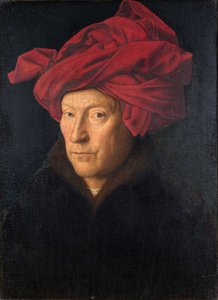
1390 - 1441 , Nederland


Hold deg oppdatert med de siste kunstnyhetene, eksklusive tilbud og dekorasjonsideer.
Fortell oss om prosjektet ditt, så vil våre kunsteksperter gi deg 3 personlige kunstforslag.
Vi velger ut 3 alternativer kun for deg – helt gratis!


 Forhåndsvisning
 Send
Send Del med andre
 Vis detaljer

 Last ned bildet
 Liknende objekter
 Røntgenundersøkelse
 Lysbildefremvisning
 Vis hele teksten


