


x

Giclée- eller lerretsprint av museumskvalitet med rask produksjon og fleksible valgmuligheter for etterbehandling. ( Kjøp håndlaget maleri Kjøp bilde)





























Velg mellom våre forhåndsdefinerte størrelser som bevarer kunstverkets opprinnelige proporsjoner.

Du kan oppgi egne mål for å tilpasse en spesifikk ramme eller et bestemt område. Dersom den valgte størrelsen ikke samsvarer med det originale bildets proporsjoner, vil vi enten beskjære kunstverket eller utvide bildet med en speilet eller ensfarget kant. En digital mockup vil bli sendt til din godkjenning før produksjonen starter.
Vennligst merk at forhåndsvisningen på skjermen ikke gjenspeiler den faktiske beskjæringen eller utvidelsen. Kun mockuppen vil vise den endelige komposisjonen nøyaktig.
Selv om tilpassede størrelser er tilgjengelige, anbefaler vi å velge et mål fra den forhåndsdefinerte listen for å bevare de originale proporsjonene.
Verdensomspennende levering () på 2 uker i stedet for standard 4/5 uker. (23 August)


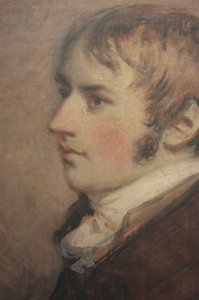
Jane Anne Inglis, nee Mason
Størrelse på reproduksjon
John Constable's portrait of Jane Anne Inglis, nee Mason, painted in 1808, is more than a simple likeness; it’s a window into the life and social dynamics of early 19th-century England. The painting immediately draws the eye with its restrained elegance – a woman presented in soft white clothing, her dark hair pulled back from her face in a style indicative of the era. Her gaze, subtly turned to the side, conveys an air of quiet introspection, inviting the viewer into a private moment of contemplation. The composition is carefully balanced, featuring Jane as the central figure, framed by two figures standing discreetly behind her – likely family members, adding layers of domestic intimacy to the scene.
Constable’s masterful use of light and shadow creates a remarkable sense of depth and atmosphere. Notice how he employs diffused illumination to soften Jane's features, highlighting the delicate curve of her neck and the subtle play of light on her dress. The muted palette – predominantly creams, browns, and greys – contributes to the painting’s overall mood of serenity and understated beauty. The artist’s attention to detail is evident in the rendering of the fabric, the texture of her hair, and the delicate jewelry she wears—a simple ring visible on her finger, a subtle emblem of status and perhaps even marital commitment.
The painting’s significance extends beyond its aesthetic qualities; it offers valuable insights into the social fabric of the time. Jane Anne Inglis was the daughter of a solicitor from Colchester, Essex, and her mother, Anne, was Constable's first cousin. This familial connection underscores the importance of patronage in the art world – how artists often relied on wealthy families to commission works and sustain their careers. The presence of the two figures behind Jane suggests a family gathering, a scene of domestic life captured with remarkable sensitivity by Constable.
Further research reveals that Jane later married James Inglis and had six children. However, her subsequent marriage was marked by hardship; her husband’s illness and financial difficulties cast a shadow over the family's happiness. The painting, therefore, can be interpreted as a poignant reminder of both beauty and vulnerability, capturing a moment of grace amidst personal challenges. The details surrounding Jane’s life – her artistic encouragement by Constable, her children’s future aspirations – add layers of narrative richness to this seemingly simple portrait.
John Constable was renowned for his ability to capture the essence of the English landscape, but he was equally adept at portraying human subjects. His technique in this portrait is a testament to his observational skills and emotional intelligence. He employed loose brushstrokes—a hallmark of his style—to create a sense of immediacy and spontaneity. Unlike the smooth, polished surfaces favored by some of his contemporaries, Constable’s paintings often retain traces of the artist's hand, reflecting his belief that art should be an honest expression of feeling.
The painting demonstrates Constable’s skill in capturing fleeting moments of light and atmosphere. He skillfully used chiaroscuro—the contrast between light and dark—to create a sense of depth and drama. Notice how he renders the shadows cast by the figures behind Jane, subtly suggesting their presence without obscuring her form. This delicate balance between observation and emotion is what makes Constable’s work so enduringly captivating.
Most-Famous-Paintings offers meticulously crafted hand-painted reproductions of John Constable's “Jane Anne Inglis, nee Mason,” allowing you to experience the beauty and emotional depth of this remarkable portrait in a truly authentic way. Unlike digital prints, our reproductions capture the nuances of Constable’s brushstrokes, color palette, and overall atmosphere with unparalleled fidelity.
Whether displayed in your home or office, this reproduction will serve as a timeless reminder of the elegance, grace, and quiet dignity of 19th-century England. It's an investment in art that celebrates both artistic skill and human connection—a piece that speaks volumes without uttering a single word.

1776 - 1837 , Storbritannia

Explore the profound artistry of black and white photography. From the chemistry of gelatin silver to the chiaroscuro of the Old Masters, discover how monochrome captures the eternal essence of light, form, and emotion for the discerning art collector.


Hold deg oppdatert med de siste kunstnyhetene, eksklusive tilbud og dekorasjonsideer.
Fortell oss om prosjektet ditt, så vil våre kunsteksperter gi deg 3 personlige kunstforslag.
Vi velger ut 3 alternativer kun for deg – helt gratis!


 Forhåndsvisning
 Send
Send Del med andre
 Vis detaljer

 Last ned bildet
 Liknende objekter
 Røntgenundersøkelse
 Lysbildefremvisning


 Vis hele teksten







 Glassalternativet er kun tilgjengelig i størrelser under 110 cm


