Selg din kunst
Ønskeliste Handlekurv Cart
ForhåndsvisningForhåndsvisning Se i ARSe i AR Kjøp trykk Kjøp trykkKjøp bilde Kjøp bilde SendSend
Vis detaljerVis detaljer Legg til i favoritter Legg til i favoritter Last ned bildetLast ned bildet Liknende objekterLiknende objekter RøntgenundersøkelseRøntgenundersøkelse LysbildefremvisningLysbildefremvisning

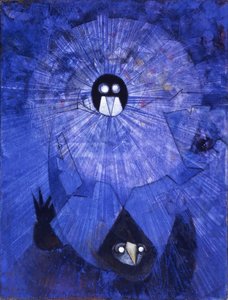
Abstract Composition

Konrad Zuse (1910-1995): German computer pioneer & artist. Inventor of the first programmable computer, Z3, & Plankalkül language. Explore his abstract compositions.

Håndlaget oljereproduksjon

Håndmalt olje på lerret i din valgte størrelse og ramme, laget på bestilling av våre kunstnere. (Kjøp trykk Kjøp trykkKjøp bilde Kjøp bilde)

Standard
custom
CM
INCH

Velg mellom våre forhåndsdefinerte størrelser som bevarer kunstverkets opprinnelige proporsjoner.

bredde
høyde

Du kan angi egne mål for å tilpasse en spesifikk ramme eller plass. Dersom den valgte størrelsen ikke samsvarer med originalbildets proporsjoner, vil vi enten beskjære kunstverket eller utvide maleriet med ytterligere håndmalte elementer. En digital mockup vil bli sendt til din godkjenning før produksjonen starter.
Vennligst merk at forhåndsvisningen på skjermen ikke gjenspeiler den faktiske beskjæringen eller utvidelsen. Kun mockuppen vil vise den endelige komposisjonen nøyaktig.
Selv om tilpassede størrelser er tilgjengelige, anbefaler vi å velge et mål fra den forhåndsdefinerte listen for å bevare de originale proporsjonene.

Eksempler på hva som kan endres: Erstatt ansikt med bilde av kunden; Legg til kjæledyr (f.eks. bytt ut katt med hund); Inkluder en skjult melding i bakgrunnen; Endre bakgrunnslandskap eller elementer.
Etter bestilling vil Most-Famous-Paintings.com-teamet sende e-post til kunden for instruksjoner og sende et utkast (mockup) som forhåndsvisning.

Verdensomspennende levering () på 3–4 uker i stedet for standard 5 uker. (17 August). Ingen kompromisser med kvaliteten.

why_choose_icon
Gratis ekspressfrakt over hele verden
why_choose_icon
Lerretsduk av høykvalitets lin
why_choose_icon
Full forsikring under transport
why_choose_icon
Garanti for refusjon av toll og importavgifter
why_choose_icon
Garantert korrekt fargegjengivelse
why_choose_icon
60 dagers returrett (kun ved feil)
why_choose_icon
100% pengene tilbake-garanti
why_choose_icon
Rabatt ved flere kjøp

Totalpris for bestilling

$ 272

reproduction

Abstract Composition

Teknikk for reproduksjon

Størrelse på reproduksjon

-

Endelig pris

$ 272


Om kunstneren

Konrad Ernst Otto Zuse: Pioneer of Computing

Early Life and Education

  • Konrad Ernst Otto Zuse was born on June 22, 1910, in Berlin, Germany.
  • He studied mechanical engineering at the Technical University of Braunschweig, graduating in 1933.
  • Even during his studies, Zuse demonstrated a keen interest in automation and calculation, laying the groundwork for his future innovations.

The Genesis of Computing: Early Machines

  • Driven by frustration with repetitive calculations during his engineering work, Zuse began designing calculating machines in the 1930s.
  • His first creation was the Z1 (1936-1938), a mechanical binary computer using floating-point numbers and limited programmability. Though mechanically unreliable, it demonstrated key concepts.
  • The Z2 (1939) improved upon the Z1 with electromechanical relays, offering greater reliability but was destroyed during World War II.

The Z3: The First Functional Programmable Computer

  • In May 1941, Zuse completed the Z3, widely considered the world’s first functional program-controlled Turing-complete computer.
  • It was electromechanical, using relays, and operated with binary floating-point arithmetic.
  • The Z3 was destroyed during a bombing raid in 1943, but its design principles were revolutionary.

Further Developments: The Z4 and Beyond

  • Zuse continued his work, developing the Z4 (completed in 1945), which became the world’s first commercial computer. It was sold to the Aerodynamische Versuchsanstalt (AVA) for aerodynamic calculations.
  • He founded one of the earliest computer businesses, Zuse KG, to produce and sell computers.

Plankalkül: A Visionary Programming Language

  • Between 1943 and 1945, amidst wartime conditions, Zuse designed Plankalkül, the first high-level programming language.
  • It was remarkably advanced for its time, featuring concepts like data structures and conditional statements. However, it remained largely unimplemented during his lifetime due to lack of resources and computing power.

Later Life and Theoretical Work

  • In 1969, Zuse published Rechnender Raum (Calculating Space), proposing the concept of a computation-based universe – a precursor to digital physics.
  • He received belated recognition for his pioneering work in the latter part of his life, including the Turing Award in 1968.
  • Konrad Zuse died in Hünfeld, Germany, on December 18, 1995.

Historical Significance and Legacy

  • Zuse’s work was largely overlooked during World War II due to the conflict and limited communication with Allied researchers.
  • His contributions were crucial in laying the foundations for modern computing, influencing subsequent generations of computer scientists and engineers.
  • He is rightfully regarded as a founding father of computer science, whose vision extended beyond mere calculation to encompass the very nature of reality itself.
konrad ernst otto zuse

konrad ernst otto zuse

1910 - 1995 , Germany

Kort om kunstneren

  • Birth Date: 1910
  • Birth Place: Berlin, Germany
  • Death Date: 1995
  • Movement: Early Computing / Pioneer of Computer Science
  • Name: Konrad Ernst Otto Zuse
  • Nationality: German
  • Notable Works:
    • Z3
    • Plankalkül
    • Z4