x

 LithographWallArtNaive Art
 1960Modern
 57.0 x 38.0 cm
Giclée- eller lerretsprint av museumskvalitet med rask produksjon og fleksible valgmuligheter for etterbehandling. ( Kjøp håndlaget maleri Kjøp bilde)





























Velg mellom våre forhåndsdefinerte størrelser som bevarer kunstverkets opprinnelige proporsjoner.

Du kan oppgi egne mål for å tilpasse en spesifikk ramme eller et bestemt område. Dersom den valgte størrelsen ikke samsvarer med det originale bildets proporsjoner, vil vi enten beskjære kunstverket eller utvide bildet med en speilet eller ensfarget kant. En digital mockup vil bli sendt til din godkjenning før produksjonen starter.
Vennligst merk at forhåndsvisningen på skjermen ikke gjenspeiler den faktiske beskjæringen eller utvidelsen. Kun mockuppen vil vise den endelige komposisjonen nøyaktig.
Selv om tilpassede størrelser er tilgjengelige, anbefaler vi å velge et mål fra den forhåndsdefinerte listen for å bevare de originale proporsjonene.
Verdensomspennende levering () på 2 uker i stedet for standard 4/5 uker. (18 August)


Crucifixion
Størrelse på reproduksjon
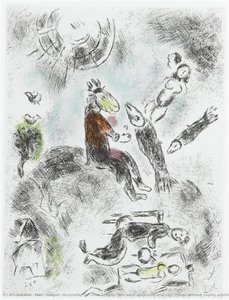
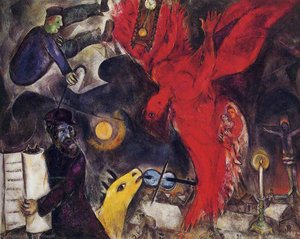
Marc Chagall's “Crucifixion,” painted in 1964, isn’t merely a depiction of a biblical scene; it’s an immersive experience—a vibrant collision of memory, faith, and the artist’s deeply personal vision. Executed as a lithograph on paper, this work transcends its medium, radiating with an almost palpable energy that draws the viewer into the heart of the drama. Chagall, a master of distilling profound emotion from simple forms, eschews photographic realism in favor of a powerfully symbolic language rooted in his Jewish heritage and the folklore of his childhood in Vitebsk, Belarus. The painting immediately arrests the eye with its bold colors—a striking contrast of deep blues and reds against a luminous white background—and its dynamic composition, where figures reach upwards towards an unseen divine presence.
To understand “Crucifixion,” it’s crucial to delve into Chagall's formative years in Vitebsk. The town, a melting pot of Russian Orthodox and Jewish cultures, profoundly shaped his artistic sensibility. He frequently depicted its landscapes—rolling fields, winding rivers, and the distinctive architecture—as symbols of memory and belonging. This painting is no exception; elements reminiscent of Vitebsk subtly permeate the composition, hinting at a deeper connection to Chagall’s past. The figures reaching upwards, for instance, recall the traditional Jewish custom of raising arms in prayer, while the ladder-like structure suggests a pathway towards spiritual ascension.
Symbolism:“Crucifixion” isn’t simply a religious painting; it's a meditation on suffering, hope, and the enduring power of faith. Chagall, who himself experienced profound loss and displacement throughout his life—including exile during World War II—infused this work with an intensely personal resonance. The painting speaks to universal themes of sacrifice, redemption, and the human condition, inviting viewers to contemplate their own beliefs and experiences. It’s a testament to Chagall's ability to transform deeply felt emotions into art that transcends time and culture. Its enduring appeal lies in its capacity to evoke both sorrow and serenity, reminding us of the complexities of faith and the beauty found within moments of profound human experience.
High-quality reproductions of “Crucifixion” are readily available through various art dealers and online platforms. For a deeper understanding of Chagall’s life and work, we recommend exploring the resources listed below:

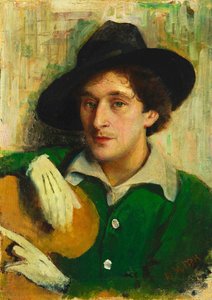
1887 - 1985 , Belarus

Explore the profound history of Surrealist Expressionism. Discover how artists blended dream logic with raw emotion to navigate post-war trauma through masterful, evocative imagery and psychological depth.

Explore the profound artistry of black and white photography. From the chemistry of gelatin silver to the chiaroscuro of the Old Masters, discover how monochrome captures the eternal essence of light, form, and emotion for the discerning art collector.


Hold deg oppdatert med de siste kunstnyhetene, eksklusive tilbud og dekorasjonsideer.
Fortell oss om prosjektet ditt, så vil våre kunsteksperter gi deg 3 personlige kunstforslag.
Vi velger ut 3 alternativer kun for deg – helt gratis!


 Forhåndsvisning
 Send
Send Del med andre
 Vis detaljer

 Last ned bildet
 Liknende objekter
 Røntgenundersøkelse
 Lysbildefremvisning
 Vis hele teksten







 Glassalternativet er kun tilgjengelig i størrelser under 110 cm