


x

 Acrylic On CanvasWallArtNaive Art
 1973Renaissance
 73.0 x 92.0 cm
Håndmalt olje på lerret i din valgte størrelse og ramme, laget på bestilling av våre kunstnere. ( Kjøp trykk Kjøp bilde)





























Velg mellom våre forhåndsdefinerte størrelser som bevarer kunstverkets opprinnelige proporsjoner.

Du kan angi egne mål for å tilpasse en spesifikk ramme eller plass. Dersom den valgte størrelsen ikke samsvarer med originalbildets proporsjoner, vil vi enten beskjære kunstverket eller utvide maleriet med ytterligere håndmalte elementer. En digital mockup vil bli sendt til din godkjenning før produksjonen starter.
Vennligst merk at forhåndsvisningen på skjermen ikke gjenspeiler den faktiske beskjæringen eller utvidelsen. Kun mockuppen vil vise den endelige komposisjonen nøyaktig.
Selv om tilpassede størrelser er tilgjengelige, anbefaler vi å velge et mål fra den forhåndsdefinerte listen for å bevare de originale proporsjonene.
Verdensomspennende levering () på 3–4 uker i stedet for standard 5 uker. (22 August). Ingen kompromisser med kvaliteten.


Jacob's Ladder
Størrelse på reproduksjon
Marc Chagall’s “Jacob’s Ladder,” completed in 1973, stands as a luminous testament to the artist’s enduring fascination with biblical narratives and his unparalleled ability to translate spiritual concepts into visual poetry. This monumental oil on canvas—measuring 73 x 92 cm—belongs firmly within the Naïve Art movement (Primitivism), yet transcends categorization through Chagall's distinctive vision, rooted in memory and infused with a dreamlike quality that captivates viewers decades after its creation.
The painting draws directly from Genesis 28:10–19, recounting Jacob’s prophetic dream of a ladder ascending to heaven—a symbol laden with theological significance. Chagall meticulously renders this ethereal scene, prioritizing emotional resonance over strict realism. The dominant crimson sky serves as an arresting backdrop, conveying divine majesty and casting an otherworldly glow upon the entire composition. At its center is the ladder itself, populated by angelic figures depicted with fluid brushstrokes that capture movement and luminosity—a deliberate departure from academic conventions.
Beyond its biblical reference, “Jacob’s Ladder” overflows with symbolic imagery. The village nestled beneath the ladder represents earthly existence, juxtaposed against the celestial realm above. Chagall employs a vibrant palette—primarily reds, blues, and yellows—to heighten emotional impact and create an atmosphere of wonder. His technique is characterized by loose brushwork, impasto (thickly applied paint), and expressive layering, hallmarks of Naïve Art’s rejection of formal training. These stylistic choices contribute to the painting's dreamlike quality, mirroring Jacob’s visionary experience.
“Jacob’s Ladder” is part of a broader artistic trajectory marked by Chagall’s exploration of Jewish folklore and spirituality. Alongside masterpieces like “Moses Receiving the Tablets of Law,” “Striking the Rock,” and “The Walk,” this painting exemplifies his commitment to conveying profound emotional truths through imaginative visual language. Chagall's stylistic influence extends beyond Naïve Art, impacting subsequent generations of artists who sought to capture the essence of emotion and memory.
"Jacob’s Ladder" continues to resonate with audiences today because it embodies Chagall’s unwavering belief in the transformative power of art—a conviction that transcends time and cultural boundaries. Its luminous colors, evocative brushwork, and symbolic richness invite contemplation on themes of faith, aspiration, and the enduring connection between humanity and divinity. It remains a captivating exemplar of artistic expression.

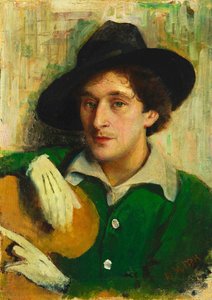
1887 - 1985 , Belarus

Explore the revolutionary world of Naïve Art & Primitivism! Discover how artists challenged academic traditions with raw emotion & unique styles. Learn about Picasso, Rousseau & more at Most-Famous-Paintings.

Discover the profound beauty of Naïve Art. Explore how self-taught masters bypass academic tradition to capture raw emotional truth through vibrant color and soulful simplicity. A cultural journey for the true art lover seeking depth beyond convention.
Ditch the boring decor. Discover why Naive Art's raw, bold, and unfiltered aesthetic is the ultimate trend for modern urban spaces. Learn how to use vibrant colors and unstudied sincerity to create a high-impact, authentic vibe in your home or studio.
Utforsk 10 ikoniske mesterverk fra tysk ekspresjonisme! Oppdag Munch, Kirchner og Kandinsky – historiene bak fargene, teknikkene & følelsene. Finn museumskvalitets kunsttrykk for ditt hjem på Most-Famous-Paintings.com.

Oppdag de 10 mest legendariske litografiene som revolusjonerte kunsten! Fra Picasso til Munch – lær historien bak mesterverkene og finn inspirasjon for ditt hjem. Museumskvalitet kunsttrykk på Most-Famous-Paintings.no. Utforsk samlingen online!


Hold deg oppdatert med de siste kunstnyhetene, eksklusive tilbud og dekorasjonsideer.
Fortell oss om prosjektet ditt, så vil våre kunsteksperter gi deg 3 personlige kunstforslag.
Vi velger ut 3 alternativer kun for deg – helt gratis!


 Forhåndsvisning
 Send
Send Del med andre
 Vis detaljer

 Last ned bildet
 Liknende objekter
 Røntgenundersøkelse
 Lysbildefremvisning
 Vis hele teksten







 Glassalternativet er kun tilgjengelig i størrelser under 110 cm


