x

 Akryl på lerretVeggkunstEarly Cubism
 1911
1911 24.0 x 34.0 cm
Giclée- eller lerretsprint av museumskvalitet med rask produksjon og fleksible valgmuligheter for etterbehandling. ( Kjøp håndlaget maleri Kjøp bilde)





























Velg mellom våre forhåndsdefinerte størrelser som bevarer kunstverkets opprinnelige proporsjoner.

Du kan oppgi egne mål for å tilpasse en spesifikk ramme eller et bestemt område. Dersom den valgte størrelsen ikke samsvarer med det originale bildets proporsjoner, vil vi enten beskjære kunstverket eller utvide bildet med en speilet eller ensfarget kant. En digital mockup vil bli sendt til din godkjenning før produksjonen starter.
Vennligst merk at forhåndsvisningen på skjermen ikke gjenspeiler den faktiske beskjæringen eller utvidelsen. Kun mockuppen vil vise den endelige komposisjonen nøyaktig.
Selv om tilpassede størrelser er tilgjengelige, anbefaler vi å velge et mål fra den forhåndsdefinerte listen for å bevare de originale proporsjonene.
Verdensomspennende levering () på 2 uker i stedet for standard 4/5 uker. (20 August)


Liggende Nøkket
Størrelse på reproduksjon
Marc Chagall's “Reclining Nude,” painted in 1911, isn’t merely a depiction of the female form; it’s an immersion into the artist’s deeply personal world—a vibrant tapestry woven from memory, folklore, and the burgeoning experimentation of early Cubism. This gouache on cardboard painting, measuring just 24 x 34 cm, holds within its compact dimensions a universe of emotion and artistic innovation. It's a piece that whispers tales of Vitebsk, Chagall’s birthplace, and resonates with the artist’s unique vision of the world – a vision profoundly shaped by his Jewish heritage and an unwavering belief in the power of imagination.
During this pivotal period in his career, Chagall was navigating a fascinating crossroads of artistic influences. He was deeply affected by Neo-Impressionism's meticulous use of color, Divisionism’s fragmented forms, and the bold experimentation of Fauvism. These movements coalesced within him, pushing him toward a style that would ultimately define Cubism – not in its rigid geometric deconstruction, but rather in a more fluid, emotionally charged exploration of space and form. “Reclining Nude” stands as a crucial early example of this evolution, showcasing his willingness to break from traditional representation and embrace a new language of visual expression.
The painting immediately captivates with its dynamic composition. The central figure, a reclining nude woman, dominates the frame, yet she doesn’t feel static or posed. Instead, she appears to be caught in a moment of quiet repose, almost as if drifting through a dream. Her arm extends outwards, inviting the viewer into her intimate space, while her gaze is directed upwards, suggesting a connection with something beyond the earthly realm. The use of earthy tones – ochres, browns, and muted reds – creates a warm, inviting atmosphere, contrasting beautifully with the vibrant splashes of color that punctuate the background.
Noticeably, a bouquet of flowers in a vase occupies the upper left corner, adding depth and complexity to the composition. This isn’t simply decorative; it's symbolic. Flowers often represent beauty, fertility, and fleeting moments of joy – elements deeply rooted in Chagall’s personal iconography. A chair is subtly placed on the far left, hinting at domesticity and a sense of groundedness amidst the ethereal quality of the scene. The geometric shapes and abstracted forms, characteristic of his early Cubist explorations, are not jarring but rather contribute to the painting's overall dreamlike atmosphere.
Chagall’s work during this period was profoundly influenced by contemporaries like Pablo Picasso and Georges Braque – both pioneers in the development of Cubism. However, Chagall infused his explorations with a distinctly personal sensibility, drawing heavily on the folklore and traditions of his Vitebsk upbringing. The painting evokes memories of his childhood, perhaps referencing the vibrant marketplaces and religious imagery that defined his early life.
The influence of Russian Orthodox iconography is also evident in the use of color and the stylized representation of figures. It’s important to note that Chagall was actively experimenting with techniques at this time, moving away from purely representational art towards a more expressive and symbolic approach. “Reclining Nude” exemplifies this shift – it's not just about depicting a nude woman; it’s about conveying an emotional state, a feeling of longing, and a connection to the past.
“Reclining Nude” is more than just a beautiful painting; it’s a significant work in the history of modern art. It represents a crucial stage in Chagall's artistic development – a period of experimentation and discovery that ultimately shaped his unique style. The painting’s enduring appeal lies in its ability to transport us to another world, inviting us to lose ourselves in its dreamlike atmosphere and contemplate the mysteries of memory and imagination. As a testament to this, it continues to inspire artists and art enthusiasts alike. For those seeking a high-quality reproduction, Most-Famous-Paintings offers exceptional hand-painted versions that capture the essence of Chagall’s genius.
To explore more works by Marc Chagall, visit /art/list/?Filter=Marc-Chagall.

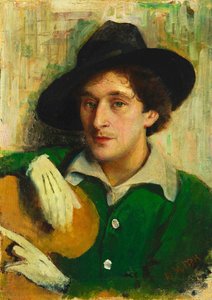
1887 - 1985 , Belarus
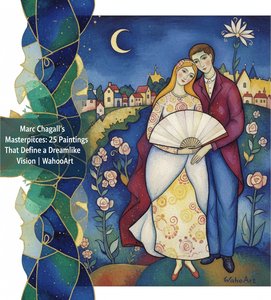
Oppdag Marc Chagalls 25 mest ikoniske malerier! Fordyp deg i drømmende kunst, fargerik kubisme og jødisk folklore. Finn inspirasjon til interiørkunst & kjøp museumskvalitets reproduksjoner på Most-Famous-Paintings.com.

Explore the captivating history of nude art! Discover iconic paintings & artists from classical to modern eras. Uncover symbolism, techniques & find museum-quality reproductions at Most-Famous-Paintings.
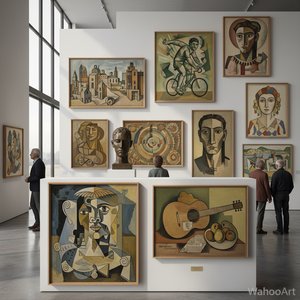
Utforsk kubismens 10 mest ikoniske mesterverk! Lær historien bak Picasso, Braque og andre legender. Finn inspirasjon til interiørdesign & kjøp museumskvalitets reproduksjoner på Most-Famous-Paintings.no – din kilde for abstrakt kunst.

Explore the revolutionary impact of Cubism on 20th-century art. Discover Picasso, Braque & beyond with our expert guide to this pivotal movement. Learn about Analytic & Synthetic Cubism's techniques and lasting legacy.

Explore the captivating world of Art Deco! Discover its history, key characteristics, enduring influence on design & collecting with expert insights from Most-Famous-Paintings.com.


Hold deg oppdatert med de siste kunstnyhetene, eksklusive tilbud og dekorasjonsideer.
Fortell oss om prosjektet ditt, så vil våre kunsteksperter gi deg 3 personlige kunstforslag.
Vi velger ut 3 alternativer kun for deg – helt gratis!


 Forhåndsvisning
 Send
Send Del med andre
 Vis detaljer

 Last ned bildet
 Liknende objekter
 Røntgenundersøkelse
 Lysbildefremvisning
 Vis hele teksten







 Glassalternativet er kun tilgjengelig i størrelser under 110 cm