


x

 Acrylic On CanvasWallArtAbstract Expressionism
 1964Modern
 267.0 x 204.0 cm
Kjøp et høyoppløselig, forbedret digitalt bilde som er langt bedre enn forhåndsvisningen på nettet.
Hver fil er omhyggelig klargjort av våre egne spesialister ved hjelp av avanserte verktøy og profesjonell manuell retusjering. Vi sørger for at hvert bilde har eksepsjonell klarhet, presis fargegjengivelse og fine detaljer.
Den endelige filen leveres via e-post innen 72 timer, optimalisert for umiddelbar bruk i profesjonelle, redaksjonelle og trykte miljøer. Dette er den samme kvaliteten som benyttes av ledende designstudioer, utgivere og gallerier.
Last ned en høyoppløselig fil for personlig bruk, utskrift og kreative prosjekter. ( Kjøp trykk Kjøp håndlaget maleri)
Når du velger Most-Famous-Paintings.com, får du ikke bare et bilde – du mottar et profesjonelt forbedret digitalt kunstverk, skapt med presisjon og med en garantert tilfredshetsgaranti. Her er alt som automatisk følger med din bestilling:

Din høyoppløselige digitale bildefil sendes til din e-post innen 72 timer etter bestilling – klar til umiddelbar bruk.

Ditt kunstverk blir profesjonelt optimalisert ved hjelp av avanserte AI-verktøy og manuell redigering, noe som sikrer maksimal detaljrikdom, klarhet og fargegjengivelse.

Har du ved et uhell slettet eller mistet filen din? Ingen bekymring – vi sender den på nytt når som helst, helt gratis.

Nyt ditt kunstverk umiddelbart uten toll, avgifter eller leveringskostnader – digitale nedlastinger er alltid avgiftsfrie.

Vi sikrer at ditt digitale bilde gjenspeiler de originale fargene så nøyaktig som mulig ved hjelp av profesjonelle verktøy og fargehåndtering.

Hvis du ikke er fornøyd med ditt digitale bilde, vil vi revidere det eller refundere 100% innen 60 dager – uten spørsmål.

Ikke fornøyd? Få full refusjon innen 60 dager etter at du har mottatt din digitale fil – uten spørsmål.

Kjøp 3 bilder, spar 10% - Kjøp 5, spar 15% - Kjøp 10+, spar 20%. Ideelt for kreative prosjekter, gallerier og byråer.
Mark Rothko's “No. 8,” painted in 1964, isn’t merely a depiction of rectangles; it’s an immersion into the profound anxieties and spiritual yearning that defined his mature style. The sheer scale – 267 x 204 cm – immediately commands attention, enveloping the viewer within its dark expanse. This monumental canvas speaks to a desire for something beyond the everyday, a reaching towards an unknowable truth. The muted palette of deep blacks punctuated by sparse, luminous whites creates a tension that is both unsettling and deeply compelling. It’s a painting that demands contemplation, inviting the observer to confront their own perceptions of light, shadow, and ultimately, existence itself.

(Image Placeholder - Replace with an actual image of the artwork)
Rothko’s technique, rooted in a meticulous layering of translucent acrylic paint, is crucial to understanding “No. 8.” He didn't employ traditional brushstrokes; instead, he built up the color fields through countless thin washes, creating an almost velvety texture. This process, known as ‘allagrismi,’ allowed the colors to bleed into one another subtly, generating a shimmering effect and imbuing the painting with a sense of movement and depth. The rectangles themselves aren’t static forms; they seem to pulse with an inner light, shifting in appearance depending on the viewer's perspective and the ambient lighting. This deliberate ambiguity is key – Rothko sought to evoke emotion rather than represent a concrete subject.
Born Markus Yakovlevich Rothkowitz in 1903, in Daugavpils, Latvia, Mark Rothko’s life was profoundly shaped by displacement and loss. His early experiences – the pogroms, his father's death, and the family’s emigration to Portland – instilled a deep-seated awareness of human suffering. This trauma became the bedrock of his artistic vision. “No. 8,” created during a period of intense personal struggle, reflects this preoccupation with mortality and the search for solace in the face of existential dread. The painting can be seen as an attempt to grapple with these difficult emotions through abstraction, offering a visual representation of the intangible.
While Rothko resisted definitive interpretations of his work, art historians have identified recurring motifs within his paintings. The rectangles are often interpreted as representing windows or portals – glimpses into another realm, perhaps reflecting the artist’s own yearning for transcendence. The darkness isn't simply a lack of light; it symbolizes the unknown, the unconscious, and the inevitability of death. The small white rectangles, strategically placed, act as beacons of hope within this oppressive darkness, offering a fragile suggestion of redemption or spiritual awakening. “No. 8” is not about providing answers but about posing profound questions – questions that resonate deeply with the human condition.
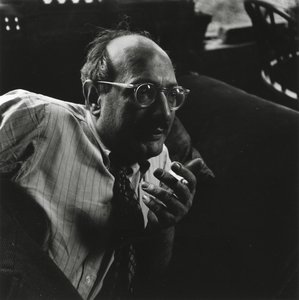
1903 - 1970 , Latvia


Hold deg oppdatert med de siste kunstnyhetene, eksklusive tilbud og dekorasjonsideer.
Fortell oss om prosjektet ditt, så vil våre kunsteksperter gi deg 3 personlige kunstforslag.
Vi velger ut 3 alternativer kun for deg – helt gratis!


 Forhåndsvisning
 Send
Send Del med andre
 Vis detaljer

 Last ned bildet
 Liknende objekter
 Røntgenundersøkelse
 Lysbildefremvisning
 Vis hele teksten


