


x

 Oil On CanvasWallArtSurrealist Movement
 1927Modern
 54.0 x 65.0 cm
Håndmalt olje på lerret i din valgte størrelse og ramme, laget på bestilling av våre kunstnere. ( Kjøp trykk Kjøp bilde)





























Velg mellom våre forhåndsdefinerte størrelser som bevarer kunstverkets opprinnelige proporsjoner.

Du kan angi egne mål for å tilpasse en spesifikk ramme eller plass. Dersom den valgte størrelsen ikke samsvarer med originalbildets proporsjoner, vil vi enten beskjære kunstverket eller utvide maleriet med ytterligere håndmalte elementer. En digital mockup vil bli sendt til din godkjenning før produksjonen starter.
Vennligst merk at forhåndsvisningen på skjermen ikke gjenspeiler den faktiske beskjæringen eller utvidelsen. Kun mockuppen vil vise den endelige komposisjonen nøyaktig.
Selv om tilpassede størrelser er tilgjengelige, anbefaler vi å velge et mål fra den forhåndsdefinerte listen for å bevare de originale proporsjonene.
Verdensomspennende levering () på 3–4 uker i stedet for standard 5 uker. (22 August). Ingen kompromisser med kvaliteten.


Fishbone Forest
Størrelse på reproduksjon
In the hauntingly beautiful 1927 masterpiece “Fishbone Forest,” Max Ernst invites us to step beyond the threshold of reality and into a realm where the boundaries of the conscious mind dissolve. This seminal work of Surrealism is far more than a mere landscape; it is a psychological labyrinth, a carefully constructed vision that captures the unsettling tension between life and death. As one gazes upon the canvas, the eye is immediately drawn to the celestial duality of a luminous sun encircled by a moon-like disc, casting an ethereal glow over a world that feels simultaneously ancient and alien. The composition is populated by scattered sheep, some resting in tranquil repose while others stand alert, creating an incongruous tableau that disrupts our conventional understanding of nature. It is a scene that breathes with the restless energy of a dream, making it an extraordinary centerpiece for any collection seeking to provoke thought and conversation.
The technical brilliance of Ernst’s execution lies in his revolutionary approach to texture and materiality. Drawing from his experimental years at Bonn University, Ernst utilized frottage and grattage—techniques involving the rubbing and scraping of surfaces to reveal organic, hidden patterns. Through these methods, he achieved a tactile richness that makes the canvas appear to pulse with life. The skeletal, bone-like structures that emerge from the earth and sky are not merely painted; they seem to have been unearthed from the very fabric of the canvas itself. This mastery of texture allows the viewer to feel the grit and the organic decay of the forest, providing a sensory depth that is essential for those looking to bring a sophisticated, multi-dimensional element into a curated interior space.
Beyond its striking visual surface, “Fishbone Forest” serves as a profound meditation on the human condition. Ernst masterfully juxtaposes symbols of innocence with emblems of mortality. The soft, vulnerable presence of the sheep represents purity and the enduring cycle of life, yet they are inextricably woven into a landscape defined by skeletal forms and structural decay. This deliberate tension reflects the core tenets of the Surrealist movement: the confrontation of existential anxieties through the celebration of the irrational. For the discerning collector or interior designer, this painting offers more than aesthetic pleasure; it provides an emotional anchor, a piece that embodies the beautiful contradictions of our existence—the way beauty can be found within the unsettling and how life persists amidst the remnants of the past.
To possess a reproduction of such a significant work is to invite a piece of art history into one's home. Whether placed in a minimalist modern gallery or a richly textured study, “Fishbone Forest” commands attention through its ability to evoke wonder and introspection. It remains a testament to Max Ernst’s legacy as a pioneer who dared to bypass logic to tap directly into the primal imagery of the human psyche, offering a window into a world where the only rule is the boundless freedom of the imagination.

Max Ernst, born Maximilian Maria Ernst on April 1st, 1891, in Brühl, Germany, was a restless spirit destined to become one of the most pivotal figures in 20th-century art. His journey wasn’t one of conventional artistic training; rather, it was a self-directed exploration fueled by philosophical inquiry, psychological fascination, and a profound disillusionment with societal norms. Ernst's father, a teacher of the deaf and an amateur painter, instilled in him both a sensitivity to the world and a rebellious streak against established authority. This early duality would become a defining characteristic of his artistic vision.
Ernst’s academic pursuits at the University of Bonn – encompassing philosophy, art history, literature, psychology, and psychiatry – were not merely diversions but foundational elements that deeply informed his later work. He wasn’t simply interested in *how* to paint; he was grappling with *why*. This intellectual curiosity led him to encounter the groundbreaking works of Picasso, Van Gogh, and Gauguin at the Sonderbund exhibition in Cologne in 1912, a moment that irrevocably altered his artistic trajectory. The seeds of modernism had been sown.
The cataclysm of World War I proved to be a watershed moment for Ernst. His experiences as a soldier on both the Eastern and Western fronts left him profoundly shaken, fostering a deep skepticism towards established order and a yearning for new modes of expression. This disillusionment found fertile ground in the burgeoning Dada movement, which he embraced wholeheartedly after returning to Cologne in 1918. Alongside Hans Arp – a lifelong friend and collaborator – Ernst became a central figure in the Cologne Dada group, rejecting traditional artistic conventions and embracing absurdity, chance, and anti-rationality.
The Dadaists sought to dismantle bourgeois values and challenge accepted notions of beauty and logic. They employed techniques like collage, photomontage, and assemblage—often incorporating found objects—to create jarring juxtapositions that mocked the seriousness of the era. Ernst’s Dada output was marked by a preoccupation with disturbing imagery and a deliberate disregard for conventional artistic standards.
Ernst's artistic innovation extended beyond subject matter; he was a relentless experimenter with technique. He didn’t simply adopt existing methods—he invented new ones. Perhaps his most famous contribution is frottage, a process of rubbing pencil or charcoal over textured surfaces to create unexpected and evocative images. This technique, born from a moment of boredom while observing wood grain, allowed Ernst to tap into the subconscious and generate forms that defied conscious control. It was a method he famously described as “a way of letting the unconscious speak.”
Closely related was grattage, where paint is scraped across canvas revealing underlying layers—often incorporating textures and patterns created by previous paintings. Ernst’s meticulous layering of colors and surfaces contributed to the dreamlike atmosphere characteristic of his work.
Ernst's engagement with Surrealism solidified his commitment to exploring the realm of dreams, the unconscious mind, and the irrational. Influenced by Sigmund Freud’s psychoanalytic theories—particularly his concept of “the Oedipus complex”—Ernst sought to unlock hidden desires and anxieties through his art. He wasn’t interested in depicting reality as it appeared but rather in revealing the underlying psychological forces that shaped perception.
His paintings frequently incorporate symbolic imagery: birds (often representing freedom and aspiration), desolate landscapes reflecting inner turmoil, unsettling juxtapositions designed to provoke thought and emotion—and recurring motifs like Loplop, Ernst’s alter ego, which embodies a blend of masculine and feminine energies. His artistic vision was driven by a profound desire to confront the darker aspects of human experience.
Throughout his prolific career, Ernst produced an astonishing array of paintings, sculptures, prints, and drawings—spanning genres from figurative landscapes to abstract compositions. Notable works include “Ofrenda funeraria,” “The Equivocal Woman,” and “L’Ange du foyer”—each demonstrating Ernst's mastery of technique and his ability to convey complex psychological states.
Max Ernst’s influence on subsequent generations of artists is undeniable. He championed innovative methods, challenged artistic conventions, and established himself as a cornerstone of Surrealist art—a movement that continues to resonate with audiences worldwide. His legacy resides not only in his stunning visual creations but also in his unwavering belief in the transformative power of imagination and the importance of confronting uncomfortable truths.
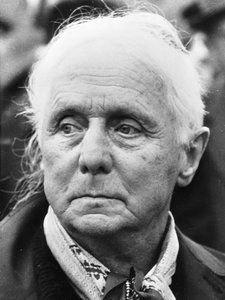
1891 - 1976 , Tyskland

Step into a world of dreams with our guide to the 10 greatest Surrealist masterpieces. From Dali to Magritte, explore the stories behind these iconic works and find museum-quality art reproductions for your decor. Discover all masterpieces on Most-Famous-Paintings.com.

Step into a world of dreams with our guide to the 10 greatest Surrealist masterpieces. From Dali to Magritte, explore the stories behind these iconic works and find museum-quality art reproductions for your decor. Discover all masterpieces on Most-Famous-Paintings.com.
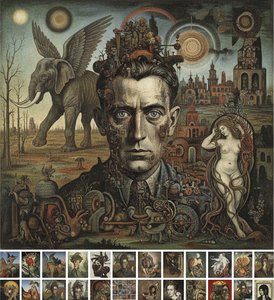
Step into the dreamscapes of Max Ernst. Explore 25 iconic Surrealist masterpieces, from pioneering collage to haunting Frottage techniques. Find inspiration for your collection with museum-quality art reproductions and curated decor ideas. Discover all masterpieces on Most-Famous-Paintings.com.


Hold deg oppdatert med de siste kunstnyhetene, eksklusive tilbud og dekorasjonsideer.
Fortell oss om prosjektet ditt, så vil våre kunsteksperter gi deg 3 personlige kunstforslag.
Vi velger ut 3 alternativer kun for deg – helt gratis!


 Forhåndsvisning
 Send
Send Del med andre
 Vis detaljer

 Last ned bildet
 Liknende objekter
 Røntgenundersøkelse
 Lysbildefremvisning
 Vis hele teksten







 Glassalternativet er kun tilgjengelig i størrelser under 110 cm


