x

Giclée- eller lerretsprint av museumskvalitet med rask produksjon og fleksible valgmuligheter for etterbehandling. ( Kjøp håndlaget maleri Kjøp bilde)





























Velg mellom våre forhåndsdefinerte størrelser som bevarer kunstverkets opprinnelige proporsjoner.

Du kan oppgi egne mål for å tilpasse en spesifikk ramme eller et bestemt område. Dersom den valgte størrelsen ikke samsvarer med det originale bildets proporsjoner, vil vi enten beskjære kunstverket eller utvide bildet med en speilet eller ensfarget kant. En digital mockup vil bli sendt til din godkjenning før produksjonen starter.
Vennligst merk at forhåndsvisningen på skjermen ikke gjenspeiler den faktiske beskjæringen eller utvidelsen. Kun mockuppen vil vise den endelige komposisjonen nøyaktig.
Selv om tilpassede størrelser er tilgjengelige, anbefaler vi å velge et mål fra den forhåndsdefinerte listen for å bevare de originale proporsjonene.
Verdensomspennende levering () på 2 uker i stedet for standard 4/5 uker. (20 August)


The Weaver
Størrelse på reproduksjon
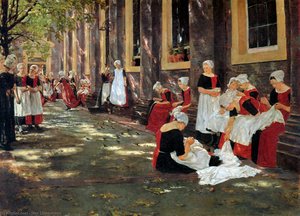
Max Liebermann’s “The Weaver” isn't merely a depiction of a woman at her loom; it’s a carefully constructed tableau that invites us into the heart of late 19th-century German craft. Painted in 1882, this oil-on-canvas work resides within the Stadelsches Kunstinstitut in Frankfurt, Germany, and immediately draws the viewer in with its warm palette and intimate setting. Liebermann, a master of capturing everyday life with an Impressionistic sensibility, skillfully avoids romanticizing the scene. Instead, he presents a realistic portrayal of a woman diligently engaged in her trade – a weaver working within the modest confines of her home. The composition is deliberately balanced, featuring the central figure bathed in soft light, surrounded by familiar domestic objects: a chair, a table laden with bottles and bowls, and glimpses of other individuals contributing to the household’s activity.
(Image source: Artvee)
Liebermann’s approach to “The Weaver” is a fascinating blend of Impressionistic techniques and a deep appreciation for the tangible world. He employs broken brushstrokes, layering colors to create a sense of light and atmosphere – a hallmark of the Impressionist movement. However, unlike many of his contemporaries who focused on capturing fleeting moments in nature, Liebermann grounds his work in the realities of daily life. The meticulous detail with which he renders the loom, the threads, and the textures of the fabrics speaks to his respect for the craft itself. This isn’t a painting about beauty; it's about honest labor and the quiet dignity of skilled artisans. The warm tones – ochres, browns, and muted yellows – evoke a sense of comfort and familiarity, suggesting the coziness of the weaver’s domestic space.
Beyond its aesthetic qualities, “The Weaver” offers a poignant glimpse into the social dynamics of the time. The scene unfolds within a humble dwelling, reflecting the lives of working-class families who relied on skilled crafts for their livelihood. Liebermann subtly portrays the interconnectedness of these individuals – the man weaving, the other figures assisting with various tasks. This isn’t a portrait of isolation; it's a depiction of community and shared labor. The painting serves as a reminder of the importance of artisans in society, highlighting their contribution to the economic and cultural fabric of the era. It subtly raises questions about social class and the value placed on manual labor – themes that resonate even today.
Liebermann’s masterful use of color is central to the painting's impact. The warm hues create a sense of intimacy and tranquility, drawing the viewer into the scene. Notice how he uses light to illuminate the weaver’s hands as they move across the loom – a gesture that emphasizes her skill and dedication. The arrangement of objects within the room also carries symbolic weight. The bottles and bowls suggest sustenance and domesticity, while the loom itself represents both labor and creativity. “The Weaver” is more than just a representation of a craft; it’s a carefully considered meditation on work, community, and the beauty found in everyday life.


1847 - 1935 , Tyskland

Discover how to transform your new home with the warmth of textile art. Our expert guide for newlyweds explores handwoven tapestries, tactile fibers, and timeless ways to curate a soulful, sophisticated interior through beautiful woven wonders.

Oppdag impressionismens magi! Utforsk 10 ikoniske kunstverk av Monet, Renoir & Degas. Lær om historien bak maleriene og finn inspirasjon til din egen veggkunst på Most-Famous-Paintings.com – museumskvalitet for hjemmet ditt.

Embark on a sophisticated journey through the tactile realm of textile art. Unveil the historical evolution from utilitarian craft to museum-grade masterpieces, exploring the intricate textures and legendary artists that redefine the boundaries of fine art.

Explore the captivating world of Impressionism! Discover its history, key artists like Monet & Renoir, defining techniques, and lasting impact on modern art. Expert insights for collectors.

Dykk ned i impresjonismens og postimpresjonismens verden med vår ekspertguide. Lær å identifisere, vurdere og investere i mesterverk fra Monet, Van Gogh og Cézanne. For den kresne kunstsamleren.


Hold deg oppdatert med de siste kunstnyhetene, eksklusive tilbud og dekorasjonsideer.
Fortell oss om prosjektet ditt, så vil våre kunsteksperter gi deg 3 personlige kunstforslag.
Vi velger ut 3 alternativer kun for deg – helt gratis!


 Forhåndsvisning
 Send
Send Del med andre
 Vis detaljer

 Last ned bildet
 Liknende objekter
 Røntgenundersøkelse
 Lysbildefremvisning


 Vis hele teksten







 Glassalternativet er kun tilgjengelig i størrelser under 110 cm