x


 Preview
 Bestill maleri Kjøp digitalt bilde
 Send
Send
 Vis detaljer
 Legg til i favoritter
 Last ned bildet
 Liknende objekter
 Røntgenundersøkelse
 Lysbildefremvisning
 Acrylic On CanvasWallArtEarly Netherlandish Painting
 58.0 x 28.0 cm
 Szépművészeti Múzeum
Giclée- eller lerretsprint av museumskvalitet med rask produksjon og fleksible valgmuligheter for etterbehandling.





























Velg mellom våre forhåndsdefinerte størrelser som bevarer kunstverkets opprinnelige proporsjoner.

Du kan oppgi egne mål for å tilpasse en spesifikk ramme eller et bestemt område. Dersom den valgte størrelsen ikke samsvarer med det originale bildets proporsjoner, vil vi enten beskjære kunstverket eller utvide bildet med en speilet eller ensfarget kant. En digital mockup vil bli sendt til din godkjenning før produksjonen starter.
Vennligst merk at forhåndsvisningen på skjermen ikke gjenspeiler den faktiske beskjæringen eller utvidelsen. Kun mockuppen vil vise den endelige komposisjonen nøyaktig.
Selv om tilpassede størrelser er tilgjengelige, anbefaler vi å velge et mål fra den forhåndsdefinerte listen for å bevare de originale proporsjonene.
Verdensomspennende levering () på 2 uker i stedet for standard 4/5 uker. (26 July)


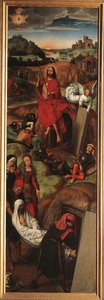
Resurrection
Størrelse på reproduksjon
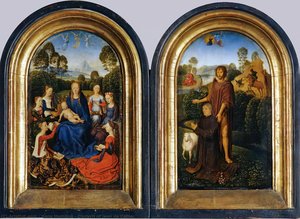
Hans Memling’s “Resurrection,” rendered in exquisite detail on a canvas measuring 58 x 28 cm, is more than just a depiction of a pivotal biblical event; it's a profound meditation on faith, hope, and the triumph over death. Created during the height of his career in Bruges around the late 15th century – though the precise dating remains elusive – this panel from the Triptych of the Resurrection stands as a testament to Memling’s mastery of Early Netherlandish painting and his deep understanding of religious iconography.
The scene unfolds with breathtaking realism. At its heart, we witness Jesus Christ being lifted vertically into the heavens by a multitude of angels, their wings spread wide in an act of divine assistance. The physicality of the resurrection is powerfully conveyed: Jesus’s body, rendered with meticulous attention to musculature and drapery, strains against the earthly bonds that have held him captive. Below, figures representing the mourning disciples – some weeping, others gazing upwards in stunned disbelief – are caught in the immediate aftermath of this miraculous event. The composition isn't merely a record of an occurrence; it’s a dynamic tableau brimming with emotional intensity.
Memling’s technique is characterized by its painstaking realism, a hallmark of the Early Netherlandish style. He employed oil paints to achieve unparalleled luminosity and depth, layering translucent glazes to create an almost ethereal quality. Notice the subtle variations in color – the warm hues of Jesus's flesh contrasting with the cool blues and purples of the angels’ robes – and the meticulous rendering of textures: the folds of the drapery, the rough surfaces of the stone, the delicate feathers of the birds circling above. The artist’s use of perspective is remarkably sophisticated for its time, creating a convincing sense of space and volume.
Crucially, Memling's work demonstrates his deep understanding of symbolism. The presence of swords, notably one held by John the Evangelist, alludes to the sacrifice Jesus made on the cross – a reminder that this resurrection is inextricably linked to his death. The birds soaring upwards represent the soul’s ascent to God. Even the placement of the cross in the upper left corner serves as a visual anchor, grounding the scene within the broader narrative of salvation. The inclusion of various figures and objects—a testament to the universality of faith—further enriches the work's symbolic weight.
Hans Memling’s rise to prominence in Bruges is inextricably linked to his apprenticeship under Rogier van der Weyden, a master whose influence can be seen throughout Memling’s oeuvre. However, Memling quickly developed his own distinctive style, characterized by an unparalleled attention to detail and a profound sense of spirituality. He operated a prolific workshop, disseminating his artistic vision across Europe and leaving behind a legacy of stunning religious paintings.
The Triptych of the Resurrection, in which this panel forms part, is considered one of Memling’s most significant achievements. It exemplifies the artistic trends of the late 15th century – a period marked by increasing interest in realism, naturalism, and the depiction of religious subjects with unprecedented emotional depth. Memling's work continues to resonate today, not only for its technical brilliance but also for its enduring message of hope and redemption. Reproductions offer a remarkable opportunity to experience this masterpiece’s power and beauty firsthand.
“Resurrection” transcends mere historical documentation; it is an invitation to contemplate the profound mysteries of faith. The scene evokes a powerful sense of awe and wonder, capturing the transformative moment when death is overcome by divine grace. The figures’ expressions – ranging from grief to ecstatic joy – reflect the complex range of human emotions associated with this pivotal event.
Whether adorning a private chapel or gracing a corporate space, this artwork's ability to inspire contemplation and evoke feelings of hope makes it a timeless addition to any collection. The meticulous detail and luminous colors create an immersive experience, drawing the viewer into the heart of the narrative and reminding us of the enduring power of faith.

Tyskland

Oppdag de 25 mest ikoniske kunstverkene fra Metropolitan Museum of Art i New York! Lær historien bak Rembrandt, Van Gogh, Monet og mer. Finn inspirasjon til interiøret ditt med museumskvalitets reproduksjoner på Most-Famous-Paintings.com.
Utforsk Alte Pinakotekets 25 mest ikoniske malerier! Oppdag renessanse- og barokkmesterverk av Dürer, Rembrandt & Caravaggio. Finn inspirasjon til hjemmet ditt med museumskvalitets reproduksjoner på Most-Famous-Paintings.com.
Oppdag de 25 mest ikoniske kunstverkene på National Gallery of Art i Washington! Fra Cézanne til Picasso – utforsk historien, teknikken og skjønnheten bak hvert mesterverk. Finn inspirasjon til interiøret ditt og kjøp museumskvalitets reproduksjoner på Most-Famous-Paintings.com.
Utforsk James Abbott McNeill Whistlers 25 mest ikoniske kunstverk! Oppdag historien bak Nocturnes, portretter og impresjonistisk harmoni. Finn museumskvalitets reproduksjoner & interiørinspirasjon på Most-Famous-Paintings.com.
Utforsk 25 ikoniske malerier av Henri Matisse! Oppdag historien bak fauvismens fargerike mesterverk, fra 'The Dance' til 'Red Studio'. Finn kunsttrykk og reproduksjoner i museumskvalitet for din interiørdesign på Most-Famous-Paintings.com.


Hold deg oppdatert med de siste kunstnyhetene, eksklusive tilbud og dekorasjonsideer.
Fortell oss om prosjektet ditt, så vil våre kunsteksperter gi deg 3 personlige kunstforslag.
Vi velger ut 3 alternativer kun for deg – helt gratis!


 Del med andre

 Vis hele teksten







 Glassalternativet er kun tilgjengelig i størrelser under 110 cm


![The Passion [detail] — Hans Holbein Den Yngre, Northern Renaissance](/media/artworks/images/thumbnails/05/7f/057f8051c622487fae8ae052bf714363.jpg)