x

 Oil On CanvasWallArtEarly Netherlandish Renaissance
 1475
1475 31.0 x 24.0 cm
Giclée- eller lerretsprint av museumskvalitet med rask produksjon og fleksible valgmuligheter for etterbehandling. ( Kjøp håndlaget maleri Kjøp bilde)





























Velg mellom våre forhåndsdefinerte størrelser som bevarer kunstverkets opprinnelige proporsjoner.

Du kan oppgi egne mål for å tilpasse en spesifikk ramme eller et bestemt område. Dersom den valgte størrelsen ikke samsvarer med det originale bildets proporsjoner, vil vi enten beskjære kunstverket eller utvide bildet med en speilet eller ensfarget kant. En digital mockup vil bli sendt til din godkjenning før produksjonen starter.
Vennligst merk at forhåndsvisningen på skjermen ikke gjenspeiler den faktiske beskjæringen eller utvidelsen. Kun mockuppen vil vise den endelige komposisjonen nøyaktig.
Selv om tilpassede størrelser er tilgjengelige, anbefaler vi å velge et mål fra den forhåndsdefinerte listen for å bevare de originale proporsjonene.
Verdensomspennende levering () på 2 uker i stedet for standard 4/5 uker. (12 August)


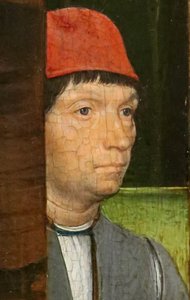
St. Veronica
Størrelse på reproduksjon
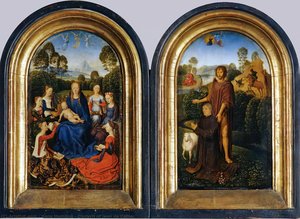
Hans Memling's “St. Veronica,” painted in 1475, stands as a cornerstone of Early Netherlandish art—a movement that prioritized meticulous detail and spiritual contemplation alongside breathtaking realism. More than just a portrait, it’s an immersive experience into the heart of fifteenth-century piety, capturing the profound reverence felt for religious iconography.
The painting depicts St. Veronica, a disciple of Jesus Christ who miraculously possessed a veil bearing his likeness after he carried his crucifix down Calvary. Memling skillfully portrays Veronica kneeling in prayerful devotion, her gaze fixed upon the veil—a poignant symbol of compassion and humility. The composition is carefully balanced, featuring two figures flanking St. Veronica: one standing upright, radiating authority, and the other seated beneath him, offering a sense of serenity and contemplation. A rocky outcrop serves as an understated yet significant backdrop, grounding the scene in the natural world and reinforcing its spiritual atmosphere.
Memling's approach aligns perfectly with the broader stylistic trends of the Flemish Primitives—a movement that distinguished itself from its Italian counterpart by prioritizing independent artistic exploration. He achieved unparalleled realism through masterful oil painting technique, utilizing glazing layers to create luminous surfaces and capturing subtle nuances of light and shadow. The artist’s meticulous attention to detail extends beyond mere representation; it embodies a desire to convey the inner life of his subjects—a characteristic that would become synonymous with Northern Renaissance art.
The central element – Jesus' face on the veil – transcends its visual depiction. It represents Christ’s suffering endured during his crucifixion and, crucially, embodies the promise of redemption offered through faith. Memling’s deliberate choice to portray Veronica with unwavering devotion underscores the importance of humility and compassion in Christian spirituality. The veil itself symbolizes purity and divine grace—a testament to the transformative power of encountering God.
"St. Veronica" continues to resonate powerfully with viewers today, eliciting feelings of serenity, contemplation, and reverence. Memling’s work profoundly influenced subsequent generations of artists, establishing a precedent for portraying religious figures with dignity and sensitivity. His legacy extends beyond individual masterpieces; it resides in his contribution to shaping the artistic landscape of Europe during a period marked by intellectual curiosity and spiritual renewal—a testament to the enduring beauty and significance of Early Netherlandish art.

Tyskland

Explore the profound history and technical brilliance of oil on panel painting. From Renaissance masters to modern techniques, discover why this rigid support offers unparalleled precision and permanence for fine art lovers and collectors.


Hold deg oppdatert med de siste kunstnyhetene, eksklusive tilbud og dekorasjonsideer.
Fortell oss om prosjektet ditt, så vil våre kunsteksperter gi deg 3 personlige kunstforslag.
Vi velger ut 3 alternativer kun for deg – helt gratis!


 Forhåndsvisning
 Send
Send Del med andre
 Vis detaljer

 Last ned bildet
 Liknende objekter
 Røntgenundersøkelse
 Lysbildefremvisning
 Vis hele teksten







 Glassalternativet er kun tilgjengelig i størrelser under 110 cm