


x

 Akryl på lerretVeggkunstHigh Renaissance
 1493Renessansen
 285.0 x 209.0 cm
 Louvre
Giclée- eller lerretsprint av museumskvalitet med rask produksjon og fleksible valgmuligheter for etterbehandling. ( Kjøp håndlaget maleri Kjøp bilde)





























Velg mellom våre forhåndsdefinerte størrelser som bevarer kunstverkets opprinnelige proporsjoner.

Du kan oppgi egne mål for å tilpasse en spesifikk ramme eller et bestemt område. Dersom den valgte størrelsen ikke samsvarer med det originale bildets proporsjoner, vil vi enten beskjære kunstverket eller utvide bildet med en speilet eller ensfarget kant. En digital mockup vil bli sendt til din godkjenning før produksjonen starter.
Vennligst merk at forhåndsvisningen på skjermen ikke gjenspeiler den faktiske beskjæringen eller utvidelsen. Kun mockuppen vil vise den endelige komposisjonen nøyaktig.
Selv om tilpassede størrelser er tilgjengelige, anbefaler vi å velge et mål fra den forhåndsdefinerte listen for å bevare de originale proporsjonene.
Verdensomspennende levering () på 2 uker i stedet for standard 4/5 uker. (21 August)


St. Jerome
Størrelse på reproduksjon
Michelangelo Buonarroti’s “St. Jerome” – often referred to as “Jerome Penitent” – is not merely a depiction of a biblical figure; it's a profound exploration of human vulnerability, spiritual yearning, and the arduous path towards redemption. Painted in 1493, during a pivotal period in Michelangelo’s artistic development, this work transcends its subject matter to become a timeless meditation on the complexities of faith and the weight of earthly desires. The painting, currently housed at the Louvre Museum in Paris, immediately draws the viewer into a scene of stark intimacy – Jerome is rendered with an almost agonizing realism, stripped bare not just physically but emotionally.
The composition itself speaks volumes. Jerome sits upon a simple, unadorned rock, his posture conveying both exhaustion and resolute determination. His hands are clasped tightly before him, as if wrestling with internal demons or desperately seeking solace in prayer. The stark contrast between the rough texture of his clothing – a coarse brown tunic – and the smooth, polished marble beneath him emphasizes his earthly existence and the arduous journey he undertakes. Notice how Michelangelo masterfully utilizes light; it falls dramatically across Jerome’s face, highlighting the lines etched by sorrow and contemplation, while leaving much of the background shrouded in shadow, symbolizing the darkness of temptation and the struggle against sin.
Michelangelo's technical prowess is immediately evident. He was a master of anatomy, and this painting showcases his deep understanding of human musculature and form. Jerome’s body isn’t idealized in the classical sense; it’s imperfect, vulnerable, and undeniably *real*. This departure from the smooth, polished figures favored by earlier Renaissance artists signaled a shift towards greater emotional honesty. The artist's meticulous attention to detail – the subtle wrinkles around Jerome’s eyes, the furrowed brow, the slight tremor in his hands – imbues the figure with an astonishing sense of life and feeling.
Furthermore, Michelangelo employed a technique known as *sfumato*, subtly blurring the edges of Jerome's form to create a hazy, dreamlike quality. This effect contributes to the painting’s overall mood of introspection and spiritual contemplation. The use of muted earth tones – browns, ochres, and grays – reinforces this sense of solemnity and underscores the figure’s connection to the natural world.
The setting is equally significant. Jerome is depicted in a desolate desert landscape, a common motif associated with repentance and spiritual purification. The barren terrain symbolizes the emptiness of worldly pursuits and the need for detachment from material possessions. The single cypress tree in the background, reaching towards the heavens like a supplicating arm, represents Jerome’s yearning for divine grace. It's a potent visual metaphor for his desire to connect with God and overcome his past sins.
Jerome’s act of writing – he is shown meticulously copying out the Psalms – symbolizes his dedication to prayer and his commitment to living a virtuous life. The act itself, performed in solitude under the harsh desert sun, represents the inner struggle required for spiritual transformation. The very posture of Jerome—his head bowed, his gaze fixed on the parchment—suggests an intense concentration and a profound connection with something beyond the material world.
“St. Jerome” is more than just a religious painting; it’s a deeply personal expression of Michelangelo's own struggles and anxieties. Scholars believe that the work reflects his own internal conflicts, particularly his battle with lust and his desire for artistic recognition. The figure’s vulnerability and quiet intensity resonate powerfully with viewers, inviting them to contemplate their own imperfections and the challenges of living a meaningful life. It is a testament to Michelangelo's ability to capture not just the outward appearance of a biblical character but also the profound depths of human emotion – a timeless masterpiece that continues to captivate audiences centuries after its creation.


1475 - 1564 , Italia
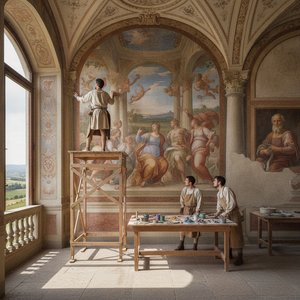
Explore the profound history and technical mastery of fresco painting. From ancient Roman murals to Michelangelo's Sistine Chapel, discover the enduring chemistry and artistry behind this timeless wall painting technique used by the world's greatest masters.


Hold deg oppdatert med de siste kunstnyhetene, eksklusive tilbud og dekorasjonsideer.
Fortell oss om prosjektet ditt, så vil våre kunsteksperter gi deg 3 personlige kunstforslag.
Vi velger ut 3 alternativer kun for deg – helt gratis!


 Forhåndsvisning
 Send
Send Del med andre
 Vis detaljer

 Last ned bildet
 Liknende objekter
 Røntgenundersøkelse
 Lysbildefremvisning
 Vis hele teksten







 Glassalternativet er kun tilgjengelig i størrelser under 110 cm


