x

 Bestill maleri Kjøp digitalt bilde
 Send
Send
 Vis detaljer
 Legg til i favoritter
 Last ned bildet
 Liknende objekter
 Røntgenundersøkelse
 Lysbildefremvisning
 WatercolorWallArtPost-Impressionism
 188219th Century
 38.0 x 20.0 cm
Giclée- eller lerretsprint av museumskvalitet med rask produksjon og fleksible valgmuligheter for etterbehandling.





























Velg mellom våre forhåndsdefinerte størrelser som bevarer kunstverkets opprinnelige proporsjoner.

Du kan oppgi egne mål for å tilpasse en spesifikk ramme eller et bestemt område. Dersom den valgte størrelsen ikke samsvarer med det originale bildets proporsjoner, vil vi enten beskjære kunstverket eller utvide bildet med en speilet eller ensfarget kant. En digital mockup vil bli sendt til din godkjenning før produksjonen starter.
Vennligst merk at forhåndsvisningen på skjermen ikke gjenspeiler den faktiske beskjæringen eller utvidelsen. Kun mockuppen vil vise den endelige komposisjonen nøyaktig.
Selv om tilpassede størrelser er tilgjengelige, anbefaler vi å velge et mål fra den forhåndsdefinerte listen for å bevare de originale proporsjonene.
Verdensomspennende levering () på 2 uker i stedet for standard 4/5 uker. (21 July)


Medea
Størrelse på reproduksjon
Paul Cézanne's Medea, created in 1882, stands as a poignant example of his evolving Post-Impressionist style. This watercolor painting, measuring 38 x 20 cm, transcends a simple depiction; it’s an exploration of human emotion rendered through innovative formal techniques.
Medea emerged during a pivotal period in art history. Post-Impressionism arose as a reaction against the fleeting, light-focused depictions of Impressionism. Cézanne, alongside artists like Vincent van Gogh and Paul Gauguin, sought to imbue their works with deeper emotional resonance and structural solidity. While Impressionists aimed to capture momentary visual impressions, Post-Impressionists delved into subjective experiences and explored formal elements—color, line, and composition—to convey meaning. This movement, predominantly French, spanned roughly from 1886 to 1905, laying the groundwork for subsequent modern art movements like Cubism.
The painting portrays a nude female figure seated on what appears to be a rocky outcrop. She cradles a child in her arms, creating an immediate sense of intimacy and maternal tenderness. Two indistinct figures are visible in the background, adding depth and suggesting a narrative beyond the central subject. Cézanne’s use of watercolor is particularly striking; the fluid medium allows for layered washes of color that create a sense of atmosphere and vulnerability. The lines are not precise but rather expressive, conveying movement and emotion over strict realism. Notice how Cézanne uses tonal variations within the foliage in the background to suggest depth, despite the somewhat flattened perspective characteristic of his style. This technique prioritizes feeling and visual impact over photographic accuracy.
The title Medea alludes to the tragic figure from Greek mythology—a powerful sorceress known for her passionate nature and devastating actions. While Cézanne’s painting doesn't explicitly depict a scene from the myth, it evokes its underlying themes of strength, resilience, and perhaps even despair. The nude figure can be interpreted as representing fertility, a connection to nature, or the raw vulnerability of human emotion. The overall composition suggests a moment of quiet contemplation amidst potential turmoil—a powerful portrayal of maternal instinct and inner fortitude.
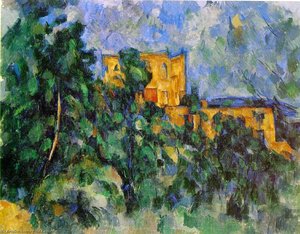
Cézanne drew inspiration from various artistic sources, including Pierre-Auguste Renoir, whose works often explored themes of love and family. However, Cézanne’s approach diverged significantly; he sought to move beyond the purely aesthetic concerns of Impressionism towards a more structured and emotionally charged representation of reality. Consider Well by the Winding Road in the Park of Chateau Noir, another notable work by Cézanne, which demonstrates his ability to capture landscapes with a sense of tranquility while employing his signature geometric approach. His later explorations into form would profoundly influence artists like Pablo Picasso and Georges Braque, solidifying his place as a pivotal figure in the transition from 19th-century art to modernism.


1839 - 1906 , Frankrike
Utforsk Paul Cézannes 25 mest ikoniske malerier! Oppdag historien bak impresjonismens mesterverk, fra stilleben til landskap. Finn kunsttrykk av høy kvalitet og interiørinspirasjon på Most-Famous-Paintings.com.

Utforsk Paul Klees 25 mest ikoniske malerier! Fordyp deg i hans abstrakte verden, fargerike ekspresjonisme og unike stil. Finn inspirasjon til interiørdesign & kjøp museumskvalitets reproduksjoner på Most-Famous-Paintings.com. Oppdag mesterverkene nå!

Oppdag impressionismens magi! Utforsk 10 ikoniske kunstverk av Monet, Renoir & Degas. Lær om historien bak maleriene og finn inspirasjon til din egen veggkunst på Most-Famous-Paintings.com – museumskvalitet for hjemmet ditt.

Oppdag de 10 mest legendariske akvarellmesterverkene av kunstnere som Turner, Monet & Goya. Lær om historien bak ikoniske malerier og finn inspirasjon til interiørdesign. Museumskvalitet reproduksjoner på Most-Famous-Paintings.no – utforsk samlingen online!

Oppdag Claude Monets 25 mest ikoniske malerier! Fordyp deg i impressionismens verden, fra vannliljer til soleiloppgang. Historien bak kunsten & eksklusive reproduksjoner på Most-Famous-Paintings.no – for et kunstfullt hjem.


Hold deg oppdatert med de siste kunstnyhetene, eksklusive tilbud og dekorasjonsideer.
Fortell oss om prosjektet ditt, så vil våre kunsteksperter gi deg 3 personlige kunstforslag.
Vi velger ut 3 alternativer kun for deg – helt gratis!


 Del med andre

 Vis hele teksten







 Glassalternativet er kun tilgjengelig i størrelser under 110 cm