x


 Preview
 Bestill trykk Kjøp digitalt bilde
 Send
Send
 Vis detaljer
 Legg til i favoritter
 Last ned bildet
 Liknende objekter
 Røntgenundersøkelse
 Lysbildefremvisning
Håndmalt olje på lerret i din valgte størrelse og ramme, laget på bestilling av våre kunstnere.





























Velg mellom våre forhåndsdefinerte størrelser som bevarer kunstverkets opprinnelige proporsjoner.

Du kan angi egne mål for å tilpasse en spesifikk ramme eller plass. Dersom den valgte størrelsen ikke samsvarer med originalbildets proporsjoner, vil vi enten beskjære kunstverket eller utvide maleriet med ytterligere håndmalte elementer. En digital mockup vil bli sendt til din godkjenning før produksjonen starter.
Vennligst merk at forhåndsvisningen på skjermen ikke gjenspeiler den faktiske beskjæringen eller utvidelsen. Kun mockuppen vil vise den endelige komposisjonen nøyaktig.
Selv om tilpassede størrelser er tilgjengelige, anbefaler vi å velge et mål fra den forhåndsdefinerte listen for å bevare de originale proporsjonene.
Verdensomspennende levering () på 3–4 uker i stedet for standard 5 uker. (24 July). Ingen kompromisser med kvaliteten.


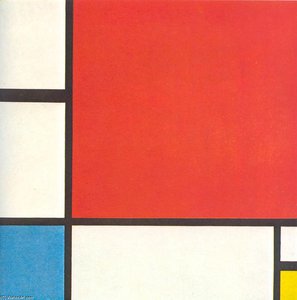
Composition with two lines
Størrelse på reproduksjon
Piet Mondrian's "Composition with Two Lines" is not merely an arrangement of black lines against a white field; it represents a pivotal moment in the evolution of abstract art, and a distillation of a lifelong pursuit of spiritual harmony. Created sometime before his death in 1944, though its precise date remains elusive, this work embodies the core principles of Neoplasticism – an artistic movement Mondrian himself championed. To understand this painting is to delve into a philosophy that sought to transcend the chaotic reality of the visible world and arrive at a universal language of form and color.
Mondrian’s journey toward abstraction was not sudden, but rather a gradual shedding of representational constraints. Born in Amersfoort, Netherlands, in 1872, he initially trained as a teacher while simultaneously honing his artistic skills. His early works were steeped in the traditions of Dutch landscape painting, echoing the muted tones and naturalistic depictions of the Hague School. However, even then, a fascination with underlying structure began to emerge. He experimented with various styles – Pointillism, Fauvism – each step pushing him further away from simply *depicting* nature towards *interpreting* its essential forms. The move to Paris in 1912 proved transformative, exposing him to the radical ideas of Cubism and sparking a period of intense experimentation. He began deconstructing objects into their geometric components, dismantling traditional perspective and challenging the very notion of pictorial space.
By the 1920s, Mondrian had fully embraced what he termed Neoplasticism – “New Plastic Art.” This wasn’t simply about removing recognizable imagery; it was a deliberate attempt to express a deeper spiritual reality through pure abstraction. He believed that by reducing art to its most fundamental elements—horizontal and vertical lines representing opposing forces, and the primary colors of red, blue, and yellow alongside black, white, and gray – he could achieve a universal aesthetic harmony. “Composition with Two Lines” exemplifies this philosophy in its purest form. The intersecting black lines aren’t arbitrary; they represent a dynamic equilibrium, a balance between opposing energies. The stark white background isn't emptiness but rather an essential void, allowing the lines to breathe and resonate. It is important to note that Mondrian wasn’t aiming for cold calculation, but rather a carefully considered arrangement meant to evoke a sense of order and serenity.
The enduring appeal of “Composition with Two Lines,” and indeed all of Mondrian's Neoplastic works, lies in their ability to transcend the purely visual. While seemingly austere, these paintings possess a quiet power that invites contemplation. They are not about *what* is depicted, but rather *how* it is perceived. The simplicity encourages viewers to engage with the work on an emotional and intellectual level, prompting questions about balance, harmony, and the nature of reality itself. This painting continues to inspire artists, designers, and architects today, its influence visible in everything from fashion to furniture. A reproduction of “Composition with Two Lines” isn’t just a decorative element; it's an invitation to bring a piece of art history – and a philosophy of pure abstraction – into your space.

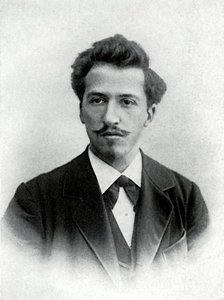
1872 - 1944 , Nederland
Utforsk de 10 mest innflytelsesrike verkene innen geometrisk abstraksjon! Oppdag historiene bak Mondrian, Kandinsky og Malevich. Finn inspirasjon til interiøret med Most-Famous-Paintings.coms eksklusive reproduksjoner – museumskvalitet for ditt hjem. Utforsk samlingen online!
Utforsk kraften i monokrom interiørdesign! Denne guiden for hotelldesignere dykker ned i ekspresjonisme, tekstur og lyssetting for å skape elegante rom. Få ekspertråd og inspirasjon.

Explore the captivating history of geometric abstraction in art, from ancient roots to contemporary masters. Expert insights for collectors & enthusiasts. Discover key artists, movements & investment potential.

Utforsk de 10 mest legendariske akrylmaleriene som revolusjonerte kunsten! Oppdag historiene bak Jackson Pollock, Mark Rothko og Andy Warhol. Finn inspirasjon til interiøret – kjøp museumskvalitets reproduksjoner på Most-Famous-Paintings.com.

Utforsk 10 legendariske akrylmalerier som revolusjonerte kunsten! Fra Jackson Pollock til Mark Rothko – oppdag historiene, teknikkene og fargepalettene bak ikoniske verk. Finn museumskvalitets kunsttrykk på Most-Famous-Paintings.com.


Hold deg oppdatert med de siste kunstnyhetene, eksklusive tilbud og dekorasjonsideer.
Fortell oss om prosjektet ditt, så vil våre kunsteksperter gi deg 3 personlige kunstforslag.
Vi velger ut 3 alternativer kun for deg – helt gratis!


 Del med andre


 Vis hele teksten







 Glassalternativet er kun tilgjengelig i størrelser under 110 cm