


x


 Preview
 Bestill maleri Kjøp digitalt bilde
 Send
Send
 Vis detaljer
 Legg til i favoritter
 Last ned bildet
 Liknende objekter
 Røntgenundersøkelse
 Lysbildefremvisning
 Akryl på lerretVeggkunstGeometric Expressionism
 1929
1929 182.0 x 192.0 cm
 National Gallery of Modern Art
Giclée- eller lerretsprint av museumskvalitet med rask produksjon og fleksible valgmuligheter for etterbehandling.





























Velg mellom våre forhåndsdefinerte størrelser som bevarer kunstverkets opprinnelige proporsjoner.

Du kan oppgi egne mål for å tilpasse en spesifikk ramme eller et bestemt område. Dersom den valgte størrelsen ikke samsvarer med det originale bildets proporsjoner, vil vi enten beskjære kunstverket eller utvide bildet med en speilet eller ensfarget kant. En digital mockup vil bli sendt til din godkjenning før produksjonen starter.
Vennligst merk at forhåndsvisningen på skjermen ikke gjenspeiler den faktiske beskjæringen eller utvidelsen. Kun mockuppen vil vise den endelige komposisjonen nøyaktig.
Selv om tilpassede størrelser er tilgjengelige, anbefaler vi å velge et mål fra den forhåndsdefinerte listen for å bevare de originale proporsjonene.
Verdensomspennende levering () på 2 uker i stedet for standard 4/5 uker. (24 July)


Hode Studie (Geometrisk)
Størrelse på reproduksjon

Rabindranath Tagore, born May 7, 1861, in Kolkata, stands as an unparalleled figure in Bengali literature and culture—a testament to the transformative power of artistic vision. More than just a poet laureate, he was a multifaceted genius who profoundly impacted Indian art with his innovative approach to modernism, blending traditional aesthetics with contemporary sensibilities. His influence continues to resonate across disciplines and cultures today, marking him as a true polymath whose creative reach extended far beyond the written word.
Tagore’s upbringing within an intellectually stimulating family nurtured his innate artistic inclinations. His father, Debendranath Tagore, was a philosopher deeply connected to Abanindranath Tagore—who would later become a celebrated Indian artist and the founder of the Bengal School of May Art. This environment, rich in creative pursuits, provided Rabindranath with a foundation where music, literature, and visual expression were inextricably linked. From childhood, he demonstrated a remarkable aptitude for writing poetry, immersing himself in the literary traditions of Bengal while simultaneously exploring musical compositions. This dual engagement foreshadowed his artistic trajectory, establishing him as an artist who would eventually transcend conventional boundaries.
Tagore’s involvement with the movement surrounding the Bengal School of Art proved pivotal to shaping his unique visual style. This era championed a distinctive aesthetic known as contextual modernism, which sought to revitalize Indian art through a dialogue with Western influences without abandoning its core spiritual and cultural heritage. Tagore embraced this spirit of experimentation wholeheartedly. While he is globally renowned for his literary mastery, his foray into the visual arts revealed a deeply intuitive and spontaneous creator.
In his paintings, Tagore skillfully incorporated elements of European Impressionism and Symbolism, creating works imbued with evocative imagery and emotional depth. His technique often bypassed rigid academic structures in favor of something more primal and expressive. He utilized fluid lines and organic forms to capture the essence of his subjects, ranging from the spiritual atmosphere of Santiniketan to the rhythmic energy of a Dancing Woman. His work often featured intricate details, such as the poetic use of oriental script seen in masterpieces like Geetāshtak, where lush backgrounds meet calligraphic elegance, inviting viewers into a meditative state.
The significance of Rabindranath Tagore lies not only in his individual achievements but in his role as a bridge between eras and civilizations. As a Nobel Laureate, he brought the profound spiritual and humanistic themes of Indian thought to the global stage through works like Gitanjali. His artistic legacy is characterized by several key pillars:
Today, the works of Tagore serve as a vital touchstone for anyone seeking to understand the evolution of Indian modernism. His ability to weave together the spiritual essence of his homeland with a forward-looking, global perspective ensures that his name remains synonymous with the very heart of creative revolution.

1861 - 1941 , India
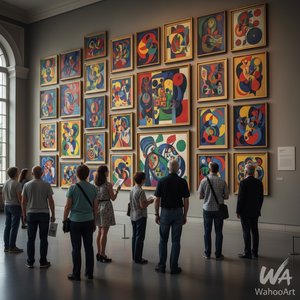
Utforsk Wassily Kandinskys 25 mest ikoniske malerier! Oppdag historien bak abstrakt kunst, ekspresjonisme og fargeharmoni. Finn inspirasjon til interiøret – museumskvalitet reproduksjoner på Most-Famous-Paintings.com.
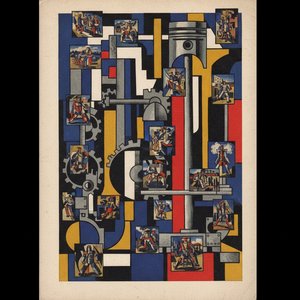
Utforsk Fernand Légers 25 mest ikoniske kunstverk! Oppdag kubismens mester, hans revolusjonerende stil og fargerike hyllest til maskinalderen. Finn inspirasjon til interiørdesign og kjøp eksklusive reproduksjoner på Most-Famous-Paintings.com.
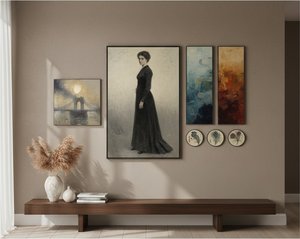
Utforsk James Abbott McNeill Whistlers 25 mest ikoniske kunstverk! Oppdag historien bak Nocturnes, portretter og impresjonistisk harmoni. Finn museumskvalitets reproduksjoner & interiørinspirasjon på Most-Famous-Paintings.com.

Oppdag de 25 mest ikoniske kunstverkene fra Metropolitan Museum of Art i New York! Lær historien bak Rembrandt, Van Gogh, Monet og mer. Finn inspirasjon til interiøret ditt med museumskvalitets reproduksjoner på Most-Famous-Paintings.com.
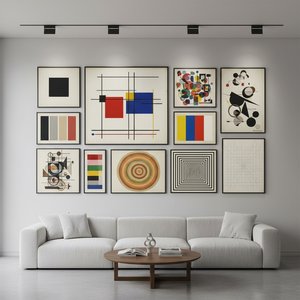
Utforsk de 10 mest innflytelsesrike verkene innen geometrisk abstraksjon! Oppdag historiene bak Mondrian, Kandinsky og Malevich. Finn inspirasjon til interiøret med Most-Famous-Paintings.coms eksklusive reproduksjoner – museumskvalitet for ditt hjem. Utforsk samlingen online!


Hold deg oppdatert med de siste kunstnyhetene, eksklusive tilbud og dekorasjonsideer.
Fortell oss om prosjektet ditt, så vil våre kunsteksperter gi deg 3 personlige kunstforslag.
Vi velger ut 3 alternativer kun for deg – helt gratis!


 Del med andre

 Vis hele teksten







 Glassalternativet er kun tilgjengelig i størrelser under 110 cm


