x

Giclée- eller lerretsprint av museumskvalitet med rask produksjon og fleksible valgmuligheter for etterbehandling. ( Kjøp håndlaget maleri Kjøp bilde)





























Velg mellom våre forhåndsdefinerte størrelser som bevarer kunstverkets opprinnelige proporsjoner.

Du kan oppgi egne mål for å tilpasse en spesifikk ramme eller et bestemt område. Dersom den valgte størrelsen ikke samsvarer med det originale bildets proporsjoner, vil vi enten beskjære kunstverket eller utvide bildet med en speilet eller ensfarget kant. En digital mockup vil bli sendt til din godkjenning før produksjonen starter.
Vennligst merk at forhåndsvisningen på skjermen ikke gjenspeiler den faktiske beskjæringen eller utvidelsen. Kun mockuppen vil vise den endelige komposisjonen nøyaktig.
Selv om tilpassede størrelser er tilgjengelige, anbefaler vi å velge et mål fra den forhåndsdefinerte listen for å bevare de originale proporsjonene.
Verdensomspennende levering () på 2 uker i stedet for standard 4/5 uker. (17 August)


Blue cinema
Størrelse på reproduksjon
René Magritte’s “Blue Cinema,” painted in 1925, is more than just a depiction of a woman posing before a cinema; it’s a meticulously constructed meditation on perception, identity, and the deceptive nature of reality. Executed during a pivotal moment in Magritte's artistic development – a period marked by his burgeoning interest in Surrealism while retaining a strong connection to classical painting techniques – this work exemplifies his signature style: a deliberate disruption of familiar visual conventions.
Painted in 1925, “Blue Cinema” reflects Magritte's early explorations into Surrealist themes while firmly rooted in the traditions of Flemish realism. He was deeply influenced by artists like Jan van Eyck, known for his meticulous detail and exploration of optics, a fascination that would become central to Magritte’s own approach. The painting’s precise rendering – the smooth application of paint, the careful modeling of form – speaks to this influence. However, unlike Van Eyck's often celebratory depictions, Magritte employs these techniques to create an atmosphere of unease and ambiguity. The use of a photographic style, reminiscent of early advertising photography, adds another layer of complexity, blurring the lines between reality and representation.
"Blue Cinema" resonates with profound symbolic weight, echoing themes that would become recurring motifs in Magritte's oeuvre. The cinema itself represents a constructed reality, an illusion designed to entertain and captivate. The woman’s pose – poised yet distant – suggests a questioning of identity and the role of the observer. The obscured face of her mother, subtly alluded to through the painting’s overall mood and the recurring motif of veiled figures, is perhaps most powerfully felt here. This echoes Magritte's personal trauma and his lifelong preoccupation with hidden truths and the impossibility of truly knowing another person or their world.
Most-Famous-Paintings.com is proud to offer a meticulously crafted hand-painted reproduction of René Magritte’s “Blue Cinema.” This exceptional piece captures the essence of Magritte's genius, allowing you to bring this iconic artwork into your home or office. Perfect for collectors seeking a statement piece, or interior designers looking to infuse their spaces with a touch of Surrealist intrigue, this reproduction is an investment in art history and a testament to Magritte’s enduring legacy.

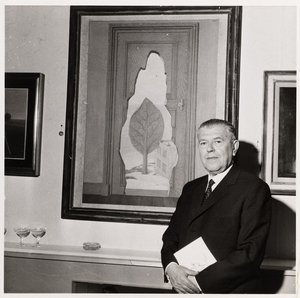
1898 - 1967 , Belgia

Explore the profound mystery of René Magritte’s 'The Treachery of Images.' Dive into an expert analysis of his Surrealist philosophy, the paradox of representation, and how he challenged reality through the interplay of language and visual perception.

Elevate your design projects with Most-Famous-Paintings's premium canvas prints and hand-painted reproductions. Discover affordable, museum-quality wall decor delivered worldwide, offering freelance decorators professional excellence, archival durability, and bespoke customization for every space.


Hold deg oppdatert med de siste kunstnyhetene, eksklusive tilbud og dekorasjonsideer.
Fortell oss om prosjektet ditt, så vil våre kunsteksperter gi deg 3 personlige kunstforslag.
Vi velger ut 3 alternativer kun for deg – helt gratis!


 Forhåndsvisning
 Send
Send Del med andre
 Vis detaljer

 Last ned bildet
 Liknende objekter
 Røntgenundersøkelse
 Lysbildefremvisning

 Vis hele teksten







 Glassalternativet er kun tilgjengelig i størrelser under 110 cm