x

Håndmalt olje på lerret i din valgte størrelse og ramme, laget på bestilling av våre kunstnere. ( Kjøp trykk Kjøp bilde)





























Velg mellom våre forhåndsdefinerte størrelser som bevarer kunstverkets opprinnelige proporsjoner.

Du kan angi egne mål for å tilpasse en spesifikk ramme eller plass. Dersom den valgte størrelsen ikke samsvarer med originalbildets proporsjoner, vil vi enten beskjære kunstverket eller utvide maleriet med ytterligere håndmalte elementer. En digital mockup vil bli sendt til din godkjenning før produksjonen starter.
Vennligst merk at forhåndsvisningen på skjermen ikke gjenspeiler den faktiske beskjæringen eller utvidelsen. Kun mockuppen vil vise den endelige komposisjonen nøyaktig.
Selv om tilpassede størrelser er tilgjengelige, anbefaler vi å velge et mål fra den forhåndsdefinerte listen for å bevare de originale proporsjonene.
Verdensomspennende levering () på 3–4 uker i stedet for standard 5 uker. (19 August). Ingen kompromisser med kvaliteten.


La parabole
Størrelse på reproduksjon
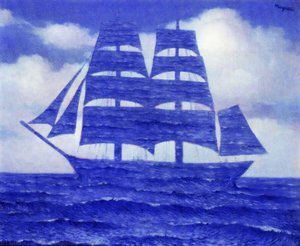
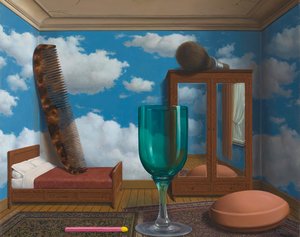
René Magritte’s “La parabole,” painted in 1955, stands as a quintessential example of surrealist art—a genre that sought to liberate imagination from rational constraints and explore the subconscious realm. More than just an aesthetically pleasing image, it's a deliberate provocation, inviting viewers to question their perceptions of reality and delve into the complexities of human experience.
Magritte executed “La parabole” in gouache—a watercolor-based medium known for its opacity and ability to achieve rich, velvety tones. This technique lends itself beautifully to capturing the muted palette characteristic of Magritte’s oeuvre, emphasizing subtle gradations of color rather than bold hues. The artist meticulously blended shades of grey and ochre, creating an atmosphere of quiet contemplation.
"La parabole" emerged during the height of Magritte's engagement with surrealism—a movement born from the Dada nihilism of World War I and fueled by psychoanalytic theories pioneered by Sigmund Freud. Surrealists aimed to tap into dreams, fantasies, and irrational impulses as sources of artistic inspiration.
“The painter must depict what he sees,” Magritte famously declared, “but not necessarily what is there.” This statement encapsulates the core principle of surrealist art—the rejection of literal representation in favor of symbolic imagery that challenges conventional notions of truth. The painting’s central figure stands silently observing the buildings and trees, embodying the viewer's role as active participant in interpreting the artwork’s meaning.The most striking element of “La parabole” is its paradoxical juxtaposition of familiar objects—buildings and trees—within an unfamiliar setting. This visual dissonance underscores Magritte's preoccupation with the elusive nature of perception and his exploration of the gap between appearance and reality. The white house, often interpreted as representing intellect or enlightenment, obscures the face of the person in the foreground, symbolizing hidden knowledge and the impossibility of fully grasping the world around us.
"La parabole" lingers in the viewer’s mind long after encountering it—provoking contemplation about fundamental questions concerning consciousness and experience. Its quiet stillness and understated beauty invite introspection, prompting us to consider how our perceptions shape our understanding of reality. Magritte's masterpiece continues to resonate with audiences today as a testament to the enduring power of surrealist art to unsettle expectations and illuminate hidden truths.

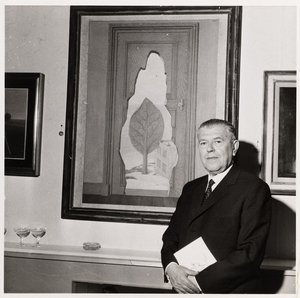
1898 - 1967 , Belgia

Explore the profound mystery of René Magritte’s 'The Treachery of Images.' Dive into an expert analysis of his Surrealist philosophy, the paradox of representation, and how he challenged reality through the interplay of language and visual perception.

Explore the profound depths of Surrealism. From Dalí’s dreamscapes to Magritte’s enigmas, master the history of the subconscious mind through our expert art guide and discover museum-quality oil reproductions of the world's most iconic surrealist masterpieces.


Hold deg oppdatert med de siste kunstnyhetene, eksklusive tilbud og dekorasjonsideer.
Fortell oss om prosjektet ditt, så vil våre kunsteksperter gi deg 3 personlige kunstforslag.
Vi velger ut 3 alternativer kun for deg – helt gratis!


 Forhåndsvisning
 Send
Send Del med andre
 Vis detaljer

 Last ned bildet
 Liknende objekter
 Røntgenundersøkelse
 Lysbildefremvisning
 Vis hele teksten







 Glassalternativet er kun tilgjengelig i størrelser under 110 cm