


x

Giclée- eller lerretsprint av museumskvalitet med rask produksjon og fleksible valgmuligheter for etterbehandling. ( Kjøp håndlaget maleri Kjøp bilde)





























Velg mellom våre forhåndsdefinerte størrelser som bevarer kunstverkets opprinnelige proporsjoner.

Du kan oppgi egne mål for å tilpasse en spesifikk ramme eller et bestemt område. Dersom den valgte størrelsen ikke samsvarer med det originale bildets proporsjoner, vil vi enten beskjære kunstverket eller utvide bildet med en speilet eller ensfarget kant. En digital mockup vil bli sendt til din godkjenning før produksjonen starter.
Vennligst merk at forhåndsvisningen på skjermen ikke gjenspeiler den faktiske beskjæringen eller utvidelsen. Kun mockuppen vil vise den endelige komposisjonen nøyaktig.
Selv om tilpassede størrelser er tilgjengelige, anbefaler vi å velge et mål fra den forhåndsdefinerte listen for å bevare de originale proporsjonene.
Verdensomspennende levering () på 2 uker i stedet for standard 4/5 uker. (21 August)


The clearing
Størrelse på reproduksjon
René Magritte's "The Clearing," painted in 1944, isn’t merely a depiction of a field; it’s an invitation to question the very nature of reality. This iconic work, rendered in oil on canvas, exemplifies the artist’s signature surrealist style – a deliberate disruption of familiar landscapes and objects to provoke contemplation about how we perceive the world around us. The painting immediately draws the eye with its seemingly simple composition: a verdant field stretches across the lower half, populated by scattered carrots and a solitary cup, while a single bird soars gracefully from the upper left corner. Yet, beneath this surface tranquility lies a potent sense of unease and mystery, characteristic of Magritte’s enduring legacy.
The historical context surrounding “The Clearing” is crucial to understanding its deeper meaning. Created during World War II, a period marked by uncertainty and profound psychological shifts, the painting reflects a broader cultural anxiety about truth and illusion. Magritte, deeply influenced by philosophers like René Descartes and the principles of logical positivism, was fascinated with the gap between appearance and reality – a concept he relentlessly explored in his art. The work can be seen as an extension of this philosophical inquiry, suggesting that our understanding of the world is often constructed through subjective experience rather than objective observation.
The seemingly mundane elements within “The Clearing” are imbued with symbolic weight. The field itself represents the vastness and unpredictability of life, while the scattered carrots – a common sight in Belgian agriculture – subtly hint at fertility, abundance, and perhaps even mortality. Their placement near the center of the image suggests a grounding force amidst the unsettling atmosphere. The solitary cup, positioned on the ground to the right, is particularly intriguing. It’s an object devoid of immediate purpose, yet it draws the viewer's attention and invites speculation about its significance – could it be a symbol of thirst, loneliness, or simply a reminder of our basic needs?
The bird, positioned high in the left corner, is perhaps the most prominent symbolic element. Its flight upward suggests aspiration, freedom, or even escape from the constraints of the earthly realm. However, its detached position also hints at isolation and detachment – mirroring the viewer’s own experience of observing this surreal scene. The color palette—primarily greens, yellows, and blues—contributes to the painting's dreamlike quality, evoking a sense of both tranquility and disorientation.
Magritte’s technique in “The Clearing” is deceptively simple yet remarkably effective. He employs a meticulous realism – rendering each carrot, leaf, and bird with painstaking detail – to heighten the unsettling effect of the scene. This juxtaposition of precise representation and illogical arrangement creates a powerful tension that forces the viewer to actively engage with the artwork. The use of muted colors and soft brushstrokes further enhances the painting’s atmospheric quality, contributing to its overall sense of mystery.
It's important to note that Magritte wasn’t interested in creating literal representations; he sought to challenge our assumptions about how we perceive reality. As he himself stated, “I do not create what I see, but what I dream.” "The Clearing" embodies this philosophy perfectly – it’s a visual poem designed to provoke thought and invite endless interpretation. It remains a testament to Magritte's genius and his enduring ability to capture the complexities of the human experience through the lens of surrealism.

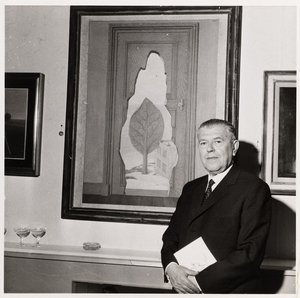
1898 - 1967 , Belgia

Explore the profound mystery of René Magritte’s 'The Treachery of Images.' Dive into an expert analysis of his Surrealist philosophy, the paradox of representation, and how he challenged reality through the interplay of language and visual perception.

Explore the profound depths of Surrealism. From Dalí’s dreamscapes to Magritte’s enigmas, master the history of the subconscious mind through our expert art guide and discover museum-quality oil reproductions of the world's most iconic surrealist masterpieces.

Explore the profound depths of Surrealism with our expert guide. From Dalí's dreamscapes to Breton's manifesto, uncover the history, symbolism, and technical mastery of this revolutionary movement. Perfect for students and collectors seeking deep art-historical insight.


Hold deg oppdatert med de siste kunstnyhetene, eksklusive tilbud og dekorasjonsideer.
Fortell oss om prosjektet ditt, så vil våre kunsteksperter gi deg 3 personlige kunstforslag.
Vi velger ut 3 alternativer kun for deg – helt gratis!


 Forhåndsvisning
 Send
Send Del med andre
 Vis detaljer

 Last ned bildet
 Liknende objekter
 Røntgenundersøkelse
 Lysbildefremvisning

 Vis hele teksten







 Glassalternativet er kun tilgjengelig i størrelser under 110 cm


