x

Giclée- eller lerretsprint av museumskvalitet med rask produksjon og fleksible valgmuligheter for etterbehandling. ( Kjøp håndlaget maleri Kjøp bilde)





























Velg mellom våre forhåndsdefinerte størrelser som bevarer kunstverkets opprinnelige proporsjoner.

Du kan oppgi egne mål for å tilpasse en spesifikk ramme eller et bestemt område. Dersom den valgte størrelsen ikke samsvarer med det originale bildets proporsjoner, vil vi enten beskjære kunstverket eller utvide bildet med en speilet eller ensfarget kant. En digital mockup vil bli sendt til din godkjenning før produksjonen starter.
Vennligst merk at forhåndsvisningen på skjermen ikke gjenspeiler den faktiske beskjæringen eller utvidelsen. Kun mockuppen vil vise den endelige komposisjonen nøyaktig.
Selv om tilpassede størrelser er tilgjengelige, anbefaler vi å velge et mål fra den forhåndsdefinerte listen for å bevare de originale proporsjonene.
Verdensomspennende levering () på 2 uker i stedet for standard 4/5 uker. (15 August)


The Postcard
Størrelse på reproduksjon
René Magritte’s “The Postcard,” painted in 1960, stands as a cornerstone of Surrealist art and continues to fascinate viewers with its deceptively simple composition. More than just a depiction of a man gazing at an apple floating above the ocean—a scene reminiscent of Pieter Bruegel III's "Landscape with the Fall of Icarus"—the painting operates on multiple levels, inviting contemplation about perception, reality, and the hidden narratives lurking beneath the surface.
Historical Context: Created during Magritte’s prolific period—following the success of works like “The Lovers” and “Golconda”—“The Postcard” aligns with the broader Surrealist movement's preoccupation with challenging rational thought and exploring subconscious desires. Influenced by Sigmund Freud’s psychoanalytic theories, Surrealists sought to liberate art from the constraints of logic, aiming instead for a visceral connection with the irrational.
Symbolism: The floating apple is arguably the painting’s most potent symbol. It defies gravity and disrupts our expectations of visual reality—a deliberate tactic employed by Magritte to destabilize viewers' assumptions about what they see. Scholars interpret the apple as representing temptation, knowledge, and perhaps even a reference to biblical narratives concerning Adam and Eve. Its placement above the man suggests an unreachable ideal or a hidden truth that remains elusive.
Emotional Impact: “The Postcard” evokes a profound sense of solitude and introspection. The figure’s gaze directs our attention outwards, mirroring our own yearning for connection with something beyond ourselves—a feeling amplified by the stillness of the ocean and the enigmatic presence of the floating apple. Magritte's masterful use of color and composition contributes to this emotional resonance, creating an artwork that lingers in the mind long after viewing.

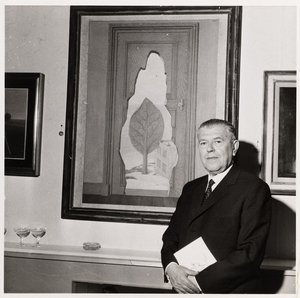
1898 - 1967 , Belgia

Explore the profound mystery of René Magritte’s 'The Treachery of Images.' Dive into an expert analysis of his Surrealist philosophy, the paradox of representation, and how he challenged reality through the interplay of language and visual perception.

Explore the profound depths of Surrealism. From Dalí’s dreamscapes to Magritte’s enigmas, master the history of the subconscious mind through our expert art guide and discover museum-quality oil reproductions of the world's most iconic surrealist masterpieces.

Explore the profound depths of Surrealism with our expert guide. From Dalí's dreamscapes to Breton's manifesto, uncover the history, symbolism, and technical mastery of this revolutionary movement. Perfect for students and collectors seeking deep art-historical insight.

Explore the profound history of Surrealist Expressionism. Discover how artists blended dream logic with raw emotion to navigate post-war trauma through masterful, evocative imagery and psychological depth.

Explore the profound depths of Surrealism through a scholarly lens. Discover the symbolism, history, and technical brilliance behind masterpieces by Salvador Dalí and other icons. Gain expert insights into the dreamlike subconscious and the enduring legacy of Surrealist art.


Hold deg oppdatert med de siste kunstnyhetene, eksklusive tilbud og dekorasjonsideer.
Fortell oss om prosjektet ditt, så vil våre kunsteksperter gi deg 3 personlige kunstforslag.
Vi velger ut 3 alternativer kun for deg – helt gratis!


 Forhåndsvisning
 Send
Send Del med andre
 Vis detaljer

 Last ned bildet
 Liknende objekter
 Røntgenundersøkelse
 Lysbildefremvisning

 Vis hele teksten







 Glassalternativet er kun tilgjengelig i størrelser under 110 cm