


x

 Contemporary Realism
 1934
1934 26.0 x 73.0 cm
Giclée- eller lerretsprint av museumskvalitet med rask produksjon og fleksible valgmuligheter for etterbehandling. ( Kjøp håndlaget maleri Kjøp bilde)
Velg mellom våre forhåndsdefinerte størrelser som bevarer kunstverkets opprinnelige proporsjoner.

Du kan oppgi egne mål for å tilpasse en spesifikk ramme eller et bestemt område. Dersom den valgte størrelsen ikke samsvarer med det originale bildets proporsjoner, vil vi enten beskjære kunstverket eller utvide bildet med en speilet eller ensfarget kant. En digital mockup vil bli sendt til din godkjenning før produksjonen starter.
Vennligst merk at forhåndsvisningen på skjermen ikke gjenspeiler den faktiske beskjæringen eller utvidelsen. Kun mockuppen vil vise den endelige komposisjonen nøyaktig.
Selv om tilpassede størrelser er tilgjengelige, anbefaler vi å velge et mål fra den forhåndsdefinerte listen for å bevare de originale proporsjonene.
Verdensomspennende levering () på 2 uker i stedet for standard 4/5 uker. (23 August)


Hell Gate Bridge
Størrelse på reproduksjon

In the vibrant tapestry of Australian art history, few names resonate with as much familial prestige and individual distinction as Sir Lionel Arthur Lindsay. Born in 1874 amidst the goldfields of Creswick, Victoria, Lindsay was far more than a solitary creator; he was a central pillar of a legendary artistic dynasty. Growing up in an environment saturated with creativity, alongside siblings such as Norman and Daryl Lindsay, his early life was a continuous dialogue with the visual arts. This upbringing instilled in him a profound respect for tradition and a meticulous eye for detail that would later define his celebrated career as a painter, etcher, and influential art critic.
Lindsay’s artistic formation took place at the prestigious National Gallery School in Melbourne, where he began to cultivate a technical mastery that bridged the gap between classical realism and the burgeoning sensibilities of impressionism. While many of his contemporaries were eager to embrace the radical abstractions of Modernism, Lindsay remained a steadfast defender of traditional craftsmanship. He possessed an uncanny ability to capture the essence of a subject through precise line work and evocative textures, whether he was rendering the rugged Australian landscape or the intricate mechanics of a locomotive. His self-taught expertise in etching and engraving, developed during his formative years, allowed him to bring a unique graphic strength to his prints, earning him international acclaim during exhibitions in London.
The work of Lionel Lindsay is characterized by an intimate connection to the subject matter, often finding profound beauty in the mundane and the monumental alike. His paintings and etchings serve as windows into both the natural world and the evolving urban landscape of early 20th-century Australia. One can observe his remarkable versatility in works such as “Trolley,” which captures the rhythmic energy of urban transit, and the deeply detailed “700-Series Locomotive,” where his precision transforms a mechanical subject into a piece of nostalgic art. His ability to manipulate light and color is equally evident in his more atmospheric pieces, where he employs an impressionistic touch to convey mood and seasonal shifts.
Beyond the canvas, Lindsay’s influence extended into the very fabric of the Australian art establishment. As a critic and writer, he used his platform to advocate for the merits of realism and the importance of technical excellence. His leadership roles were numerous and impactful:
The historical significance of Sir Lionel Lindsay lies not only in his prolific output but in his role as a guardian of artistic integrity during a period of intense cultural transition. His knighthood in 1941 was a fitting tribute to a lifetime of service to the arts, recognizing a man who had shaped the tastes and institutions of his nation. Even as the art world moved toward more experimental frontiers, Lindsay’s commitment to the beauty of the observable world provided a vital anchor for Australian identity.
As we look back upon his life, from the quiet goldfields of his youth to the prestigious galleries of London and Sydney, we see an artist who found comedy and life—as suggested by his posthumous autobiography—in every stroke of the brush and every etched line. His legacy remains preserved in the collections of major galleries worldwide, reminding us of a time when art was a profound exploration of truth, tradition, and the enduring spirit of the Australian landscape.

1874 - 1961 , Australia

Explore the fascinating history of the 'art model' through centuries of painting! Discover academic techniques, social contexts & the evolving role of models in art. Most-Famous-Paintings offers custom reproductions and expert consultation.

Explore the captivating history of the model in art! Discover representation, idealization & contemporary reinterpretations. Expert insights for collectors at Most-Famous-Paintings.
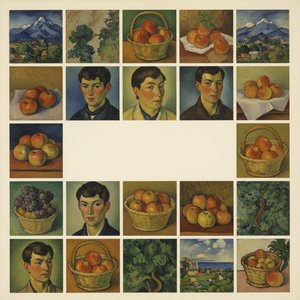
Utforsk Paul Cézannes 25 mest ikoniske malerier! Oppdag historien bak impresjonismens mesterverk, fra stilleben til landskap. Finn kunsttrykk av høy kvalitet og interiørinspirasjon på Most-Famous-Paintings.com.
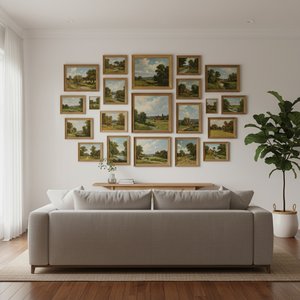
Opplev John Constables 25 mest ikoniske malerier! Fordyp deg i engelsk romantikk, landskapskunst og atmosfæriske scener. Finn museumskvalitets reproduksjoner & interiørinspirasjon på Most-Famous-Paintings.com. Utforsk samlingen online!

Explore the captivating landscapes & still lifes of Carl Eduard Schuch (1846-1903), a pivotal Austrian painter bridging realism and modernism. Discover his influences, unique style, and lasting legacy with Most-Famous-Paintings.


Hold deg oppdatert med de siste kunstnyhetene, eksklusive tilbud og dekorasjonsideer.
Fortell oss om prosjektet ditt, så vil våre kunsteksperter gi deg 3 personlige kunstforslag.
Vi velger ut 3 alternativer kun for deg – helt gratis!


 Forhåndsvisning
 Send
Send Del med andre
 Vis detaljer

 Last ned bildet
 Liknende objekter
 Røntgenundersøkelse
 Lysbildefremvisning
 Vis hele teksten




































 Glassalternativet er kun tilgjengelig i størrelser under 110 cm


