x

 Oil On CanvasWallArtLate Renaissance
 1560Renaissance
 235.0 x 125.0 cm
 Pinacoteca di Brera
Håndmalt olje på lerret i din valgte størrelse og ramme, laget på bestilling av våre kunstnere. ( Bytt til trykk Bytt til bilde)





























Velg mellom våre forhåndsdefinerte størrelser som bevarer kunstverkets opprinnelige proporsjoner.

Du kan angi egne mål for å tilpasse en spesifikk ramme eller plass. Dersom den valgte størrelsen ikke samsvarer med originalbildets proporsjoner, vil vi enten beskjære kunstverket eller utvide maleriet med ytterligere håndmalte elementer. En digital mockup vil bli sendt til din godkjenning før produksjonen starter.
Vennligst merk at forhåndsvisningen på skjermen ikke gjenspeiler den faktiske beskjæringen eller utvidelsen. Kun mockuppen vil vise den endelige komposisjonen nøyaktig.
Selv om tilpassede størrelser er tilgjengelige, anbefaler vi å velge et mål fra den forhåndsdefinerte listen for å bevare de originale proporsjonene.
Verdensomspennende levering () på 3–4 uker i stedet for standard 5 uker. (4 August). Ingen kompromisser med kvaliteten.


St Jerome
Størrelse på reproduksjon
In the vast pantheon of the Italian Renaissance, few names command as much reverence as Titian Vecellio. Known universally as the titan of Venetian colorism, Titian possessed an unparalleled ability to breathe life into oil paint, transforming flat surfaces into breathing, pulsing realities. His masterpiece, St Jerome, painted around 1560, stands as a profound testament to this mastery. This work is not merely a depiction of a biblical figure; it is a window into the soul of Mannerism, where the boundaries between the physical world and spiritual introspection begin to blur. As one gazes upon the canvas, the viewer is immediately struck by the dramatic interplay of light and shadow, a technique that Titian used to sculpt form and evoke a sense of profound, quiet drama.
The painting captures the venerable Saint Jerome in a moment of intense intellectual and spiritual labor. Depicted as a nude male figure seated at his desk, the saint is caught in the act of writing or reading—a posture that serves as a visual metaphor for the pursuit of divine wisdom through scholarly devotion. The choice of nudity is particularly striking, stripping away the trappings of worldly status to reveal the raw, vulnerable essence of the man engaged in his holy task. This vulnerability is balanced by the strength of his presence, anchored by the lush, naturalistic landscape that surrounds him. Mature trees frame the composition, providing a sense of stability and grounding, while the delicate movement of birds flitting through the branches introduces a fleeting, ethereal beauty that mirrors Jerome’s own spiritual quest for inner peace.
To appreciate St Jerome is to appreciate the very evolution of oil painting. Titian, working within the vibrant artistic hub of Venice, utilized a technique characterized by rich, layered glazes that allowed light to penetrate the surface and reflect back, creating an inner glow known as luminosity. In this particular work, his use of color is nothing short of symphonic. The earthy tones of the landscape harmonize with the warmer, flesh-like tones of the saint’s body, creating a cohesive atmosphere of serene solemnity. The brushwork, while precise in its anatomical rendering, possesses a certain painterly freedom that anticipates the expressive power of later eras, making the scene feel remarkably alive and immediate.
Beyond the technical brilliance, the painting offers a complex tapestry of symbolism designed to resonate with the deeply religious and scholarly audience of the 16th century. The presence of an attendant or companion, partially visible in the composition, adds a layer of narrative depth, suggesting the communal nature of spiritual study or perhaps representing the earthly witnesses to Jerome's divine inspiration. For the discerning collector or interior designer, this piece offers more than just aesthetic beauty; it provides a focal point of intellectual depth and historical gravity. Whether placed in a grand library, a sophisticated study, or a curated gallery space, a high-quality reproduction of this Titian masterpiece brings with it an aura of timelessness, inviting all who encounter it to pause, reflect, and engage in their own moment of quiet contemplation.

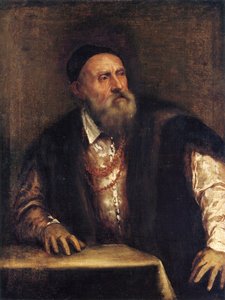
1490 - 1576 , Italia

Oppdag Claude Monets 25 mest ikoniske malerier! Fordyp deg i impressionismens verden, fra vannliljer til soleiloppgang. Historien bak kunsten & eksklusive reproduksjoner på Most-Famous-Paintings.no – for et kunstfullt hjem.
Utforsk Alte Pinakotekets 25 mest ikoniske malerier! Oppdag renessanse- og barokkmesterverk av Dürer, Rembrandt & Caravaggio. Finn inspirasjon til hjemmet ditt med museumskvalitets reproduksjoner på Most-Famous-Paintings.com.
Utforsk Paul Cézannes 25 mest ikoniske malerier! Oppdag historien bak impresjonismens mesterverk, fra stilleben til landskap. Finn kunsttrykk av høy kvalitet og interiørinspirasjon på Most-Famous-Paintings.com.
Oppdag Jacopo Tintorettos 25 mest ikoniske malerier! Fordyp deg i renessansens drama, lys og farger. Eksklusive kunsttrykk & lerretstrykk på Most-Famous-Paintings.no – finn din favoritt nå!

Utforsk fargens kraft i kunsten! Oppdag topp 10 malerier fra Van Gogh, Monet og Picasso. Lær om kunsthistorie, teknikker og inspirerende fargepaletter. Finn museumskvalitets reproduksjoner på Most-Famous-Paintings.com – for din veggkunst og interiørdesign.


Hold deg oppdatert med de siste kunstnyhetene, eksklusive tilbud og dekorasjonsideer.
Fortell oss om prosjektet ditt, så vil våre kunsteksperter gi deg 3 personlige kunstforslag.
Vi velger ut 3 alternativer kun for deg – helt gratis!


 Forhåndsvisning
 Send
Send Del med andre
 Vis detaljer

 Last ned bildet
 Liknende objekter
 Røntgenundersøkelse
 Lysbildefremvisning
 Vis hele teksten







 Glassalternativet er kun tilgjengelig i størrelser under 110 cm