x

 Akryl på lerretVeggkunstHigh Renaissance
 1505
1505 92.0 x 126.0 cm
 Musée du Petit Palais
Giclée- eller lerretsprint av museumskvalitet med rask produksjon og fleksible valgmuligheter for etterbehandling. ( Kjøp håndlaget maleri Kjøp bilde)





























Velg mellom våre forhåndsdefinerte størrelser som bevarer kunstverkets opprinnelige proporsjoner.

Du kan oppgi egne mål for å tilpasse en spesifikk ramme eller et bestemt område. Dersom den valgte størrelsen ikke samsvarer med det originale bildets proporsjoner, vil vi enten beskjære kunstverket eller utvide bildet med en speilet eller ensfarget kant. En digital mockup vil bli sendt til din godkjenning før produksjonen starter.
Vennligst merk at forhåndsvisningen på skjermen ikke gjenspeiler den faktiske beskjæringen eller utvidelsen. Kun mockuppen vil vise den endelige komposisjonen nøyaktig.
Selv om tilpassede størrelser er tilgjengelige, anbefaler vi å velge et mål fra den forhåndsdefinerte listen for å bevare de originale proporsjonene.
Verdensomspennende levering () på 2 uker i stedet for standard 4/5 uker. (18 August)


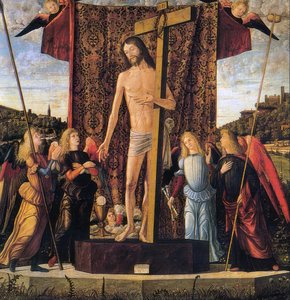
Holy Conversation
Størrelse på reproduksjon
Vittore Carpaccio’s “Holy Conversation,” completed around 1505 in Venice, stands as a testament to the enduring power of narrative painting within the High Renaissance. More than just a depiction of religious iconography—the serene tableau featuring Jesus and Mary Magdalene—it embodies a profound exploration of faith, contemplation, and the delicate balance between divine grace and human vulnerability.
Carpaccio’s artistic vision wasn't solely rooted in the humanist ideals sweeping across Italy at the time. Instead, he skillfully blended influences from early Netherlandish art, particularly Antonello da Messina’s groundbreaking realism and meticulous attention to detail. This fusion resulted in a Venetian style characterized by luminous color palettes—primarily dominated by blues and golds—and an unprecedented level of naturalistic representation. Unlike many contemporary artists prioritizing idealized forms, Carpaccio prioritized capturing the palpable atmosphere of his subject matter.
“Holy Conversation” is arguably Carpaccio’s magnum opus, serving as a pivotal piece within his monumental cycle depicting the legend of Saint Ursula and her seventy companions. This narrative masterpiece meticulously recreates the pilgrimage to Cologne Cathedral, capturing not only the physical setting but also the emotional resonance of the event—the pilgrims' devotion, their apprehension about encountering God, and ultimately, their profound spiritual experience. Carpaccio’s masterful use of perspective creates a convincing illusion of depth, immersing viewers in the scene’s environment.
Carpaccio’s meticulous technique extends beyond mere visual accuracy; it's infused with symbolic meaning. The prominent crucifix held by Jesus serves as a constant reminder of sacrifice and redemption—a central theme within Christian theology. Mary Magdalene’s gaze, directed towards Jesus, conveys humility and reverence. Furthermore, the architectural elements of Cologne Cathedral—represented with remarkable precision—symbolize spiritual aspiration and divine majesty. Carpaccio's careful rendering of textures—the rough stone of the cathedral walls, the folds of Mary Magdalene’s robe—adds to the painting’s tactile quality and reinforces its emotional impact.
"Holy Conversation" remains a cornerstone of Venetian Renaissance art. Its enduring appeal lies in Carpaccio's ability to convey complex theological ideas through evocative imagery and masterful execution. It exemplifies the High Renaissance commitment to naturalistic observation combined with artistic innovation—a legacy that continues to inspire artists and collectors alike.


1465 - 1526 , Italia

Explore the luminous mastery of the Venetian Renaissance. Discover how masters like Titian and Giorgione revolutionized art through colorito, light, and atmosphere. An expert guide to the golden age of Italian painting for collectors and enthusiasts.


Hold deg oppdatert med de siste kunstnyhetene, eksklusive tilbud og dekorasjonsideer.
Fortell oss om prosjektet ditt, så vil våre kunsteksperter gi deg 3 personlige kunstforslag.
Vi velger ut 3 alternativer kun for deg – helt gratis!


 Forhåndsvisning
 Send
Send Del med andre
 Vis detaljer

 Last ned bildet
 Liknende objekter
 Røntgenundersøkelse
 Lysbildefremvisning
 Vis hele teksten







 Glassalternativet er kun tilgjengelig i størrelser under 110 cm