


x

 TemperaRomantic Symbolism
 179919th Century
 38.0 x 55.0 cm
Giclée- eller lerretsprint av museumskvalitet med rask produksjon og fleksible valgmuligheter for etterbehandling. ( Kjøp håndlaget maleri Kjøp bilde)





























Velg mellom våre forhåndsdefinerte størrelser som bevarer kunstverkets opprinnelige proporsjoner.

Du kan oppgi egne mål for å tilpasse en spesifikk ramme eller et bestemt område. Dersom den valgte størrelsen ikke samsvarer med det originale bildets proporsjoner, vil vi enten beskjære kunstverket eller utvide bildet med en speilet eller ensfarget kant. En digital mockup vil bli sendt til din godkjenning før produksjonen starter.
Vennligst merk at forhåndsvisningen på skjermen ikke gjenspeiler den faktiske beskjæringen eller utvidelsen. Kun mockuppen vil vise den endelige komposisjonen nøyaktig.
Selv om tilpassede størrelser er tilgjengelige, anbefaler vi å velge et mål fra den forhåndsdefinerte listen for å bevare de originale proporsjonene.
Verdensomspennende levering () på 2 uker i stedet for standard 4/5 uker. (16 August)


The Last Supper
Størrelse på reproduksjon
In the quiet intensity of William Blake’s 1799 masterpiece, The Last Supper, the boundaries between the earthly and the eternal seem to dissolve. This is not merely a historical reconstruction of a biblical event; it is an immersive descent into the prophetic psyche of one of the Romantic era's most singular geniuses. As the viewer approaches this tempera on canvas, they are immediately struck by a profound sense of spiritual weight. The scene captures the pivotal moment of the Eucharist, yet Blake transcends traditional iconography to present a vision where light and shadow perform a sacred dance. At the heart of the composition sits Jesus Christ, framed by a radiant, golden starburst that emanates from his very presence, casting a celestial glow upon the gathered disciples. This deliberate use of light serves as more than a focal point; it acts as a window into Blake’s belief in the divine spark residing within all humanity.
The atmosphere is one of solemn grandeur, sculpted through a masterful application of chiaroscuro. Blake utilizes dramatic contrasts to pull the figures out of a nearly black, infinite background, creating a sense of depth that feels both intimate and cosmic. The palette is a sophisticated tapestry of symbolic hues: the skin tones and tabletop are bathed in a transformative golden yellow, hinting at the alchemical process of spiritual transmutation. These warm, luminous tones are punctuated by unexpected accents of aquamarine blue, salmon pink, and a deep, earthy rust red. Such colors do not merely decorate the garments of the apostles; they resonate with Blake’s complex symbolic language, representing the interconnectedness of the sea, the flesh, and the earth, all held within the embrace of divine grace.
To gaze upon The Last Supper is to engage with the very essence of the Romantic movement—a period defined by an intense preoccupation with emotion, imagination, and the sublime. Blake, a man whose life was shaped by vivid visionary experiences, imbues every gesture on the canvas with profound meaning. The way the disciples lean toward or away from Christ, their hands raised in prayer or resting in contemplation, tells a story of human reaction to the divine. One can almost feel the tension in the room as the weight of betrayal and sacrifice hangs in the air. Even the objects upon the table—the goblets, plates, and bowls—are rendered with a meticulousness that grounds this supernatural event in a tangible, physical reality.
For the discerning collector or interior designer, this artwork offers much more than aesthetic beauty; it provides a focal point of deep intellectual and emotional resonance. The painting’s ability to command attention through its stark contrasts and rich textures makes it an extraordinary addition to any curated space. Whether placed in a study filled with literature or as a centerpiece in a room designed for reflection, the piece invites conversation and contemplation. It serves as a reminder of the power of the human imagination to bridge the gap between the seen and the unseen, making it a timeless acquisition for those who seek art that speaks to the soul.

1757 - 1827 , Storbritannia

Explore the mystical art & poetic genius of William Blake (1757-1827). Discover his revolutionary illuminated printing, rich symbolism, and lasting influence on Romanticism. Find handmade reproductions at Most-Famous-Paintings.

Explore the life & art of Sir William Blake Richmond, a pivotal figure bridging Pre-Raphaelitism and Aestheticism. Discover his stunning portraits, mosaics at St Paul's Cathedral, and lasting influence on Victorian art.
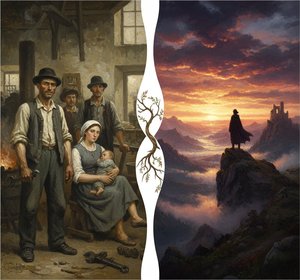
Explore 10 defining masterpieces of Romantic Realism! Discover Courbet, Millet & Daumier's powerful paintings—capturing emotion and social realities. Find museum-quality reproductions for your home at Most-Famous-Paintings.com.

Explore the profound artistry of The Last Supper through an art historian's lens. From Leonardo da Vinci’s genius to diverse Renaissance interpretations, discover the symbolism and technique behind history's most iconic sacred depictions.

Explore the rich history & techniques of tempera painting! Discover Renaissance masters like Botticelli & Fra Angelico, conservation insights, and the enduring legacy of this captivating art form. Learn more now!


Hold deg oppdatert med de siste kunstnyhetene, eksklusive tilbud og dekorasjonsideer.
Fortell oss om prosjektet ditt, så vil våre kunsteksperter gi deg 3 personlige kunstforslag.
Vi velger ut 3 alternativer kun for deg – helt gratis!


 Forhåndsvisning
 Send
Send Del med andre
 Vis detaljer

 Last ned bildet
 Liknende objekter
 Røntgenundersøkelse
 Lysbildefremvisning
 Vis hele teksten







 Glassalternativet er kun tilgjengelig i størrelser under 110 cm


