


x

 Bestill trykk Kjøp digitalt bilde
 Send
Send
 Vis detaljer
 Legg til i favoritter
 Last ned bildet
 Liknende objekter
 Røntgenundersøkelse
 Lysbildefremvisning
Håndmalt olje på lerret i din valgte størrelse og ramme, laget på bestilling av våre kunstnere.





























Velg mellom våre forhåndsdefinerte størrelser som bevarer kunstverkets opprinnelige proporsjoner.

Du kan angi egne mål for å tilpasse en spesifikk ramme eller plass. Dersom den valgte størrelsen ikke samsvarer med originalbildets proporsjoner, vil vi enten beskjære kunstverket eller utvide maleriet med ytterligere håndmalte elementer. En digital mockup vil bli sendt til din godkjenning før produksjonen starter.
Vennligst merk at forhåndsvisningen på skjermen ikke gjenspeiler den faktiske beskjæringen eller utvidelsen. Kun mockuppen vil vise den endelige komposisjonen nøyaktig.
Selv om tilpassede størrelser er tilgjengelige, anbefaler vi å velge et mål fra den forhåndsdefinerte listen for å bevare de originale proporsjonene.
Verdensomspennende levering () på 3–4 uker i stedet for standard 5 uker. (21 July). Ingen kompromisser med kvaliteten.


Before
Størrelse på reproduksjon
William Hogarth's "Before," painted circa 1753, isn’t merely a depiction of a domestic scene; it’s a meticulously crafted tableau of social commentary and psychological insight. This remarkable work, rendered in oil on canvas, captures a moment of intense tension within a seemingly ordinary room – a bedroom dominated by the uneasy dynamic between a seated woman and a standing one. The stark black and white palette immediately establishes a formal, almost theatrical quality, reminiscent of Hogarth’s earlier engravings, yet imbued with a raw emotionality rarely seen in his more polished portraiture.
The composition is deliberately unsettling. The posture of the standing figure – her hand raised, poised to strike – speaks volumes about suppressed anger and simmering resentment. Her face, partially obscured, conveys a mixture of defiance and vulnerability. Conversely, the seated woman’s expression suggests resignation or perhaps even complicity. The inclusion of the cat and dog, seemingly oblivious to the drama unfolding around them, further emphasizes the isolation and detachment within this domestic sphere. The mirror reflects not just the room's interior but also hints at a deeper, unresolved narrative – a sense of self-reflection and hidden truths.
To fully appreciate “Before,” it’s crucial to understand Hogarth's broader artistic project. He was a pioneer in using art as a vehicle for social critique, meticulously documenting the realities of life in 18th-century London – its excesses, hypocrisies, and moral failings. His "modern moral subjects," as he termed them, weren’t simply portraits; they were carefully constructed narratives designed to expose societal ills. Hogarth's work reflects a deep engagement with the social and political currents of his time, mirroring the anxieties surrounding class divisions, marriage customs, and the rise of consumerism.
The scene itself is laden with symbolism. The umbrella, a symbol of protection and status, lies discarded on the floor, suggesting a disruption of order and perhaps even a loss of control. The bed, a central element of domesticity, becomes a site of conflict rather than comfort. Hogarth’s meticulous attention to detail – from the texture of the fabrics to the arrangement of objects – reinforces the painting's narrative power, inviting viewers to decipher the unspoken tensions and underlying meanings.
Hogarth’s technique is characterized by a remarkable level of realism and precision. He employed a method of “optical mixing,” layering thin washes of paint to create subtle gradations of tone and texture, a technique that lends the image an almost photographic quality. His use of chiaroscuro – the dramatic contrast between light and shadow – further heightens the emotional impact of the scene, drawing attention to key elements and creating a sense of unease. The starkness of the monochrome palette amplifies the drama and focuses the viewer’s attention on the figures and their interaction.
“Before” stands as a testament to Hogarth's artistic genius and his profound understanding of human nature. It remains a powerful example of satirical art, offering a timeless glimpse into the complexities of domestic relationships and the social realities of 18th-century London. Most-Famous-Paintings’s hand-painted reproductions capture the essence of this iconic work, allowing you to experience its intricate details and emotional depth in stunning fidelity.

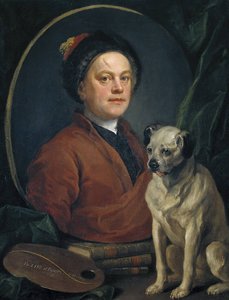
1697 - 1764 , Storbritannia

Explore the life & work of Honoré Daumier, a master of 19th-century French realism and satire. Discover his powerful lithographs, paintings, and sculptures critiquing society – and his lasting influence on modern art.

Explore the social commentary & artistic representation of 18th-century society. Discover Rococo masterpieces, portraiture's power, and shifting historical perspectives. Expert insights for art lovers.

Explore the history of satire in art! From Hogarth's London to contemporary critique, discover how artists use wit & visual power to reflect and challenge society. Expert insights at Most-Famous-Paintings.

Explore the captivating world of Joseph Highmore, a leading British Rococo painter. Discover his elegant portraits, insightful 'Pamela' illustrations & contributions to 18th-century art history. Learn more at Most-Famous-Paintings.

Explore the powerful history of social commentary in art! Discover key artists like Hogarth & Daumier, movements from Realism to American Social Realism, and how art reflects—and challenges—society. Expert insights at Most-Famous-Paintings.


Hold deg oppdatert med de siste kunstnyhetene, eksklusive tilbud og dekorasjonsideer.
Fortell oss om prosjektet ditt, så vil våre kunsteksperter gi deg 3 personlige kunstforslag.
Vi velger ut 3 alternativer kun for deg – helt gratis!


 Del med andre


 Vis hele teksten







 Glassalternativet er kun tilgjengelig i størrelser under 110 cm


